
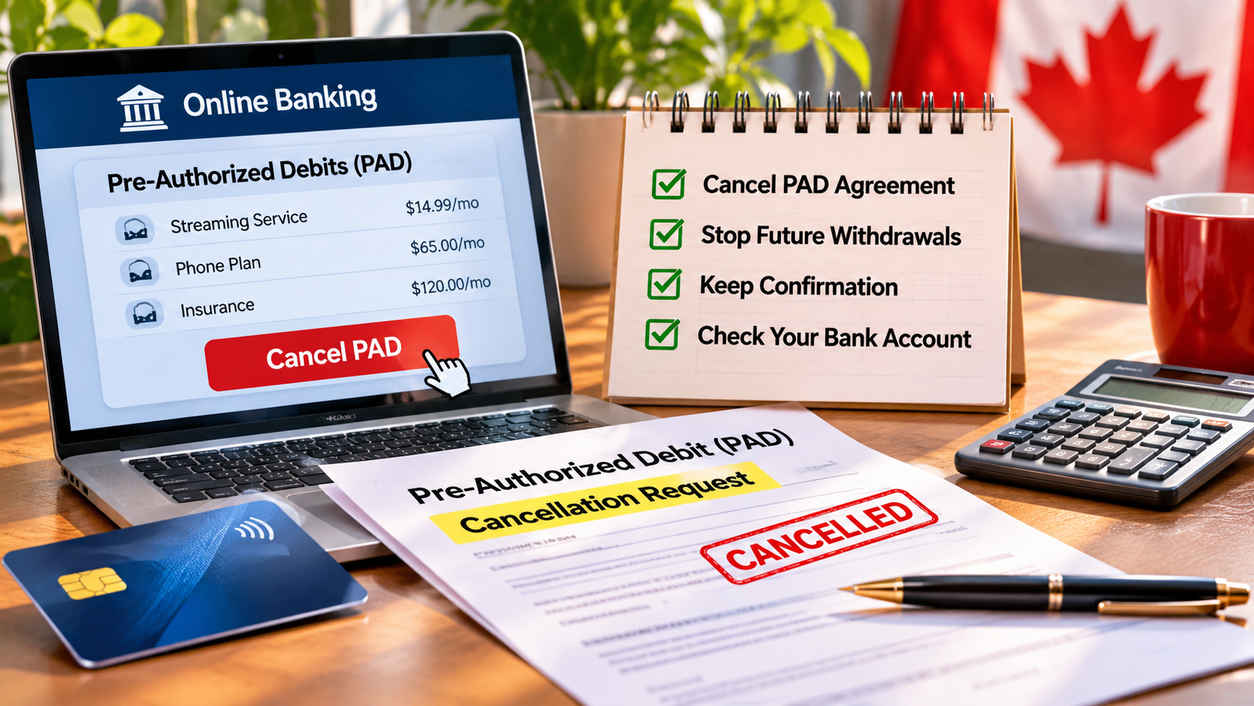
Key Takeaways
- A PAD cancellation request should be sent to the company withdrawing the money, with written proof retained.
- A bank stop-payment request can help block an individual or recurring withdrawal, but it does not automatically cancel the merchant agreement.
- Eligible personal PAD disputes generally have a 90-day reporting window through the financial institution.
What Is Pre-Authorized Debit Cancellation in Canada?
A pre-authorized debit (PAD) allows a company to withdraw money directly from your Canadian bank account according to an agreement you approved. Mortgage payments, insurance premiums, utility bills and subscription charges commonly use this arrangement.
Pre-authorized debit cancellation means withdrawing that permission so the company cannot continue collecting payments through the same authorization. However, cancelling the payment method and ending the service contract are two different things.
The Financial Consumer Agency of Canada (FCAC) explains that consumers must notify the biller in writing to cancel a PAD agreement and should keep a copy of the notice.
How Can You Cancel a PAD Agreement?
Start by checking the original authorization or agreement. It should explain the cancellation procedure and provide the company's contact details.
Follow these steps:
- Contact the company that withdraws money from your account.
- Request cancellation of the specific PAD authorization.
- Send the request in writing using an accepted method, such as email or the company's official cancellation form.
- Include relevant account or agreement details without sharing unnecessary sensitive information.
- Save the cancellation confirmation and a copy of your request.
- Monitor your bank statement to check whether further withdrawals occur.
Payments Canada says the biller must cancel the PAD agreement within 30 days of receiving notice. Check your agreement for its stated cancellation procedure and timing.
Can Your Bank Stop Automatic Withdrawals?
Yes. You can ask your financial institution for a stop-payment request if you need to block an upcoming withdrawal. FCAC says a stop payment may be available for a single payment and, depending on the bank, recurring payments.
However, a stop payment is not the same as cancelling the PAD with the company. It may block a transaction without ending the authorization or your service agreement.
Ask your bank about the available options, required notice, processing time and applicable fees. Do not assume that submitting a request guarantees an upcoming withdrawal will be stopped.
What If a Company Continues Taking Money?
If withdrawals continue after you have properly cancelled the PAD, contact the company immediately and request an explanation. Provide your cancellation confirmation and transaction details.
If the issue remains unresolved, contact your financial institution and ask about reimbursement under the applicable PAD rules.
For personal PADs, consumers generally have 90 days from the withdrawal date to report an incorrect or unauthorized debit. Your bank may ask you to complete a declaration explaining why the transaction should be reversed.
Act promptly. Do not wait until several payments have been taken before raising a dispute.
Does Cancelling a PAD Cancel Your Contract?
No. This is one of the most important distinctions.
Cancelling a PAD removes permission for a company to withdraw future payments through that arrangement. It does not automatically terminate your subscription, insurance policy, loan, utility service or other contract.
For example, cancelling an insurance premium withdrawal does not necessarily cancel the insurance policy. You may still owe premiums under the agreement, and missed payments could have consequences.
Contact the provider separately if you want to end the actual service. Arrange another payment method for any amount that remains due.
How Can You Avoid Banking Problems After Cancellation?
Keep enough money in your account until you confirm that the payment arrangement has ended. A failed withdrawal can still create complications if you owe the company money.
Review your bank statement after the scheduled payment date. Also check whether other recurring withdrawals remain active.
If an unexpected debit causes an overdraft or returned payment, review your bank's charges. TwikUp's guide to Overdraft Protection vs NSF Fees explains how these costs can differ.
You can also review bank account fees in Canada to understand other charges that may appear on your statement.
TwikUp's Perspective
Payment convenience should not come at the cost of losing control over your bank account. Consumers should treat every PAD authorization as an ongoing financial instruction that deserves occasional review.
A useful habit is to maintain a simple record of recurring withdrawals, including the company name, amount, payment frequency and cancellation confirmation. This makes it easier to identify unfamiliar transactions and resolve disputes with clear documentation.
The strongest approach is not simply stopping a payment when it becomes inconvenient. It is making sure the payment authorization, service agreement and outstanding balance are all handled separately. That distinction can help prevent a cancelled withdrawal from turning into a missed bill or an avoidable financial dispute.
Disclaimer
This article is for general educational purposes only and does not constitute legal or financial advice. PAD cancellation procedures, bank stop-payment services and fees may vary by financial institution and agreement. Contact your bank or service provider for guidance on your circumstances.