
Key Takeaways
- Alberta's expanding development pipeline could create opportunities for investors involved in industrial land, infrastructure and specialised facilities.
- Ontario and Quebec retain advantages through established data centre operations and digital connectivity.
- Electricity availability, water management, approvals and construction financing can determine whether a proposed site becomes a viable investment.
Why Is Canada Data Centre Real Estate Attracting Attention?
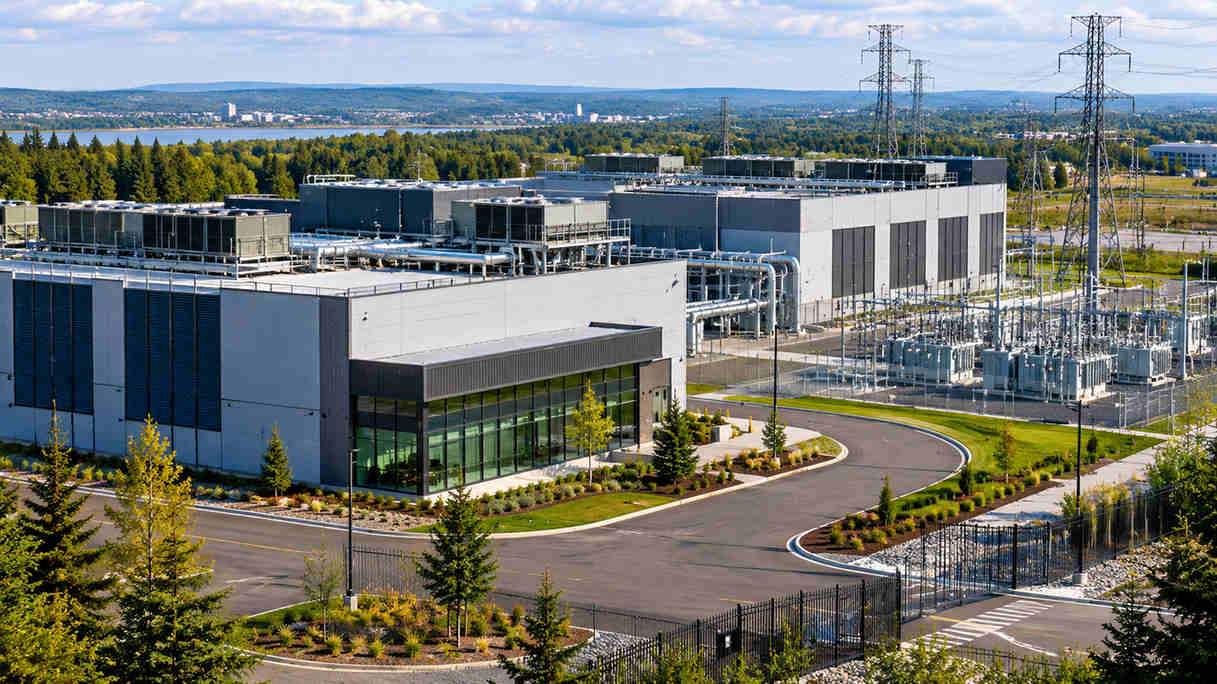
Data centres are becoming an important part of Canada's commercial real estate market. Artificial intelligence, cloud computing, online services and digital storage require specialised buildings capable of housing thousands of servers and supporting substantial electricity demand.
This creates a different investment opportunity from traditional warehouses or office buildings. Developers need suitable industrial land, reliable electricity, fibre connections, cooling infrastructure and permissions before construction can begin.
Colliers reported approximately 1,415 MW of commissioned Canadian data centre capacity in October 2026, alongside at least 5.5 GW of named planned and under-construction capacity. The figures indicate considerable development interest, although proposed capacity should not be confused with operating infrastructure.
Which Canadian Regions Could Offer Opportunities in 2027?
Alberta: Alberta has emerged as an important destination for large-scale AI infrastructure. Its provincial strategy focuses on electricity generation, sustainable cooling and attracting investment. Meta's proposed Sturgeon County campus, representing an announced investment exceeding CAD $13 billion, illustrates the scale of development being considered.
For property investors, the opportunity may extend beyond owning a completed facility. Industrial land, power-related infrastructure and supporting development services could also attract interest. However, projects must demonstrate that electricity supply and construction schedules are achievable.
Ontario: Toronto remains Canada's primary data centre market. Existing operators, enterprise customers and established network connections provide advantages. Locations around Toronto and surrounding municipalities may interest developers seeking proximity to customers and digital infrastructure.
Quebec: Montreal and Quebec City benefit from established facilities and electricity infrastructure. Expansion opportunities may exist around existing data centre campuses, although electricity allocation and regulatory decisions remain important considerations.
Saskatchewan and British Columbia: These provinces represent emerging development opportunities. Saskatchewan has attracted attention through sovereign AI infrastructure plans, while British Columbia has projects involving regional digital infrastructure. Their long-term potential depends on local power availability, network access and approvals.
Why Does Electricity Access Matter More Than Cheap Land?
A large industrial property may appear attractive because of its purchase price. However, a data centre cannot operate without dependable electricity. A facility requiring 100 MW of power needs a confirmed supply arrangement, appropriate substations and sufficient transmission capacity. Grid upgrades can introduce substantial costs and delay construction.
Investors should request documented electricity capacity, connection timelines and details of who pays for additional infrastructure. A proposed project with no realistic power delivery schedule should not be valued like an operational facility.
What Should Investors Examine Before Buying Data Centre Land?
Land selection requires a specialised assessment. Buyers should examine zoning permissions, environmental conditions, fibre routes, road access, water availability and opportunities for future expansion.
Cooling technology deserves particular attention. Some facilities use substantial water resources, while others employ closed-loop systems or alternative cooling arrangements. Local water conditions and environmental approvals can affect development feasibility.
Financial due diligence is equally important. Investors should assess construction budgets, financing commitments, prospective tenants, lease agreements and the developer's ability to complete each construction phase.
An announced project, a permitted development and an operating data centre represent three different levels of investment risk.
What Could Slow Canada's Data Centre Expansion?
Electricity demand is one of the biggest uncertainties. The Canada Energy Regulator's 2026 outlook includes several possible data centre demand scenarios, reflecting uncertainty about how quickly the industry will expand.
Government policy also matters. Canada's Responsible Data Centre Development Principles expect projects to protect electricity ratepayers, minimise water use, engage communities and create lasting local benefits.
Other challenges include rising construction costs, equipment availability, financing conditions, environmental reviews and delays in connecting facilities to power networks.
TwikUp's Perspective: Where Could Investors Look Next?
TwikUp's view is that 2027 opportunities may emerge around established digital infrastructure markets and selected emerging development corridors. Alberta deserves particular attention because of its large project pipeline, while Ontario and Quebec retain advantages that new markets may take years to develop.
However, investors should avoid purchasing land solely because a major technology company has announced a project nearby. The stronger investment case comes from verified electricity access, suitable zoning, fibre connectivity and credible customer demand.
Readers interested in the wider AI infrastructure investment cycle can also explore TwikUp's analysis of AI infrastructure spending and technology investment.
For Canadian property investors, data centres could become an increasingly important specialised real estate category. The most attractive opportunities will likely depend on development readiness rather than announcements alone.
Disclaimer
This article is for general educational and informational purposes only. It does not constitute financial, legal, tax or investment advice. Data centre developments involve significant capital requirements, electricity and water constraints, regulatory approvals, construction risks and potential tenant concentration. Readers should obtain independent legal, technical, environmental and financial advice before investing.