
Key Takeaways
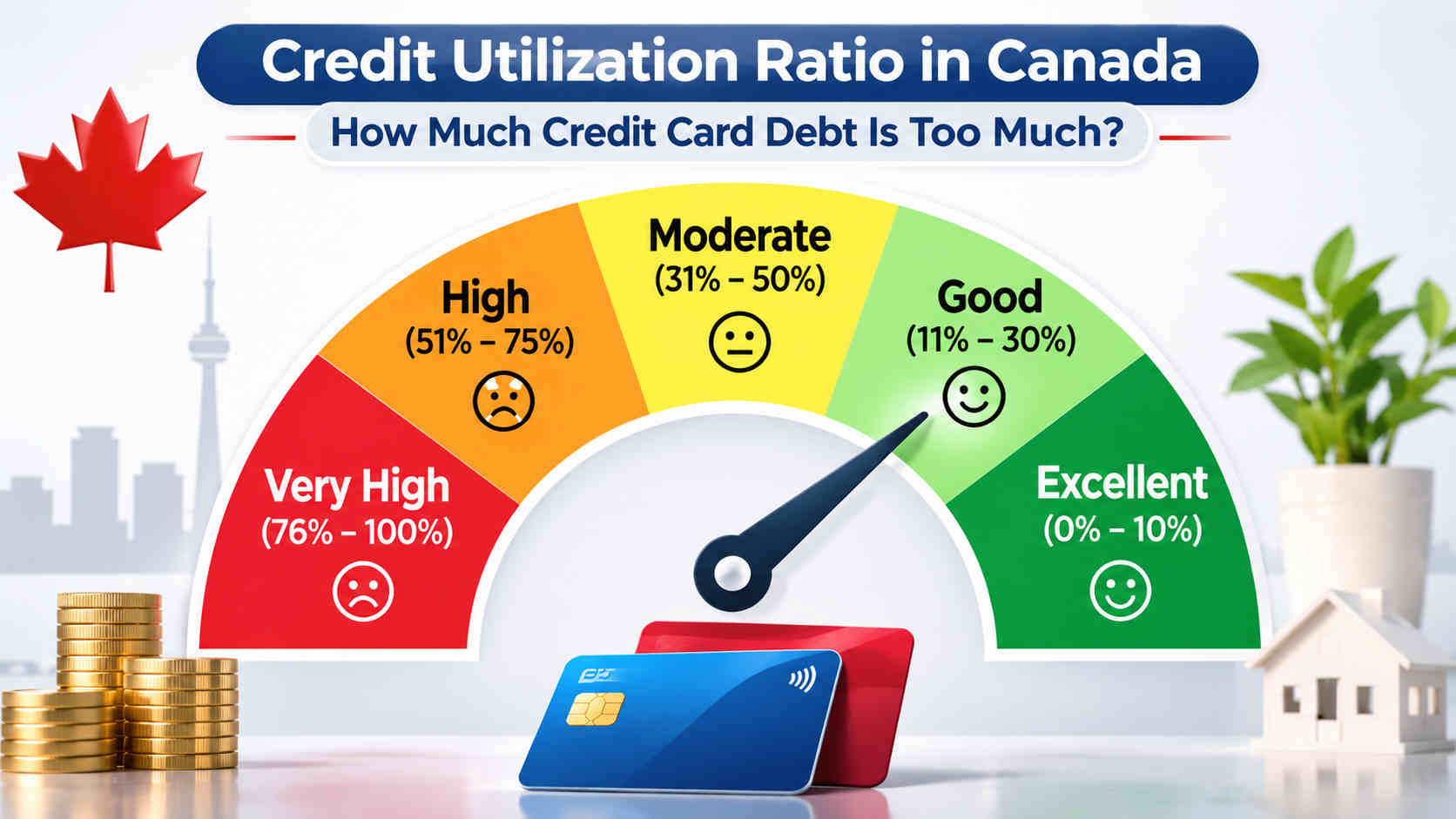
- The FCAC recommends using less than 30% of your total available credit, although lower utilization may be preferable.
- Your overall credit usage and the balance on individual cards can both matter when credit scores are calculated.
- Paying your statement balance on time protects you from interest, while managing reported balances can help control utilization.
What Is a Credit Utilization Ratio?
Your credit card limit tells you how much you can borrow. Your credit utilization ratio shows how much of that available credit you are actually using.
In Canada, the Financial Consumer Agency of Canada (FCAC) recommends trying to use less than 30% of your total available credit. This is a practical guideline for managing credit, not a guaranteed threshold that determines whether your score will rise or fall.
For example, if your credit card has a $5,000 limit and the balance used for the calculation is $1,000, your utilization is 20%. That is below the FCAC's recommended level. The important point is that lenders and credit bureaus can view heavy credit use as a sign that you may be relying too much on borrowed money, even when you have been making payments regularly.
How Do You Calculate Credit Utilization?
The calculation is straightforward:
Credit Utilization Ratio = (Credit Card Balance ÷ Credit Limit) × 100
Consider a Canadian cardholder with two credit cards:
- Card A: $1,500 balance on a $5,000 limit
- Card B: $500 balance on a $5,000 limit
Their combined balance is $2,000, while their total available credit limit is $10,000.
The calculation is:
($2,000 ÷ $10,000) × 100 = 20%
The overall utilization ratio is therefore 20%.
However, individual card usage tells another part of the story. Card A is using 30% of its limit, while Card B is using 10%.
Equifax Canada explains that both overall utilization and individual-account utilization may be considered in credit score calculations. This means one heavily used card can still deserve attention even when the combined figure looks comfortable.
Is 30% Credit Utilization Too Much?
The 30% guideline is a useful starting point, but it should not be treated as a strict scoring rule. For someone with a $5,000 credit limit, staying below 30% means keeping the relevant balance under $1,500. A lower balance can provide an additional cushion, particularly if unexpected purchases or recurring expenses increase spending during the month.
Here is how different balances compare:
| Credit limit | 10% usage | 30% usage |
|---|---|---|
| $2,000 | $200 | $600 |
| $5,000 | $500 | $1,500 |
| $10,000 | $1,000 | $3,000 |
| $15,000 | $1,500 | $4,500 |
These figures are planning examples, not official credit score bands. Canadian credit bureaus do not publish one universal utilization percentage that guarantees a particular score. The sensible objective is to avoid consistently using most of your available credit.
Does Paying Your Full Credit Card Bill Help?
Yes, paying your full statement balance by the payment due date is an important habit because it generally helps you avoid interest on ordinary purchases when your card's interest-free grace period applies. However, there is a difference between the amount you eventually pay and the balance that may appear on your credit report.
The FCAC warns that high monthly credit use can matter even when someone pays the full amount every month. Card issuers generally send account information to credit bureaus periodically, so the balance reported may not always match the amount remaining after your payment.
If you regularly spend heavily on a card, making an additional payment before the issuer reports the account balance may help reduce the figure reported. Check with your card issuer about its reporting schedule rather than assuming every company reports on the statement date. You do not need to carry debt or pay interest simply to build a credit history.
How Can You Lower Your Credit Utilization?
A few practical adjustments can make credit usage easier to manage. First, pay down high-interest credit card balances instead of allowing them to grow from month to month. Paying more than the minimum also reduces the amount of interest that can accumulate.
Second, consider making more frequent payments if your spending is high. A payment halfway through the billing cycle can reduce the balance before the next reporting update.
Third, avoid closing an older credit card without considering the consequences. Closing an account can reduce your total available credit and increase your overall utilization if other card balances remain. The FCAC also notes that keeping an older account open may help preserve credit history.
A credit limit increase can reduce the percentage used if your spending stays unchanged. However, requesting one only makes sense if you can resist the temptation to borrow more. Finally, check your credit reports from Equifax and TransUnion. Reviewing your own report does not lower your credit score, and it can help you identify inaccurate balances or unfamiliar accounts.
What Else Affects Your Canadian Credit Score?
Credit utilization is important, but it is not the only factor lenders consider. Payment history is particularly important. Missed payments, outstanding debts, collections, account age and recent credit applications can also influence credit scores.
The FCAC explains that different credit bureaus and lenders use different scoring formulas. TransUnion also identifies payment history, account balances, utilization, credit history, credit mix and recent credit activity among the factors that can affect its scores.
This is why lowering a card balance does not guarantee an immediate increase in your score. Other information on your credit file may influence the result.
TwikUp's Perspective
Credit utilization is not simply about keeping a credit card balance below a particular percentage. It is part of a wider financial habit: understanding your limits before making financial decisions.
The same discipline applies to registered savings accounts. Canadians managing multiple financial accounts should understand how transactions across different institutions can affect their overall financial position. For example, our guide to TFSA over-contribution penalties in Canada explains how exceeding available contribution room can trigger a monthly CRA tax, even when the excess happens unintentionally.
Both situations highlight why keeping track of balances, available limits and account activity matters. A credit card limit is not extra income, just as opening another TFSA does not create additional contribution room.
The smarter approach is to use financial products with a clear understanding of their limits, costs and responsibilities. A healthy credit profile should support financial stability, not encourage unnecessary borrowing.
Disclaimer
This article is for educational and informational purposes only. It does not constitute personalized financial or credit advice. Credit scoring methods differ between credit bureaus and lenders, and individual results may vary.