
Key Takeaways
- Flagpoling let temporary residents get work and study permits processed same-day at a border crossing; the CBSA processed over 69,300 flagpolers in 2023–24.
- Canada ended flagpoling for work and study permit applications, renewals and biometrics on December 23, 2024, under the Border Plan.
- Narrow exemptions remain (US citizens and permanent residents, certain FTA professionals, some truck drivers); everyone else must apply to IRCC online.
For years, the fastest immigration office in Canada was a bridge
"Flagpoling" was the nickname for a perfectly legal shortcut: a temporary resident in Canada would drive to a US border crossing, formally leave Canada, turn around, and re-enter — because at a port of entry, a border officer could process a work or study permit application on the spot, in hours instead of the months an online application could take. The Canada Border Services Agency defines flagpolers as temporary residents who leave Canada for the United States or St. Pierre and Miquelon and return to access immigration services at the border.
At its peak it was not a niche trick. By the CBSA's count, officers processed more than 69,300 flagpolers between April 2023 and March 2024, concentrated in the Pacific, Southern Ontario and Quebec regions — lineups of permit applicants at land crossings, consuming officer time meant for the border itself.
How Ottawa shut it down
The closure came in two steps. On June 21, 2024, post-graduation work permits were removed from ports of entry entirely. Then, under Canada's Border Plan, the broader ban took effect at 11:59 p.m. ET on December 23, 2024: border officers stopped accepting work permit applications and renewals, study permit applications and renewals, and biometrics from flagpolers. Visitor records and temporary resident permits were not affected.
The stated logic was straightforward — border services are for the border. Work and study permits are IRCC's job, and every flagpoler processed at a booth was an applicant queue-jumping the online system while officers did paperwork instead of screening.
Who can still do it
The ban has narrow exemptions. US citizens and lawful permanent residents can still seek these services at a port of entry, as can certain free-trade-agreement professionals and technicians (under CUSMA and the Chile, Korea, Panama, Colombia and Peru agreements) and their spouses in some cases. International truck drivers who hold a work permit, kept their status, and applied to renew before leaving Canada are also exempt, as is anyone with a pre-existing CBSA appointment.
Everyone else gets redirected: apply to IRCC online, and apply before your current status expires so you keep maintained status while you wait. Showing up at the border anyway now earns you a trip back to the website — and, for the unprepared, the risk of being refused entry to the US or complicating your Canadian status in the process.
Why it still matters
Flagpoling's end is a case study in how Canada now manages its temporary-resident system: close the fast lane, push everyone into one digital queue, and accept longer waits as the price of control. For employers who once sent workers to the border for same-day permits — and for the workers themselves — the planning horizon for any permit change is no longer an afternoon's drive. It is IRCC's processing clock, and it starts months earlier than it used to.
The Twikup Take
Flagpoling died because it worked too well: a loophole so popular it became a parallel immigration system with lineups. What's left is fairer — one queue for everyone — and slower, which was rather the point. The border is a border again; the paperwork moved back online, where Ottawa can count it, cap it, and control it.
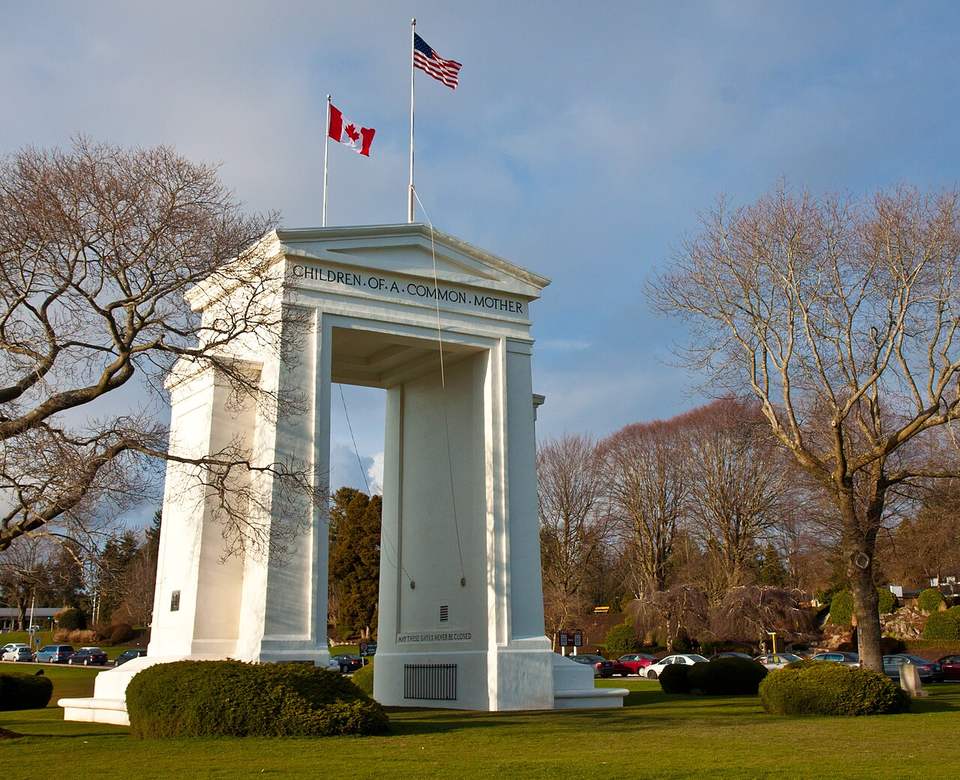
Image: The Peace Arch at the Canada–US border by Abhinaba Basu, CC BY 2.0.