
Key Takeaways
- The Agri-Food Pilot ended May 14, 2025; IRCC accepts no new applications but continues processing applications accepted before that date
- It required 12 months (1,560 hours) of eligible in-Canada agri-food work on an LMIA-based permit, a qualifying job offer, and CLB 4 language
- IRCC states no successor program on its pages
First, the status — because old guides still rank on Google
IRCC's own page for the program is now titled "Closed: Agri-Food Pilot." Its wording is exact: "We're no longer accepting new applications. The Agri-Food Pilot ended on May 14, 2025. We'll continue to process applications we accepted before this date." The pilot launched on May 15, 2020, was extended once, and IRCC states no successor program on its pages. Anyone selling you a "new Agri-Food application" is selling something that does not exist.
How it worked
The pilot gave experienced agri-food workers a direct route to permanent residence. In its final design, IRCC accepted a maximum of 2,750 complete applications a year (the final intake, January 1 to May 14, 2025, was prorated to 1,010).
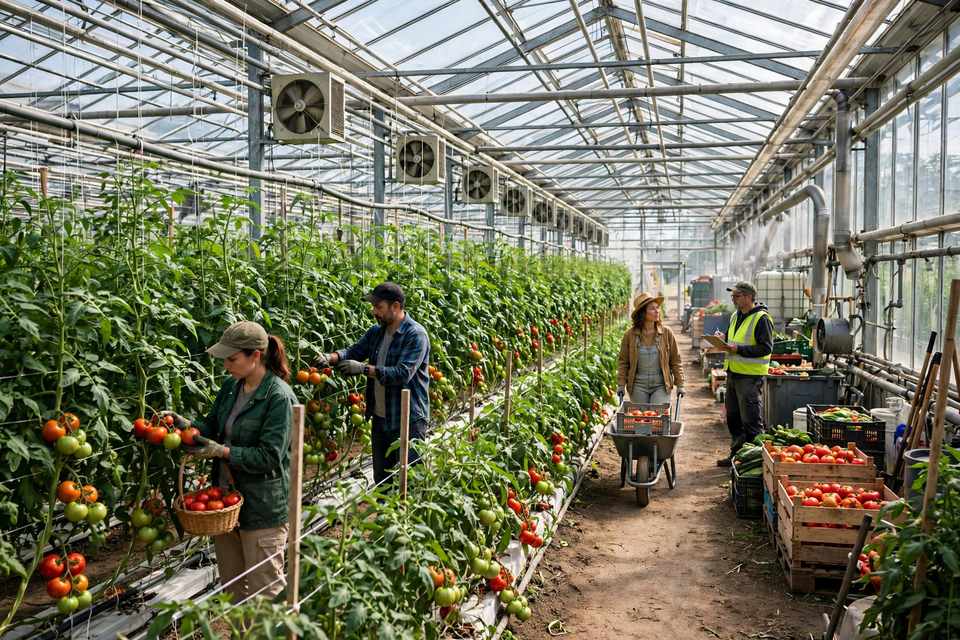
To qualify, an applicant needed 12 months (1,560 hours) of full-time, non-seasonal work in Canada within the previous three years, in an eligible occupation-and-industry pairing — meat processing (NAICS 3116) and greenhouse, nursery, livestock and mushroom production — gained on an LMIA-based work permit. They also needed a full-time, non-seasonal, indeterminate job offer outside Quebec at or above the Job Bank median wage, CLB level 4 in all four language abilities, a high-school-equivalent education, and settlement funds of 50% of the low-income cut-off ($15,263 for a single applicant on the July 2025 table) unless already working in Canada. One nuance many guides missed: applicants already in Canada could meet either the job-offer or the education requirement; applicants outside Canada needed both. The federal fees were $950 processing plus $575 right of permanent residence — $1,525 for a principal applicant.
The Twikup Take
The pilot's closure leaves a real gap: the workers it served — meat plant, greenhouse and livestock staff already in Canada on LMIA permits — have no dedicated PR stream of their own now, and fall back on Express Entry and provincial programs designed for different profiles. If your application was accepted before May 14, 2025, it is still being processed; if it wasn't, no consultant can reopen a closed door.
Image: Illustrative image.