
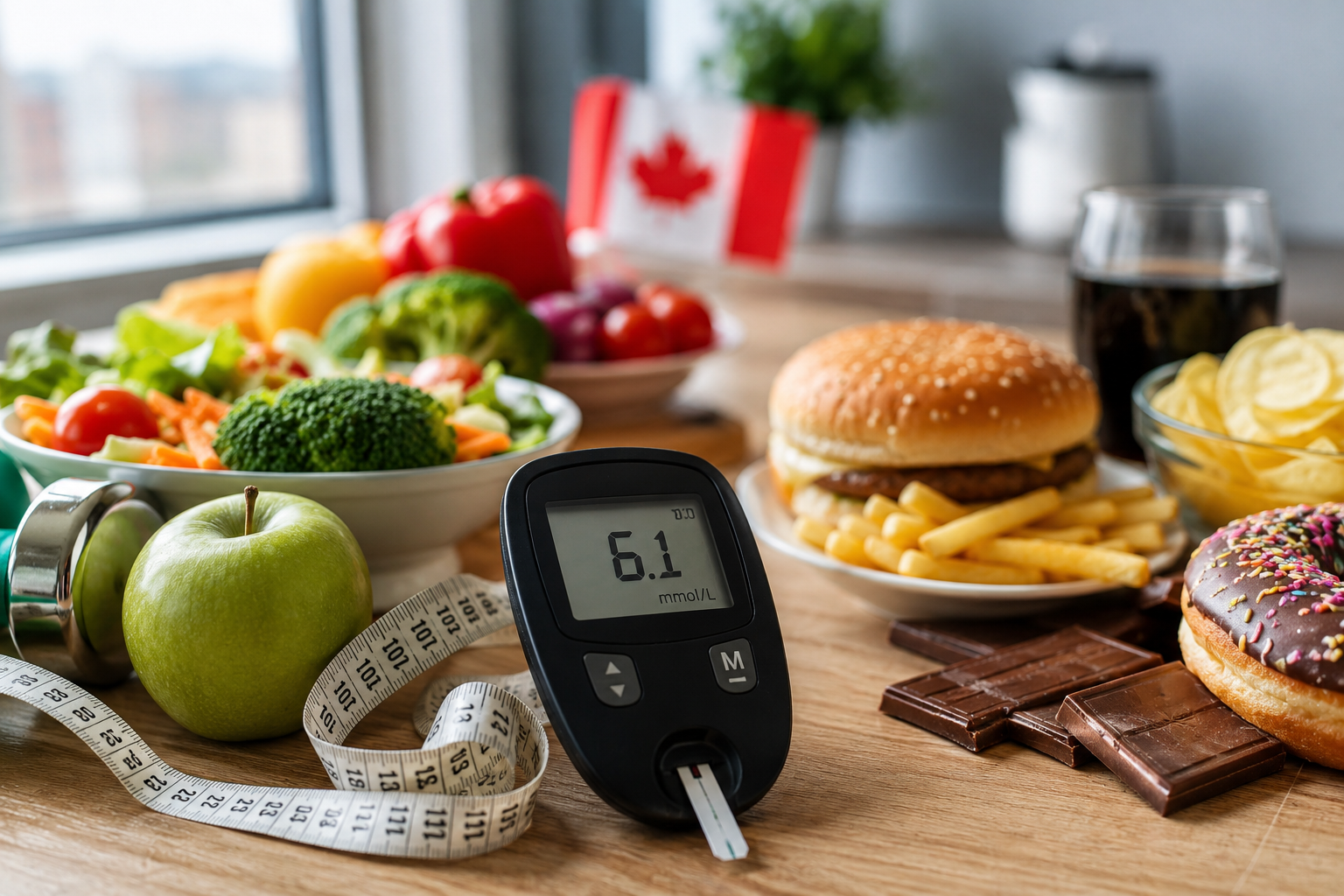
Why more Canadians are being diagnosed with prediabetes is both a testing story and a biology story.
Rising diagnoses: what happened and what it means now
Routine screening in primary care, more frequent HbA1c and fasting-glucose tests, has expanded case finding, so people with mild dysglycemia are showing up earlier in the clinical record. At the same time, clinicians are seeing a real uptick in insulin resistance across patients, not just more recorded labels.
The drivers behind the trend
- Screening expansion: Primary care now tests adults with modest risk factors, elevated BMI, hypertension, family history, increasing early detection rates.
- Visceral adiposity: Growth in abdominal fat is the most consistent biological precursor to insulin resistance and later diabetes.
- Diet shifts: Higher intake of ultra-processed foods and refined carbs raises chronic glycemic load and metabolic stress.
- Physical inactivity: Reduced muscle activity lowers glucose uptake and worsens insulin sensitivity.
- Amplifiers: Chronic stress, poor sleep, and circadian disruption worsen glucose regulation but usually act as modifiers rather than primary causes.
- Aging: Declining insulin sensitivity with age increases baseline population risk.
Why this matters beyond statistics
The current rise in recorded prediabetes reflects two overlapping realities: clinicians are detecting earlier stages of dysglycemia, and the population's metabolic baseline is deteriorating. That duality changes how we interpret trends because higher diagnosis rates do not automatically signal only better medicine; they also flag a growing public health burden.
What clinicians and policymakers should watch next
- Screening scope: Monitor whom primary care screens to ensure resources target people with the highest preventable risk.
- Prevention focus: Prioritize interventions that reduce visceral fat through diet quality, reduced ultra-processed food intake, and strength plus aerobic activity.
- System supports: Integrate stress, sleep, and circadian health into prevention programs as amplifying factors.
- Surveillance: Track both testing rates and objective markers of population metabolic health to separate detection effects from true prevalence shifts.
FAQ: Brief insights on prediabetes trends
Why are diagnoses increasing?
Partly because testing has broadened; partly because population-level insulin resistance is rising and both are true simultaneously.
Is this just better detection?
No. Expanded screening finds earlier cases, but increased visceral adiposity and lifestyle trends have raised baseline metabolic risk.
What most often precedes diabetes?
Progressive insulin resistance, commonly linked to rising abdominal fat, is the most consistent precursor.
Can lifestyle changes reverse prediabetes?
Yes. Reducing visceral fat through improved diet and increased activity reliably improves insulin sensitivity.
Related Perspectives
Public health nutrition Primary care screening protocols Physical activity and metabolic health