
Toronto's municipal election is one week away — Monday, October 26 — and the mayoral race that looked like a runaway a month ago has tightened into a genuine contest.
The basics
Election day is Monday, October 26, from 10 a.m. to 8 p.m. Torontonians vote for mayor, their ward councillor, and a school board trustee. Advance voting (October 6–11) and mail-in voting have already closed, so election day — or voting by proxy — is now the only way left to cast a ballot.
The scale is enormous: roughly 2.14 million eligible voters, 361 certified candidates (53 for mayor, 190 for councillor, 118 for school board trustee), and more than 1,350 voting places across the city's 25 wards.
To vote you must be a Canadian citizen, at least 18, and a Toronto resident (or own or rent property in the city). Bring one piece of ID showing your name and Toronto address — a utility bill, bank statement, or lease works; a passport alone does not.
A two-person race — and it's close
The mayoral contest is now effectively between incumbent Olivia Chow and former councillor Brad Bradford, after former federal cabinet minister Chris Alexander suspended his campaign on October 6.
Polls released in the last two weeks all show Chow ahead, but the gap has narrowed sharply:
- Pallas Data (Oct 14): Chow 52%, Bradford 46% — a 6-point lead
- Nanos Research for CP24/CTV (Oct 8–10): Chow 51%, Bradford 47% among decided voters — a 4-point lead
- Scope Research (Oct 6): Chow 44%, Bradford 41% — a 3-point lead, with 11% undecided (51%–47% among decided voters)
- Mainstreet Research (Oct 6–7): Chow 47%, Bradford 44% — a 3-point lead
With roughly one in six voters still undecided in some surveys, the final week could still move the result in either direction.
What's deciding it
When voters are asked to name their top issue unprompted, cost of living leads (23%), followed by housing affordability (19%), crime and public safety (17%), and traffic and congestion (13%), according to Liaison Strategies polling.
The campaigns have sharpened around those anxieties. Bradford has pitched signal priority for the entire streetcar network — green lights that keep streetcars moving through traffic — while Chow is running on her record as incumbent mayor.
Why this one matters
Municipal elections decide the things that touch daily life most directly: property taxes, transit, road maintenance, parks, libraries, and policing. Turnout in Toronto municipal elections has historically been low — the 2022 race drew about 30% of eligible voters — so a small shift in who shows up can decide the mayor's office.
If you live in Toronto and haven't voted yet: find your voting place through the City's MyVote tool, bring your ID, and vote on Monday, October 26, between 10 a.m. and 8 p.m.
Sources:
- City of Toronto — Fact Sheet: 2026 Toronto Municipal Election
- City of Toronto — Key Election Dates
- Scope Research — October 6 Toronto poll
- Pallas Data — "Chow 52%, Bradford 46% as Mayoral Race Tightens" (Oct 16, 2026)
- Nanos Research — "Toronto Decides: Chow's cushion shrinks as Bradford closes in" (Oct 13, 2026)
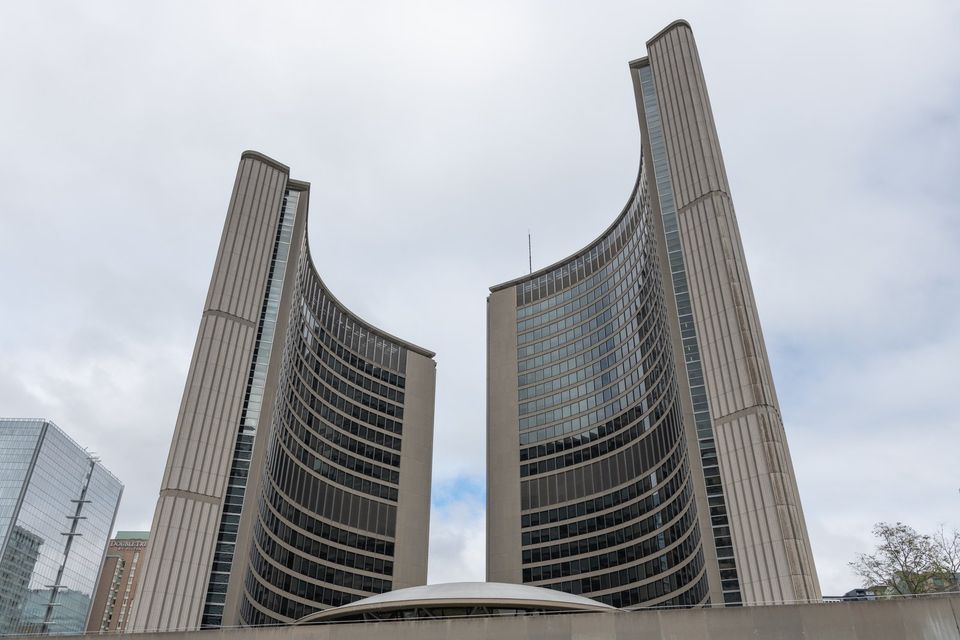
Photo: Toronto City Hall, Wikimedia Commons, CC BY-SA 4.0.