
Key Takeaways
- Canada and Germany are holding high-level diplomatic talks in Ottawa on September 25, 2026.
- A signing ceremony and media availability is scheduled for 11:30 a.m. ET.
- The discussions cover security, Ukraine, trade, energy, critical minerals, artificial intelligence and broader Canada-Germany cooperation.
Ministers Meet in Ottawa
Minister Johann Wadephul is visiting Canada from September 24 to 25, 2026. During his visit, he is scheduled to meet Minister Anita Anand in Ottawa to discuss bilateral, regional and global issues.
According to Global Affairs Canada, the ministers are expected to discuss support for Ukraine, Euro-Atlantic security, developments in the Middle East, economic security, critical minerals, artificial intelligence and cooperation through the G7, NATO and other multilateral forums.
The two ministers are also expected to explore opportunities to further strengthen the long-standing partnership between Canada and Germany.
Signing Ceremony Scheduled for 11:30 a.m. ET
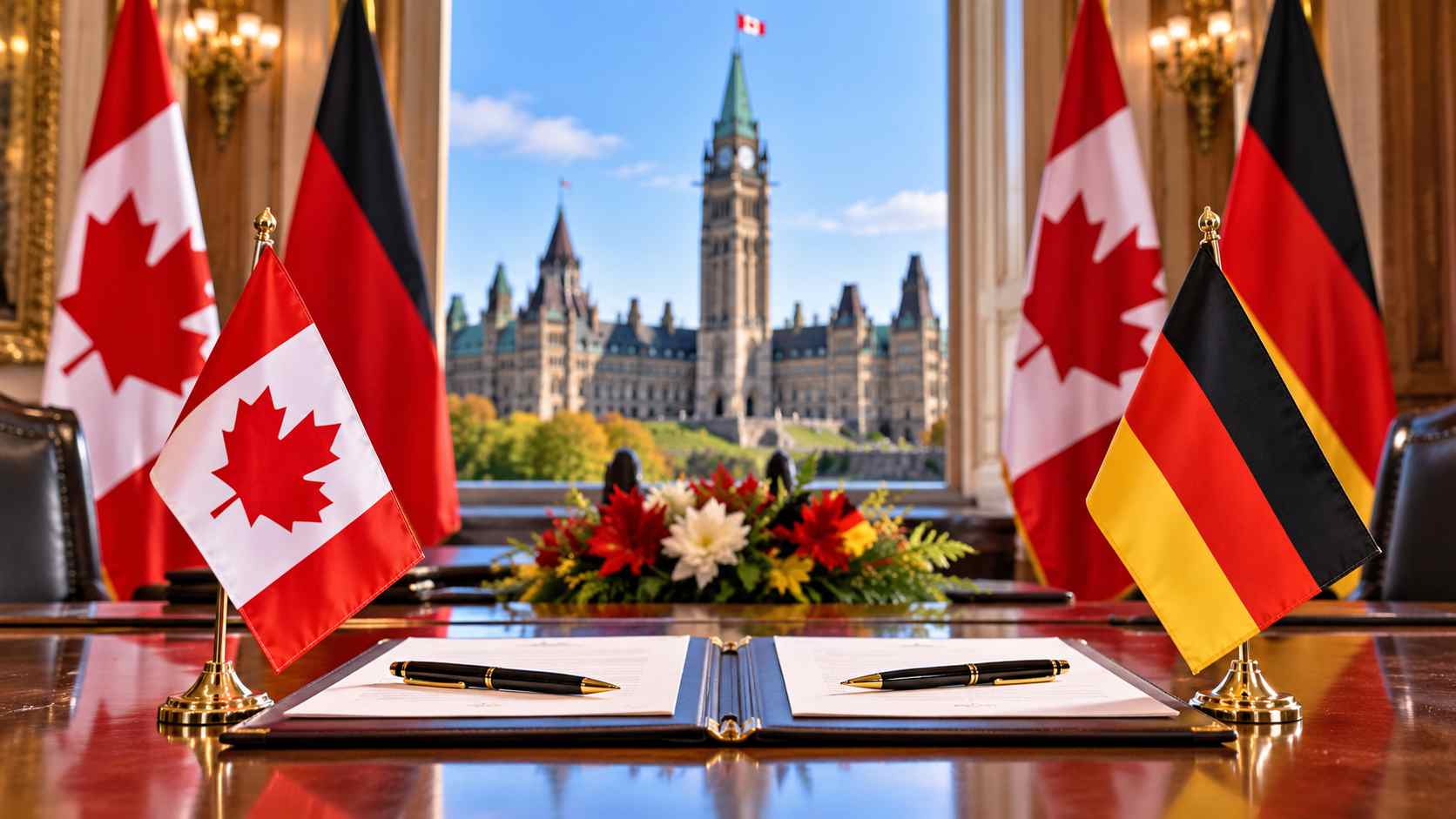
Global Affairs Canada has scheduled a signing ceremony and media availability for 11:30 a.m. ET on September 25.
The ceremony will follow the ministers' meeting. Global Affairs Canada has invited media representatives to attend, with registered media required to arrive by 11 a.m. ET.
At the time of publication, the official media advisory confirms that a signing ceremony will take place, but it does not publicly identify the specific agreement being signed.
Canada and Germany Mark 75 Years of Diplomatic Relations
The meeting comes as Canada and Germany mark the 75th anniversary of diplomatic relations in 2026.
Both countries describe their relationship as a close transatlantic partnership. They cooperate through bilateral channels as well as through institutions and groupings including NATO, the G7 and the European Union.
Germany is also Canada's largest trading partner within the European Union.
Trade and Economic Cooperation Remain Important
Economic relations are another major part of the bilateral relationship.
Global Affairs Canada reports that Canada-Germany merchandise trade reached $34.2 billion in 2025. The department also notes that bilateral merchandise trade has grown significantly since the provisional application of the Comprehensive Economic and Trade Agreement, or CETA, in 2017.
The ministers' discussions are therefore taking place against a broader economic relationship that includes trade, investment, energy and supply-chain considerations.
Critical Minerals and Energy on the Agenda
Critical minerals and energy security are among the areas identified by Global Affairs Canada as shared priorities for Canada and Germany.
For Canada, cooperation in these areas connects its resource base with European economic and industrial requirements. For Germany, deeper partnerships with reliable international suppliers remain relevant to economic security and industrial resilience.
The official agenda also includes climate action, research and innovation, providing additional areas for bilateral cooperation.
Artificial Intelligence and Innovation
Artificial intelligence is another subject included in the ministers' discussions.
Canada and Germany have previously identified digital innovation, research and technology as areas where cooperation can be strengthened. The September 25 meeting places artificial intelligence within a wider conversation about economic security, innovation and international cooperation.
The official announcement does not provide details about a specific AI agreement to be signed during today's ceremony.
Security and Support for Ukraine
Security remains a central part of the Canada-Germany relationship.
Both countries are NATO Allies and G7 members and have worked together on international security issues, including support for Ukraine.
The September 25 discussions are expected to cover Euro-Atlantic security and developments related to Ukraine, alongside other regional and global issues.
What the Signing Could Mean for Bilateral Relations
The scheduled signing ceremony provides a concrete point within a broader effort to strengthen Canada-Germany cooperation.
The two countries already maintain extensive relationships across trade, security, energy, critical minerals, climate action, research and innovation. A new agreement could add another formal mechanism for cooperation, depending on the details released after the ceremony.
For readers and businesses, the significance will depend on what the agreement actually covers and how it is implemented.
TwikUp's Perspective
The importance of today's Canada-Germany meeting extends beyond the scheduled signing ceremony. The official agenda shows that both countries are discussing several areas that directly affect economic and strategic cooperation, including trade, critical minerals, energy security, artificial intelligence and research.
The timing is also notable because Canada and Germany are marking 75 years of diplomatic relations in 2026. Their economic relationship has expanded significantly under CETA, while security cooperation has remained important through NATO and the G7.
However, the signing itself should be assessed after the agreement's details are officially released. The current Global Affairs Canada advisory confirms the ceremony but does not identify the agreement. Its practical impact will therefore depend on the commitments announced and their subsequent implementation.
What Happens Next?
The immediate development to watch is the 11:30 a.m. ET signing ceremony and media availability on September 25.
Once the Canadian and German governments publish the agreement and its details, the specific commitments can be assessed across trade, security, energy, critical minerals, artificial intelligence and other areas of bilateral cooperation.
For now, the confirmed development is that Canada and Germany are continuing high-level talks while preparing to formalize a new agreement during the Ottawa visit.