
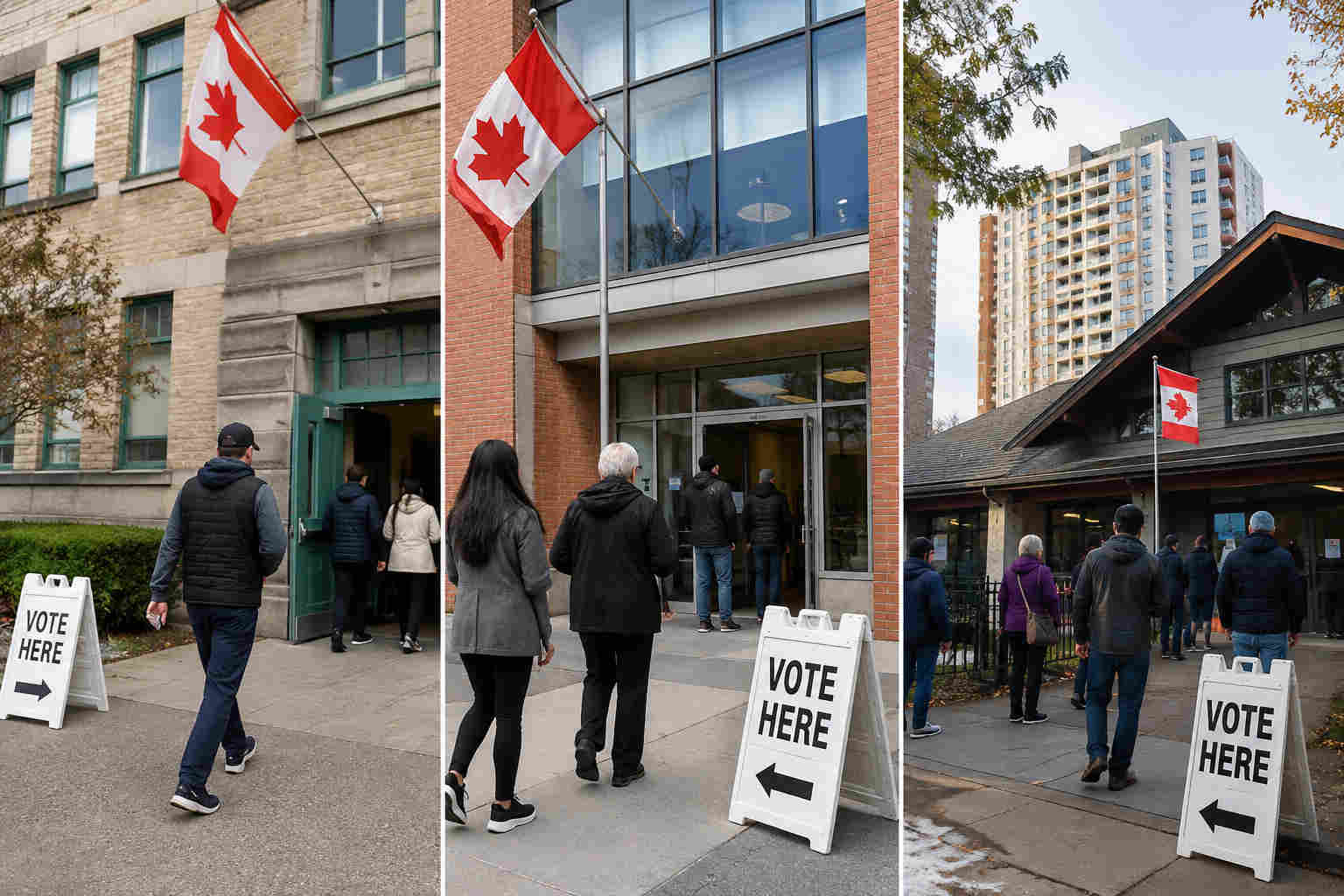
Key Takeaways
- Federal by-elections are being held today in three ridings across Ontario, Quebec and British Columbia.
- The three contests are Beaches–East York, Chicoutimi–Le Fjord and North Vancouver–Capilano.
- The results will determine who fills the three vacant House of Commons seats and will offer an indication of voter sentiment in the affected ridings.
Canada Votes in Three Federal By-Elections as Carney Faces Key Test
Canadian voters are heading to the polls today as federal by-elections take place in three ridings across the country.
The elections are being held on August 31, 2026, in Beaches–East York in Ontario, Chicoutimi–Le Fjord in Quebec and North Vancouver–Capilano in British Columbia.
The contests are being held to fill vacancies in the House of Commons.
Three Ridings Go to the Polls
The three federal by-elections cover three different regions of Canada.
Beaches–East York, Ontario
Voters in Beaches–East York are choosing a new member of Parliament in the Toronto-area riding.
The contest includes candidates representing several political parties, including the Liberal Party, Conservative Party, NDP, Green Party and People's Party, along with other candidates.
Chicoutimi–Le Fjord, Quebec
Voters in Chicoutimi–Le Fjord are also choosing a new federal representative.
The Quebec riding is one of the three electoral districts participating in today's by-elections.
North Vancouver–Capilano, British Columbia
The third contest is taking place in North Vancouver–Capilano in British Columbia.
Voters there are choosing among candidates from several political parties and affiliations.
Why the By-Elections Matter
By-elections do not determine the national government on their own, but they can provide an important snapshot of local voter sentiment.
For Prime Minister Mark Carney's government, the three contests offer an opportunity to assess how voters in different parts of the country are responding to the current political environment.
The results will also determine which parties gain or lose representation in the House of Commons.
Voting Takes Place Today
Elections Canada has confirmed that voting day is Monday, August 31, 2026.
Eligible voters can cast their ballots at their assigned polling stations.
Advance voting was also available before election day, while eligible electors had other options including voting at Elections Canada offices and by special ballot.
Candidates Represent Different Political Parties
The three races feature candidates from Canada's major federal political parties.
The Liberal, Conservative, NDP, Green and People's parties are among the political affiliations represented in the contests.
The candidates are competing to fill the parliamentary vacancies in their respective electoral districts.
What Happens After Voting?
Once polls close, Elections Canada will begin publishing preliminary results for the three ridings.
Results will be reported separately for each electoral district.
The final outcome will determine which candidates win the three vacant seats in the House of Commons.
A Look at the Political Significance
The by-elections are being closely watched because they take place under the current federal government led by Prime Minister Mark Carney.
However, the results should not be treated as a direct national election verdict.
By-elections are influenced by local candidates, riding-specific issues, turnout and local political dynamics.
The results can nevertheless provide useful information about how voters in these communities are responding to the political landscape.
Voter Turnout Will Be Important
Turnout could play an important role in the final results.
Federal by-elections generally attract fewer voters than a nationwide general election, meaning changes in turnout among different groups can have a noticeable effect on the outcome.
Campaign organisation and the ability of parties to mobilise supporters can therefore become particularly important.
The Three Contests at a Glance
| Riding | Province | Election Date |
|---|---|---|
| Beaches–East York | Ontario | August 31, 2026 |
| Chicoutimi–Le Fjord | Quebec | August 31, 2026 |
| North Vancouver–Capilano | British Columbia | August 31, 2026 |
What to Watch Tonight
The biggest focus will be on which parties capture the three vacant seats.
Attention will also be on voter turnout and the size of the winning margins.
Because the three ridings are located in different provinces, their results could offer different perspectives on local political sentiment across Canada.
The Bigger Picture
Today's federal by-elections are an important part of Canada's parliamentary process.
Three communities are choosing new representatives while political parties compete for seats in the House of Commons.
The results will not change the federal government by themselves, but they will determine the political representation of Beaches–East York, Chicoutimi–Le Fjord and North Vancouver–Capilano.
TwikUp Insight
Canada's three federal by-elections are taking place today across Ontario, Quebec and British Columbia.
The contests will decide who fills three vacant House of Commons seats and provide an early look at voter sentiment in the affected communities under Prime Minister Mark Carney's government.