
Key Takeaways
- Canada and Vietnam have formally elevated their relationship to a Strategic Partnership.
- The partnership covers eight broad areas, including trade, AI, energy, supply chains, defence, food security and education.
- The two countries also expanded their air transport agreement to allow direct passenger and cargo flights between Canada and Vietnam.
Canada and Vietnam Launch New Strategic Partnership as Economic Ties Deepen
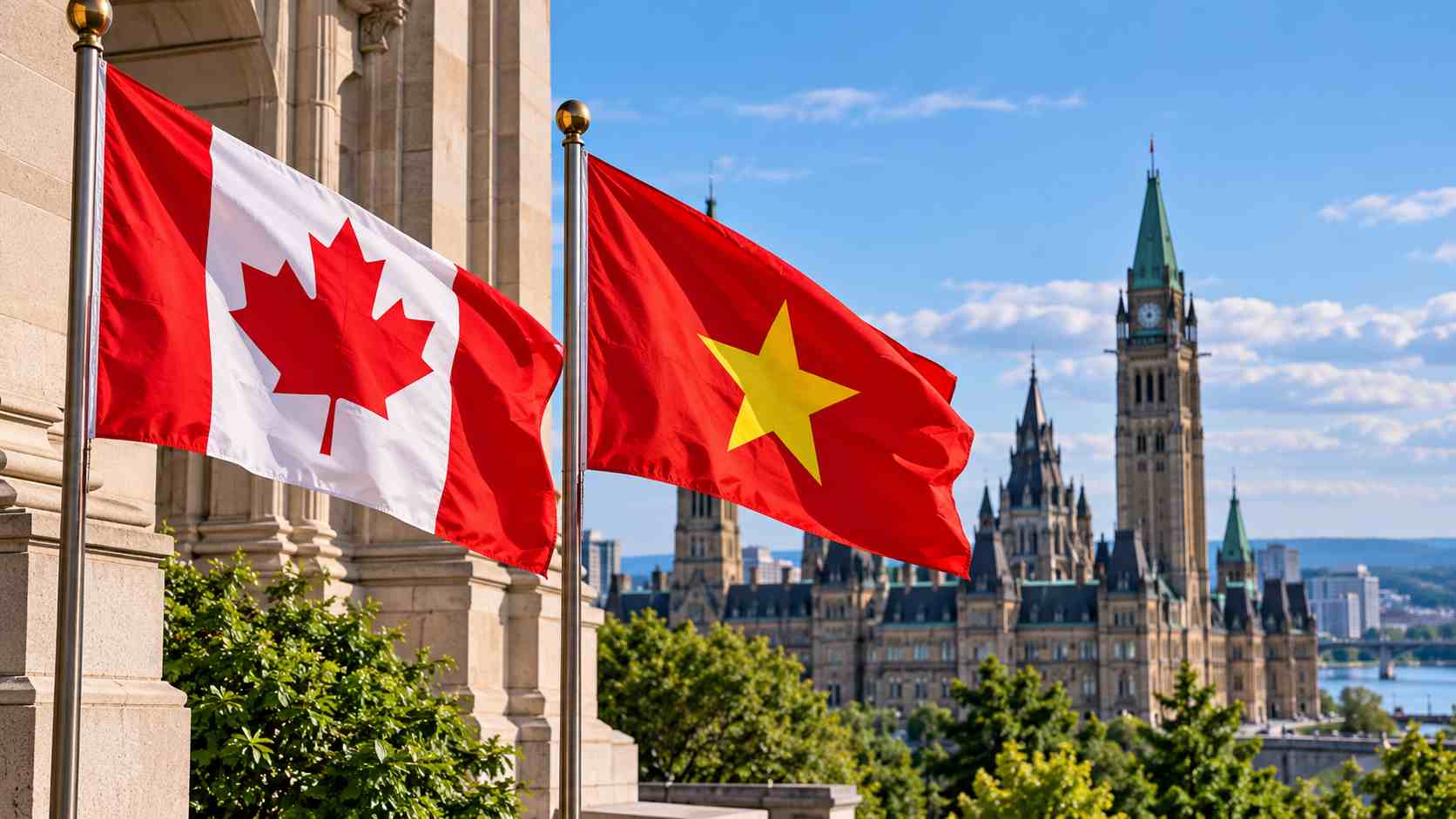
Canada and Vietnam have elevated their bilateral relationship to a Strategic Partnership following Vietnamese General Secretary and President Tô Lâm’s state visit to Canada.
Prime Minister Mark Carney and Tô Lâm met in Ottawa on September 24, where they discussed ways to expand trade, investment, technology, energy, transportation and other areas of cooperation.
The new partnership creates a broader framework for cooperation between the two countries and builds on their existing Comprehensive Partnership established in 2017.
Canada and Vietnam Establish Strategic Partnership
The two leaders issued a joint statement elevating Canada-Vietnam relations to a Strategic Partnership.
The framework is built around eight areas of cooperation:
- Bilateral, regional and multilateral cooperation
- Trade, investment, financial and economic cooperation
- Transportation, supply chains and infrastructure
- Digital transformation, artificial intelligence and advanced technologies
- Energy security, environment and sustainable growth
- Food security and agri-food
- Defence, security, maritime affairs, law enforcement and justice
- Education, culture and people-to-people ties
The Canadian government said the partnership is intended to support stronger economic cooperation, mutually beneficial growth and sustainable development.
Trade and Investment Become a Major Focus
Trade is one of the central elements of the new partnership.
Vietnam is Canada's largest trading partner within ASEAN. The Canadian government says bilateral merchandise trade has doubled over the past five years.
Both countries reaffirmed their support for the Comprehensive and Progressive Agreement for Trans-Pacific Partnership, or CPTPP, and agreed to strengthen cooperation through the Canada-Vietnam Joint Economic Committee.
Canada and Vietnam also reiterated support for the conclusion of a Canada-ASEAN Free Trade Agreement.
According to the Prime Minister's Office, the proposed Canada-ASEAN agreement is expected to add nearly $2 billion to Canada's GDP and create nearly 14,000 Canadian jobs once implemented.
Artificial Intelligence and Advanced Technology Included
The Strategic Partnership also places artificial intelligence and advanced technology among the areas where Canada and Vietnam intend to cooperate.
The two countries agreed to support research collaboration, talent mobility and innovation partnerships in areas including artificial intelligence, quantum technologies, semiconductors and STEM fields.
They also agreed to cooperate on innovation and start-up ecosystems.
For Canada, the technology component fits into its broader effort to expand economic relationships across the Indo-Pacific while supporting investment and technology partnerships.
Energy Cooperation Expands
Energy security is another major part of the agreement.
Canada and Vietnam welcomed the signing of a Memorandum of Understanding on Energy Cooperation and the Clean Energy Transition.
The two countries intend to expand cooperation involving conventional and clean energy, including LNG, hydrogen and renewable energy.
They also agreed to explore cooperation involving carbon management, energy-transition technologies and potential civil nuclear cooperation.
Canada and Vietnam further identified opportunities involving solar and wind power, including onshore and offshore wind resources.
Direct Flights Between Canada and Vietnam
The new partnership also brings a significant change to air connectivity.
Canada and Vietnam expanded their Air Transport Agreement to permit direct passenger and cargo flights between the two countries.
Transport Canada says the agreement allows up to 14 weekly passenger-combination flights per country and up to seven weekly all-cargo flights per country.
The agreement also provides fifth-freedom rights for all-cargo flights.
The Canadian government says improved air connectivity could support tourism, business travel, education, investment and the movement of goods.
Defence and Maritime Security Cooperation
The Strategic Partnership also includes defence and security cooperation.
Canada and Vietnam agreed to continue their Defence Policy Dialogue and Three-Year Work Plan on Defence Cooperation.
The two countries will explore cooperation in areas including humanitarian assistance and disaster response, maritime law enforcement, cyber security and maritime domain awareness.
They also agreed to explore cooperation involving military services, defence industries, science and technology.
Vietnam announced plans to establish a permanent Defence Attaché Office in Canada.
The countries also reaffirmed support for freedom of navigation and overflight and the peaceful settlement of disputes in accordance with international law.
Environment and Food Security
Environmental cooperation is another pillar of the new relationship.
Canada and Vietnam welcomed the signing of a Memorandum of Understanding on Enhanced Environmental Cooperation.
The agreement covers areas including climate change adaptation, methane, pollution, plastic pollution and nature.
The two countries also agreed to strengthen cooperation on food security and agri-food issues.
This includes technical cooperation involving agricultural standards and food safety.
Education and People-to-People Connections
The partnership also expands cooperation in education, research and people-to-people ties.
Canada and Vietnam agreed to strengthen collaboration involving universities, researchers, students and professionals.
Priority areas include artificial intelligence, semiconductors, life sciences and advanced manufacturing.
The two governments also highlighted existing scholarship and academic exchange programs supporting Vietnamese students and Canadian researchers.
The two countries agreed to explore additional cooperation involving tourism, culture and a potential social security agreement.
What This Means for Canada-Vietnam Relations
The new Strategic Partnership moves Canada-Vietnam relations beyond their existing Comprehensive Partnership framework.
Canada established diplomatic relations with Vietnam in 1973, while the two countries formally established their Comprehensive Partnership in 2017.
Vietnam is now Canada's largest trading partner within ASEAN, while Canada views Vietnam as an important partner under its Indo-Pacific Strategy.
The new framework brings trade, technology, energy, transportation, security and people-to-people ties into a broader bilateral agenda.
TwikUp's Perspective
The most significant aspect of the announcement is the breadth of the new partnership.
Rather than focusing on one sector, Canada and Vietnam have created a framework covering trade, AI, energy, supply chains, defence, food security, education and transportation.
From TwikUp's perspective, the economic component could be particularly important because Vietnam already occupies a significant position in Canada's ASEAN trade relationships. Expanding air connectivity and improving cooperation on supply chains could also make it easier for businesses, investors and travellers to operate between the two markets.
The technology component is another area to watch. Cooperation involving AI, semiconductors, quantum technologies and advanced manufacturing could create opportunities for research institutions and businesses in both countries.
At the same time, the Strategic Partnership represents a framework for cooperation rather than an immediate guarantee of specific investment or trade outcomes. Its longer-term significance will depend on how the agreements and commitments announced during the visit are implemented.
For TwikUp, the key development is therefore not simply that the two leaders met. It is that Canada and Vietnam have established a much broader structure through which future economic, technology, energy and security cooperation can develop.
What Happens Next?
Canada and Vietnam are expected to continue working through existing bilateral mechanisms and newly identified areas of cooperation.
The two countries will also continue discussions around the Canada-ASEAN Free Trade Agreement, while Vietnam prepares to host the 2027 APEC Economic Leaders' Meeting.
The expanded air transport agreement, energy cooperation, environmental initiatives and technology partnerships will provide additional areas to watch as the new Strategic Partnership develops.