
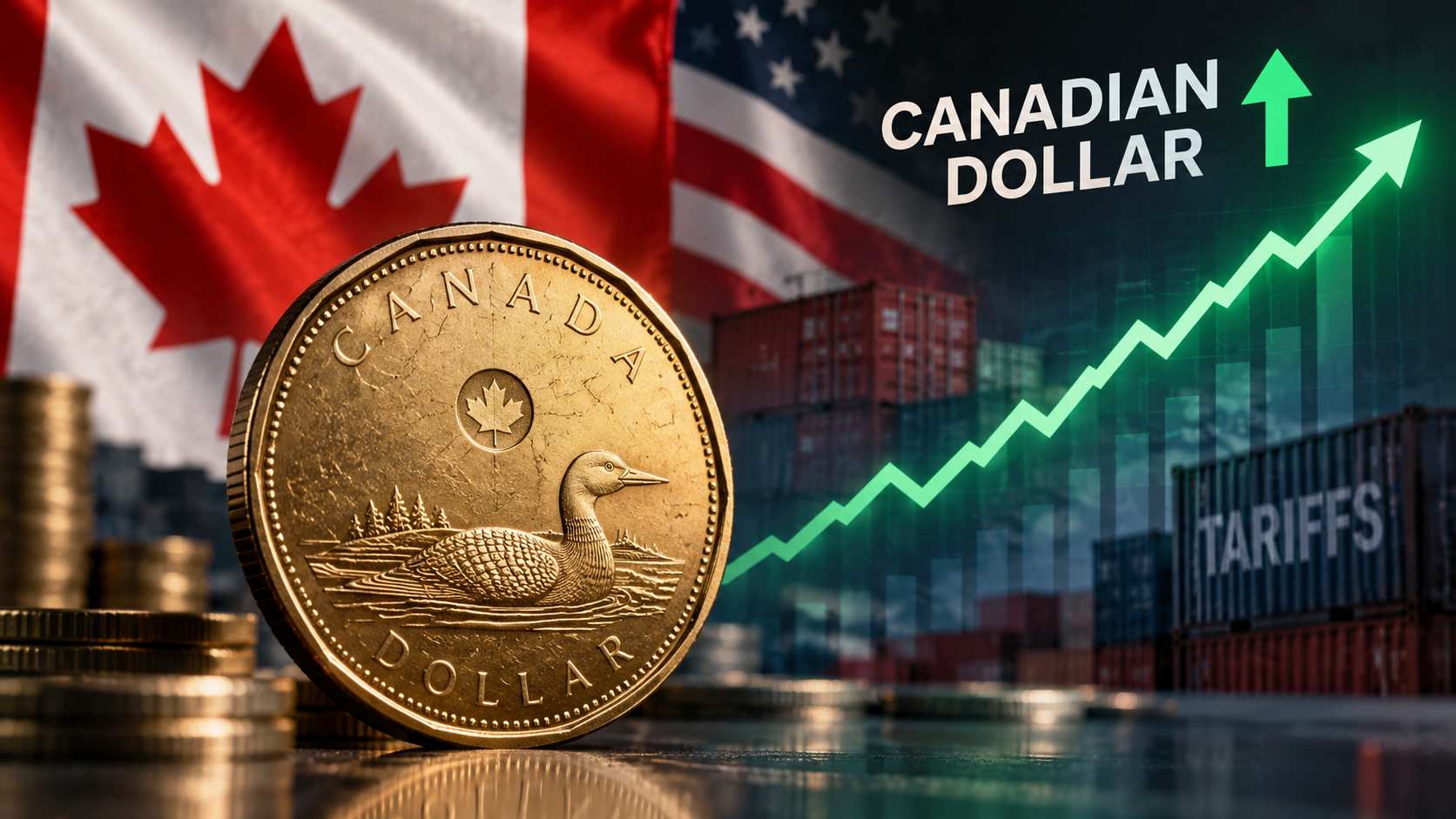
Canada and the United States just moved another step deeper into their trade fight.
But the Canadian dollar apparently didn't get the memo.
On September 8, Canada's new counter-tariffs on American goods officially took effect. The measures impose tariffs of 15%, 25% and 50% on selected products covering C$27.6 billion in imports from the United States.
Normally, a fresh escalation with Canada's biggest trading partner doesn't sound like great news for the Canadian economy.
Yet something interesting happened Tuesday.
The Canadian dollar strengthened against the U.S. dollar and briefly reached about C$1.3760 per U.S. dollar — its strongest intraday level since August 21.
Canada raised the tariff wall.
The loonie went up.
So what exactly is going on?
The Loonie Isn't Keeping Score
First, the Canadian dollar's move doesn't mean financial markets have suddenly decided Canada is “winning” the trade fight.
Currencies aren't political scoreboards.
The loonie is constantly being pulled in different directions by commodity prices, interest-rate expectations, economic data, global investor sentiment and movements in the U.S. dollar.
And on Tuesday, one major force was working in Canada's favour: oil.
Crude prices moved higher as concerns surrounding global energy supplies intensified.
That's important for Canada because it is one of the world's major oil producers and exporters.
When oil prices rise, they can sometimes support the Canadian dollar by improving Canada's terms of trade and the outlook for export revenues.
So while tariffs dominated the political conversation, currency markets had much more to think about.
Canada's Tariffs Are Still Very Real
The stronger loonie doesn't make Canada's escalating trade dispute harmless.
The new counter-tariffs took effect at 12:01 a.m. Tuesday and apply to products covering C$27.6 billion in imports from the United States.
The federal government introduced the measures after the United States imposed a 50% tariff on C$27.6 billion worth of Canadian goods beginning August 22.
Canada says its response matches those U.S. measures dollar for dollar.
The Canadian tariffs range from 15% to 50%, with individual rates based on the corresponding U.S. tariff applied to the same goods.
Affected sectors include steel, dairy, appliances, agricultural equipment, pulp and paper, and electronics.
That makes Tuesday's currency movement particularly interesting.
Canada's trade dispute escalated at midnight.
By daytime trading, the loonie was strengthening.
Why That's Not Actually a Contradiction
Imagine the Canadian dollar in the middle of a giant financial tug-of-war.
Trade tensions are pulling from one side.
Oil prices are pulling from another.
Then you have Canadian and U.S. interest-rate expectations, bond yields, inflation, economic growth and investors moving money around global markets.
Whichever combination pulls hardest can determine where the currency goes.
That's why a negative Canadian headline doesn't automatically mean a weaker Canadian dollar.
Tuesday offered a perfect example.
The market wasn't saying tariffs don't matter.
It was showing that tariffs aren't the only thing that matters.
Does a Stronger Loonie Help Canadians?
Potentially — but don't start planning a cheaper Florida vacation because of one day's currency movement.
If the Canadian dollar strengthens substantially and remains stronger, Canadians travelling to the United States generally receive more U.S. dollars for their Canadian money.
Imported products priced in U.S. dollars can also become relatively cheaper for Canadian buyers and businesses.
But there's a catch.
Tariffs, transportation expenses and retailer pricing can easily overwhelm small currency movements, meaning Canadians shouldn't expect today's loonie gain to suddenly make tariff-hit American products cheaper.
There's another side to a stronger dollar as well.
Canadian products can become relatively more expensive for foreign buyers paying in other currencies, potentially adding another challenge for some exporters already navigating trade barriers.
TwikUp Insight
Perhaps the most interesting part of Canada's trade story Tuesday isn't simply that another round of tariffs arrived.
It's what happened to the loonie while they arrived.
Canada imposed new counter-tariffs covering C$27.6 billion of American imports.
The Canadian dollar responded by briefly reaching its strongest level in nearly three weeks.
That doesn't mean Canada won Tuesday.
It doesn't mean tariffs are good for the Canadian economy.
And it certainly doesn't tell us who ultimately comes out ahead in this trade fight.
Instead, it reveals something much more interesting about financial markets.
The biggest political headline isn't always the biggest market force.
While politicians were talking tariffs, currency traders were also watching oil, interest rates, economic expectations and the U.S. dollar.
Canada and the United States moved another step apart on trade Tuesday.
For at least part of the day, the Canadian dollar moved in the opposite direction.
Up.
This article is for informational purposes only and does not constitute financial or investment advice.