
Canada and the United States have spent decades building one of the closest trading relationships on Earth.
Tomorrow, another part of that relationship gets more expensive.
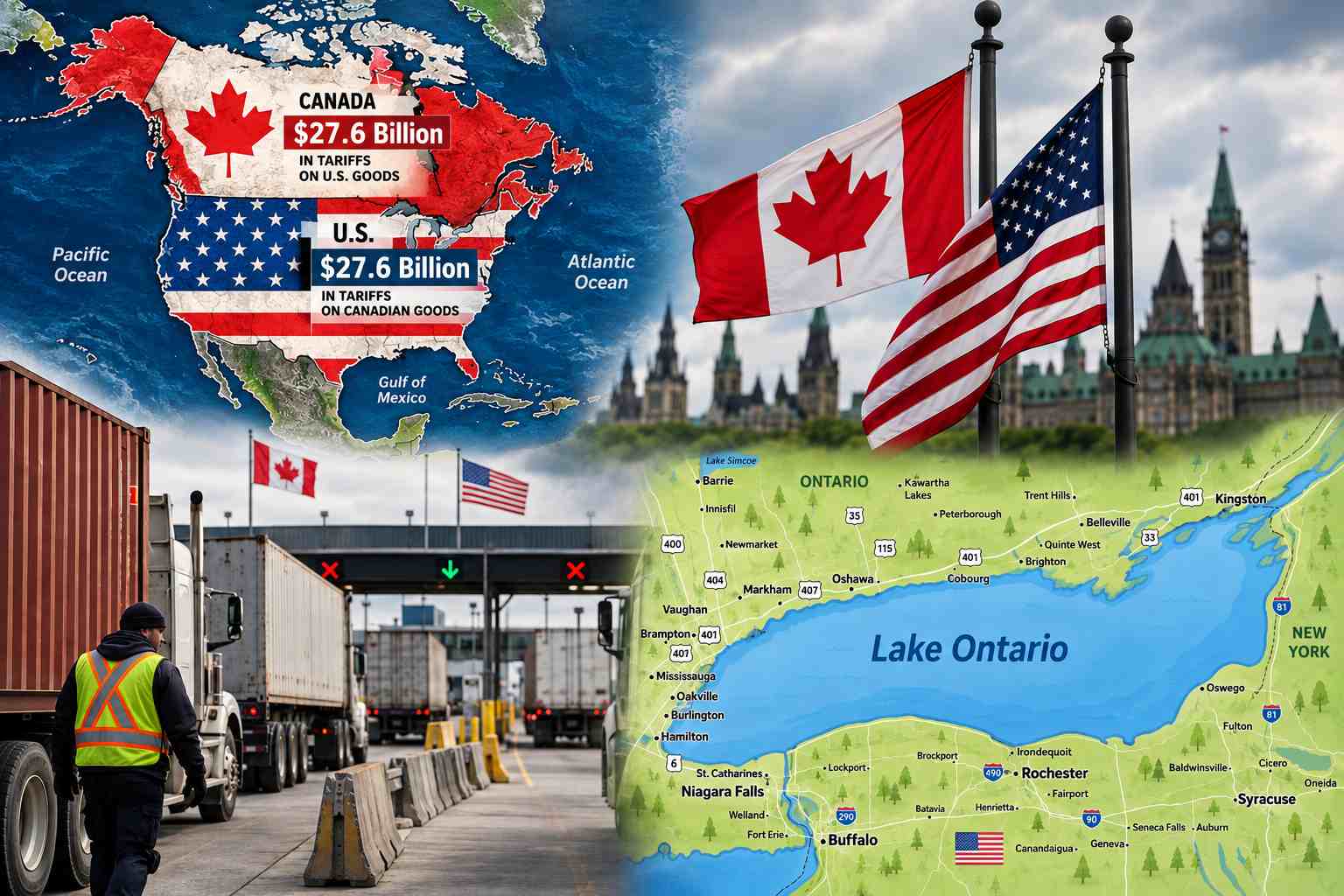
At 12:01 a.m. on September 8, Canada will impose new counter-tariffs of 15%, 25% and 50% on selected products originating in the United States.
The measures will cover approximately $27.6 billion worth of U.S. imports.
And that number isn't a coincidence.
The United States imposed a 50% tariff on $27.6 billion worth of Canadian goods beginning August 22.
Canada's response?
Match the latest U.S. measures dollar for dollar — and, depending on the product, rate for rate.
Washington raised the trade pressure. Ottawa decided Canada wouldn't absorb it without responding.
What Changes at Midnight?
Canada's new counter-tariffs take effect at 12:01 a.m. on September 8.
They target U.S.-origin goods across several sectors, including steel, dairy, appliances, agricultural equipment, pulp and paper and electronics.
Some affected products will face a 15% tariff.
Others will face 25%.
And some will face 50%.
Certain steel and aluminum products, furniture, clothing and apparel are among the categories facing the highest 50% rate.
There is an important exception.
U.S. goods already in transit to Canada when the measures take effect will not be subject to the new counter-tariffs.
For businesses importing affected American products after that point, however, the calculation changes immediately.
Why Is Canada Fighting Back?
Ottawa's argument is straightforward.
Canadian workers and businesses are already dealing with new U.S. trade barriers. The federal government says its countermeasures are intended to put affected Canadian workers, producers and manufacturers on better competitive footing against American products entering Canada.
There is also a bigger message behind the numbers.
Canada's economy is much smaller than America's.
But Canada is also one of the biggest customers for U.S. businesses.
Ottawa's response is effectively saying that access to the Canadian market matters too.
If Washington makes it more expensive for Canadian businesses to sell into the United States, American exporters may now encounter similar pressure when selling selected products north of the border.
But There's Something Canadians Need to Know
Counter-tariffs aren't free money arriving from the United States.
When an affected American product is imported into Canada, the applicable tariff is paid on that import.
That means the Canadian importer suddenly has a decision to make.
Absorb the additional cost.
Raise the price.
Find another foreign supplier.
Or buy from a Canadian producer instead.
And that final possibility is where Canada's strategy becomes particularly interesting.
Imagine an American product and a Canadian alternative competing for the same customer.
If the American product suddenly becomes significantly more expensive because of a tariff, the Canadian option may become more competitive without changing its own price.
If enough Canadian businesses switch suppliers, American exporters could lose Canadian sales.
But there's another side to this.
If Canada doesn't produce an adequate alternative — or if changing suppliers is difficult — Canadian businesses may have to absorb higher costs or pass some of them on to customers.
That's why a tariff fight doesn't produce painless victories.
Both sides are trying to create enough economic pressure to change the other side's behaviour without causing too much damage at home.
So Who Actually Wins?
Not Canada tomorrow morning.
Not America either.
A tariff taking effect isn't a victory. What happens afterward determines whether the strategy worked.
The United States has the obvious advantage of a much larger economy.
Canada has another kind of leverage: Canadians buy an enormous amount of American goods.
That makes the next few months more important than midnight itself.
Do Canadian companies start replacing affected American imports?
Do Canadian manufacturers capture more business at home?
Do U.S. exporters begin losing Canadian orders?
Do American companies put pressure on Washington because one of their largest foreign markets has become more expensive?
Or do Canadian businesses struggle to find alternatives and end up carrying too much of the cost themselves?
Those are the numbers that will eventually tell us who gained leverage.
The Most Powerful Canadian Response May Not Be the Tariff
There's another possibility that doesn't require another government announcement.
Canadian businesses can change where they buy.
Consumers can change what they choose.
A tariff can make an American product more expensive, but the real economic pressure begins if customers actually stop buying it.
If a Canadian company replaces a tariffed American supplier with a Canadian one, the effect goes beyond the money Ottawa collects at the border.
The American exporter loses a customer.
The Canadian producer potentially gains one.
Of course, that only works when a competitive Canadian alternative actually exists. Canada cannot simply replace every American product overnight.
But where alternatives do exist, this trade dispute could change purchasing decisions that last much longer than the tariffs themselves.
Canada Is Sending a Message Anyway
Canada and the United States are neighbours, allies and deeply connected trading partners.
That relationship matters enormously to both countries.
But friendship doesn't mean Canada has to accept every trade decision made in Washington without responding.
Ottawa says it negotiated with the United States toward a broader agreement but suspended those negotiations after determining that the latest proposed terms were not in Canada's national interest.
Now the dispute moves from negotiating tables to the border.
Starting September 8, selected American products will encounter something Canadian exporters are already experiencing:
Tariffs can make selling to your neighbour considerably more difficult.
There are economic risks for Canada in fighting back.
Canadian businesses could face higher costs. Consumers could see higher prices on some affected goods. And replacing deeply established U.S. supply chains isn't always simple.
But Ottawa has decided that repeatedly absorbing new American trade barriers without responding carries consequences too.
So perhaps the biggest question isn't whether Canada or America wins tomorrow.
It's what Canada should do when its largest trading partner puts new barriers in front of Canadian workers and businesses.
Accept them to avoid escalating the fight?
Or respond — even when defending Canadian economic interests comes with a price?
Tomorrow, Canada has chosen the second option.