
Key Takeaways
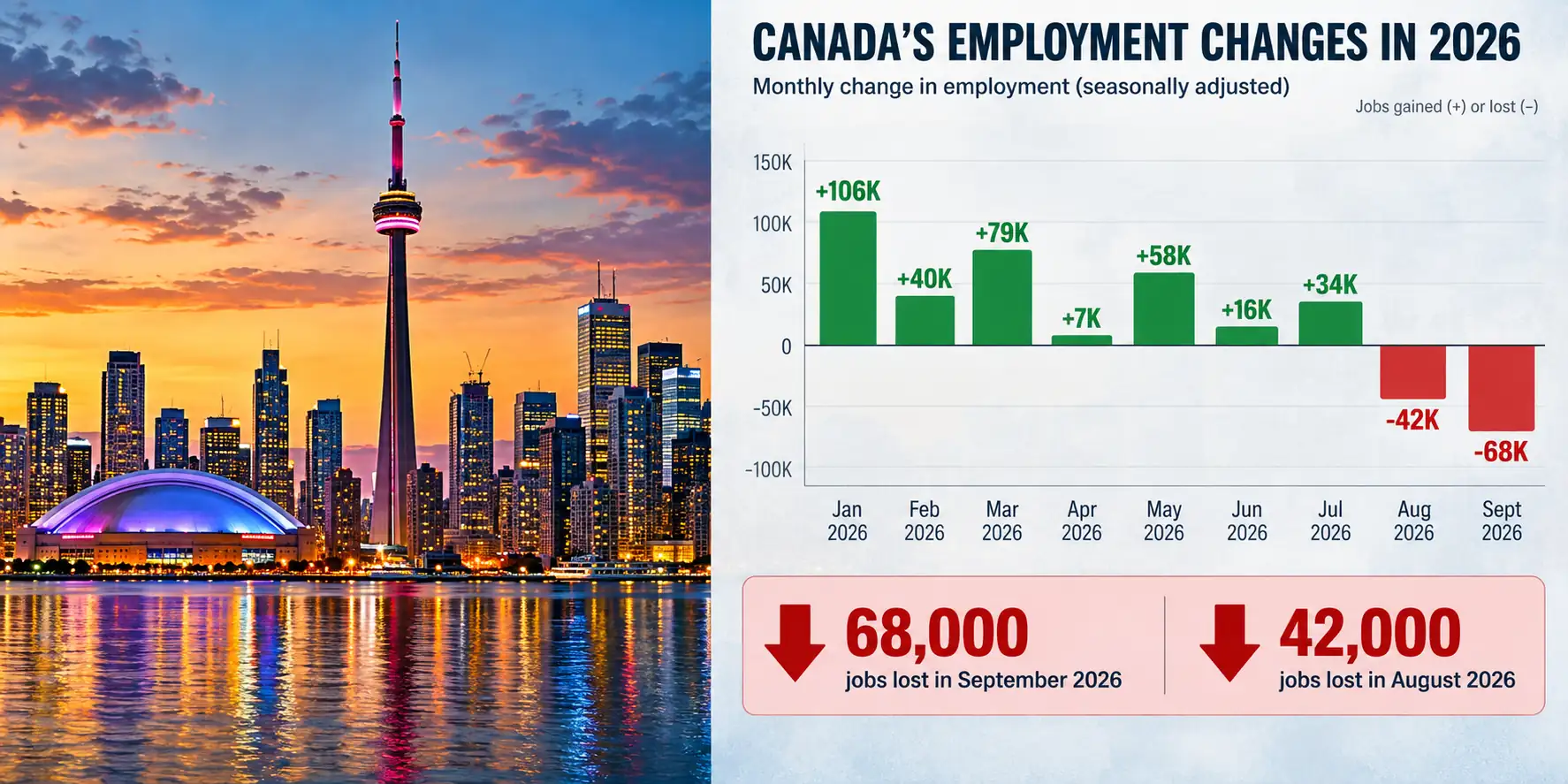
- Canada lost approximately 68,000 jobs in September after losing roughly 42,000 in August.
- The unemployment rate rose to 6.5%, while the employment rate fell to 60.6%.
- Employment was 3.07 million higher in September 2026 than in September 2016 despite major pandemic-era losses.
Canada’s summer hiring momentum has hit a speed bump—and September made it bigger.
The country lost approximately 68,000 jobs in September, following a decline of roughly 42,000 in August, according to Statistics Canada’s report released today, October 9. That leaves 110,000 fewer people employed than in July.
The unemployment rate climbed to 6.5%, while the share of people aged 15 and older who were working slipped to 60.6%.
Who felt the squeeze?
September’s losses were concentrated among young people aged 15 to 24 and women aged 25 to 54. Educational services, health care and social assistance, and manufacturing recorded declines.
The provincial picture was mixed: employment fell in Quebec, British Columbia and Manitoba, while Alberta, Newfoundland and Labrador, and Prince Edward Island posted gains.
Zoom out, and the story gets more interesting
Our analysis of Statistics Canada’s monthly data shows employment rose from 18.03 million in September 2016 to 21.10 million in September 2026—a net increase of 3.07 million, or about 17%.
Across those 120 monthly changes, employment increased 93 times and decreased 27 times. Growth won more months, but the losses sometimes landed much harder.
Adding up the monthly increases gives 7.47 million. Adding up the decreases gives 4.40 million. These figures measure movements in total employment, rather than individual hires or layoffs.
The biggest plot twist came in 2020
March and April 2020 alone accounted for approximately 71% of the decade’s cumulative monthly losses, with employment falling by a combined 3.12 million.
The rebound was dramatic, too: June 2020 delivered the period’s largest monthly increase, at approximately 1.06 million.
That explains why a decade-long gains-and-losses chart can look like a roller coaster even when the final employment total is substantially higher.
So, how worrying is today’s news?
September’s decline is far smaller than the extraordinary falls of 2020. Still, two consecutive monthly losses—and a falling employment rate—give the latest report a weaker tone.
Canada has more people working than it did ten years ago. But that offers limited comfort to someone searching for work today. The next reports will show whether this is a temporary stumble or a longer slowdown.
Historical calculations cover September 2016–September 2026, using seasonally adjusted employment estimates for people aged 15 and older, total gender, excluding the territories.