
Key Takeaways
- The federal government is investing more than C$4.7 billion for VIA Rail to acquire and maintain 313 new passenger rail cars from Alstom Canada.
- The new rail cars will be manufactured and assembled in Thunder Bay, Ontario, and La Pocatière, Quebec, with design and engineering work in Saint-Bruno-de-Montarville.
- The project is expected to support nearly 700 jobs and generate more than C$1.6 billion in economic benefits for Canada.
Passenger Rail Cars to Be Built in Canada
The new VIA Rail passenger cars will be manufactured and assembled at Canadian facilities.
The manufacturing work will take place in Thunder Bay, Ontario, and La Pocatière, Quebec, while design and engineering activities will be carried out in Saint-Bruno-de-Montarville, Quebec.
This marks a significant change for VIA Rail. Much of the company's existing fleet was built outside Canada, including in the United States.
The new project will bring passenger rail car production back to Canadian facilities after a gap of four decades.
Alstom to Supply 313 New Rail Cars
Alstom Canada has signed an agreement to design, engineer, manufacture and provide long-term support for the new fleet.
The 313 passenger cars will replace aging equipment used on VIA Rail's long-distance, regional and remote services.
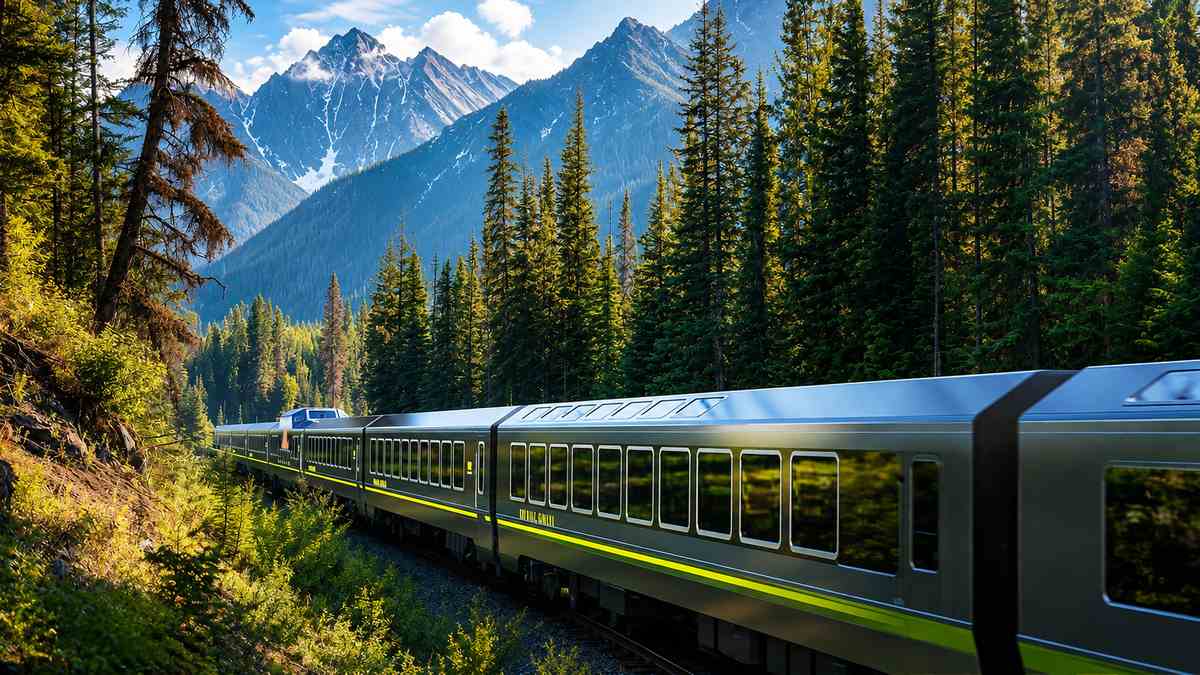
The new fleet will include several types of passenger cars, including dining cars, panorama cars and sleeper cars.
The trains are being designed to provide more modern amenities, improved accessibility and greater reliability while maintaining features associated with VIA Rail's long-distance services.
Nearly 700 Jobs Expected
The investment is also expected to support Canadian employment.
The federal government says the project will support nearly 700 good jobs in Ontario and Quebec.
Alstom's Canadian operations will carry out design, engineering, manufacturing and assembly work as part of the project.
The company also plans to leverage and expand its network of more than 900 Canadian suppliers.
The project is expected to generate more than C$1.6 billion in economic benefits for Canada.
Canadian Steel and Domestic Supply Chains
The investment aligns with the federal government's broader Buy Canadian Policy, which aims to increase domestic procurement and strengthen Canadian supply chains.
For the VIA Rail fleet, Alstom will maximize the use of Canadian steel in structural assemblies, supports and fabricated metal components.
Using Canadian suppliers and materials is expected to increase the domestic economic impact of the project while strengthening the country's rail manufacturing ecosystem.
The federal government says the approach will help build greater economic resilience amid changing global trade conditions.
Replacing an Aging VIA Rail Fleet
VIA Rail's long-distance, regional and remote fleet is approaching the end of its useful life.
Some of the equipment currently in service is more than 70 years old, creating a need for major fleet renewal.
The new passenger cars are intended to provide safer, more reliable and more modern service for travellers.
The new fleet will serve VIA Rail's eight long-distance, regional and remote routes outside the Quebec City-Windsor Corridor.
These routes operate across eight provinces and provide important transportation connections for Indigenous, rural and remote communities.
Modern Features for Passengers
VIA Rail says the fleet will include features such as improved accessibility, modern amenities and greater reliability.
The new cars will also retain some of the features associated with Canada's long-distance rail experience, including dome cars, full-service dining and social areas.
The goal is to combine the traditional VIA Rail experience with a more modern and accessible passenger environment.
More Than C$6.6 Billion in Fleet Renewal
The latest investment is part of a much larger federal effort to renew VIA Rail's fleet.
The government recently announced C$1.95 billion for 45 new passenger rail locomotives and a new assembly and maintenance facility in Montreal.
That earlier investment includes C$1.6 billion for the locomotives and C$357 million for the new Montreal facility.
Combined with the newly announced C$4.7 billion passenger rail car investment, federal spending on renewing VIA Rail's long-distance, regional and remote fleet now exceeds C$6.6 billion.
Connecting Canadian Communities
VIA Rail's long-distance, regional and remote services play an important role in connecting communities across Canada's large geographic area.
In 2025, more than 216,000 passengers travelled on VIA Rail's long-distance, regional and remote routes.
The eight routes supported by the new fleet connect major centres with rural, Indigenous and remote communities where affordable transportation alternatives can be limited.
Replacing aging passenger cars is therefore not only a manufacturing investment but also an infrastructure investment intended to maintain these connections over the long term.
Strengthening Canada's Rail Manufacturing Industry
The federal government says the project will strengthen Canada's domestic rail manufacturing capacity while supporting skilled workers and businesses.
Alstom currently employs thousands of workers in Canada and works with hundreds of Canadian suppliers.
The VIA Rail contract is expected to create or maintain specialized employment while generating activity throughout the broader supply chain.
For Thunder Bay and La Pocatière, the project also reinforces the role of Canadian facilities in passenger rail manufacturing.
A New Chapter for VIA Rail
The return of passenger rail car manufacturing to Canada represents a major change for VIA Rail's fleet renewal strategy.
The federal government is combining the new passenger car investment with locomotive procurement and new maintenance infrastructure to modernize the national passenger rail network.
With 313 new cars, new locomotives and supporting infrastructure planned, the investment is intended to give VIA Rail a more modern fleet capable of serving Canadians for decades to come.
The project also reflects a broader federal focus on domestic manufacturing, Canadian suppliers and resilient supply chains.
For passengers, the expected result is a newer and more accessible fleet. For Canadian manufacturers and workers, the project creates a major opportunity to expand domestic rail production.