
Key Takeaways
- The ICC counts 125 states parties and has jurisdiction over genocide, crimes against humanity, war crimes and aggression
- Under complementarity, the Court acts only when national courts are unwilling or unable genuinely to prosecute
- The Court has no police force of its own and depends on states for arrests and enforcement
A court with judges, prosecutors and arrest warrants — but no police
The International Criminal Court (ICC) is the world's first permanent, treaty-based international criminal court. It sits in The Hague, it is independent of the United Nations, and it tries individuals — never states — for the gravest crimes in international law.
The Court was created by the Rome Statute, adopted on July 17, 1998, which entered into force on July 1, 2002 after 60 countries ratified it. Today the ICC counts 125 states parties. Its reach is deliberately limited: it can only address crimes committed on or after July 1, 2002, on the territory of a state party or by a national of one — unless the UN Security Council refers a situation.
The four crimes, and the rule that keeps the Court in reserve
The ICC has jurisdiction over four core crimes: genocide, crimes against humanity, war crimes, and the crime of aggression (its aggression jurisdiction was activated in 2018).
Its defining principle is complementarity: the Court is a last resort. It acts only when the state that should prosecute is unwilling or unable genuinely to do so — national courts always get the first chance.
How a case reaches The Hague
Cases arrive by three routes: a state party referral, a UN Security Council referral (the route used for Darfur and Libya), or the Prosecutor opening an investigation on their own initiative, which requires authorization from a Pre-Trial Chamber. Inside the Court, 18 judges sit across pre-trial, trial and appeals divisions, alongside the Presidency, the independent Office of the Prosecutor, and the Registry.
The Court's famous weakness is built into its design: it has no police force of its own. Arrests, transfers of suspects, asset freezes and sentence enforcement all depend on states cooperating — which is why an ICC arrest warrant can remain unexecuted for years.
Canada's founding role
Canada is woven into the Court's origin story. It signed the Rome Statute on December 18, 1998 — the 14th country to do so — and ratified it on July 7, 2000. Canada's Crimes Against Humanity and War Crimes Act, assented to on June 29, 2000, made it the first country in the world with comprehensive legislation implementing the Statute. A Canadian, Philippe Kirsch, chaired the Rome conference's Committee of the Whole and later served as the Court's president.
The Twikup Take
The ICC was built as a promise: that the worst crimes would have somewhere to go when national courts fail. Its limits — no police, no universal reach, justice by consent of states — are not bugs discovered later. They are the price its founders paid to get 125 countries to sign.
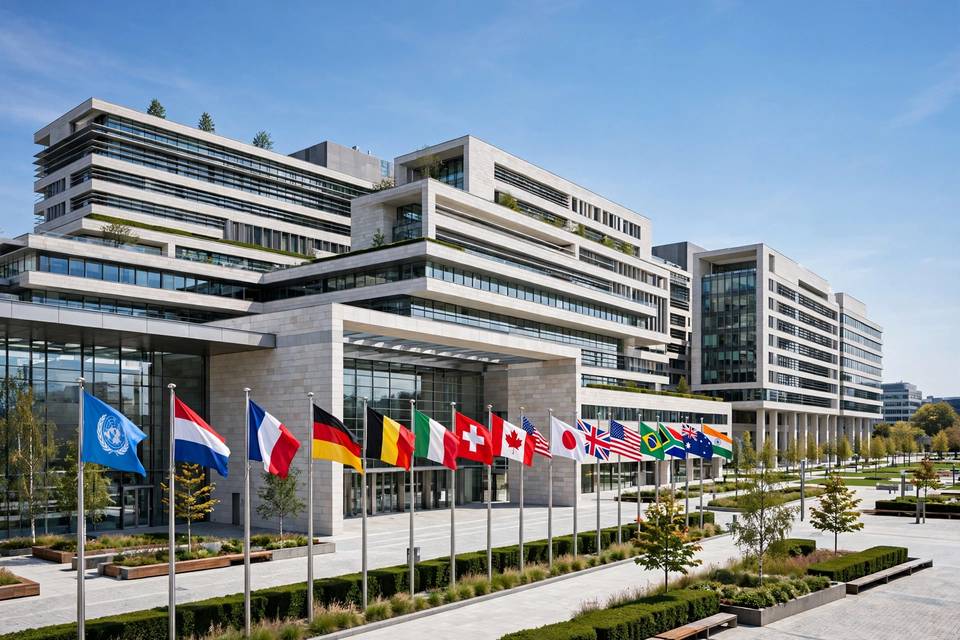
Image: Illustrative image.