
Key Takeaways
- The 16 non-playoff teams split 1,000 combinations; two draws decide the first two picks and everyone else slots by inverse standings
- The last-place team held an 18.5% first-draw chance in 2026 (25.5% across both draws) — and still usually loses the top pick
- A 10-spot move-up limit and a two-wins-in-five-years cap, both in place since 2022, are the league's anti-tanking rules
Four balls, a thousand combinations
Every spring, the 16 teams that miss the playoffs — or the teams that acquired their first-round picks — enter the NHL Draft Lottery.
But the lottery doesn't decide the whole draft order. It decides only the first two picks.
Everyone else slots in by inverse standings order, worst remaining team first.
The mechanism is physical: 14 numbered balls, four drawn at random, producing one winning combination.
The 1,000 possible four-ball combinations are divided among the 16 teams in proportion to their odds. The worse your season, the more combinations you hold.
For the 2026 lottery, the last-place Vancouver Canucks held 185 of the 1,000 combinations — an 18.5% chance in the first draw. The odds fall steeply down the standings to 0.5% for the final two positions.
A second draw, for the No. 2 pick, follows with the remaining teams' odds recalculated.
The NHL's own guide put the last-place team's overall chance of receiving the No. 1 pick at 25.5% — higher than its first-draw odds, because of the move-up limit explained below.
That still means the worst team in hockey loses the top pick about three times in four.
The two rules that broke the tank
Since 2021, the lottery has run as two draws instead of three, so the last-place team can fall no lower than third.
Since 2022, two limits have done the real anti-tanking work.
First, the 10-spot limit: no team can move up more than 10 positions, which means only the top 11 seeds can actually receive the first overall pick.
A team finishing 17th-worst can win the draw and still only climb to seventh.
Second, the two-wins rule: no team can win the lottery more than twice in any five-year period. The limit attaches to the team, so a club that has already won twice plays the next lotteries for nothing but its natural slot.
2026: the math made flesh
The 2026 lottery, held May 5, is the cleanest illustration of the system working as designed.
The Toronto Maple Leafs won the first draw from the No. 5 position — an 8.5% chance — and took the No. 1 pick, using it on Gavin McKenna at the June draft in Buffalo.
San Jose won the second draw, climbing from No. 9 to No. 2.
And Vancouver, holding the best odds in the building, fell to No. 3 — the exact outcome the odds say is most likely for a last-place team.
The draft itself runs seven rounds over two days, with the lottery order applying to the first round.
The Twikup Take
The lottery's real product is not fairness — it is doubt.
A last-place finish buys you the best single ticket and a 74.5% chance of disappointment. A 10-spot ceiling caps the reward for being merely bad. And the two-wins rule stops a rebuild from becoming a dynasty of first picks.
Tanking still happens. It just pays out far less often than the standings suggest.
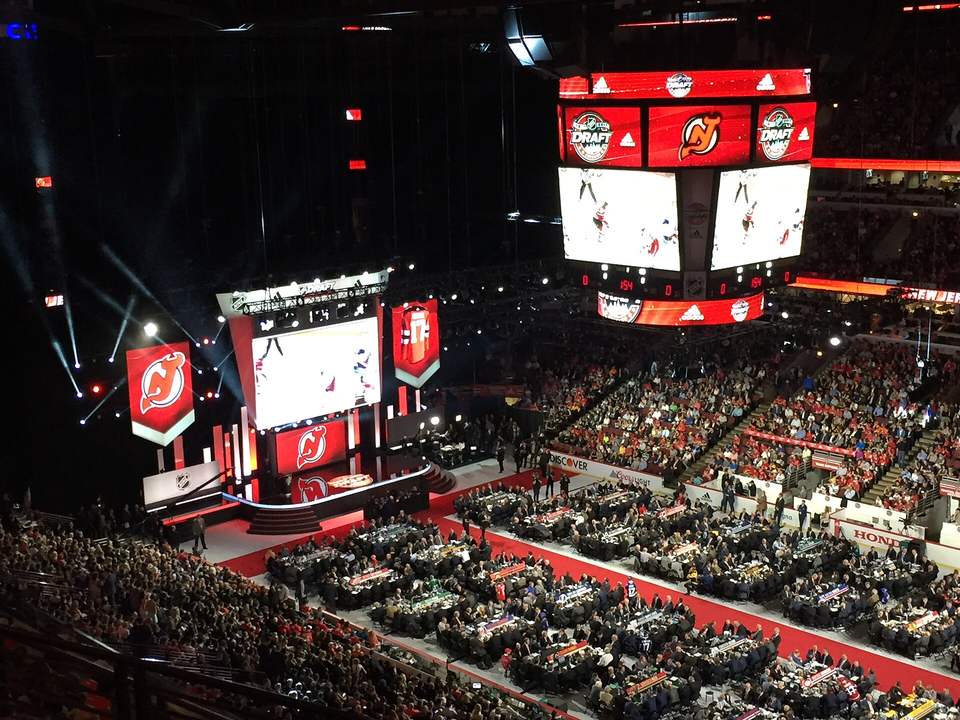
Image: 2017 NHL Entry Draft, United Center, Chicago, by Brandon Zeman, CC BY-SA 2.0, via Wikimedia Commons.