
Key Takeaways
- Solar developers generally finance and operate the energy infrastructure, while landowners receive payments for granting access to their property.
- Electricity grid capacity and project approvals can determine whether apparently suitable farmland attracts a serious development proposal.
- Decommissioning security and lease-transfer conditions deserve as much attention as the advertised annual rental payment.
Can Solar Land Leases Create Long-Term Income in Canada?
A farmer who owns productive acreage may receive an offer that looks unusual: allow an energy developer to install solar panels on part of the property and collect rent for decades. That arrangement can turn selected land into a recurring income source without requiring the owner to build or operate a power plant.
Solar land lease Canada searches often come from landowners weighing that offer against continued farming, selling the property or using it for another purpose. The opportunity can be attractive, but the payment alone does not tell the full story. Grid access, approvals, lease wording and restoration obligations determine whether the agreement is genuinely worthwhile.
How Does a Solar Land Lease Work?
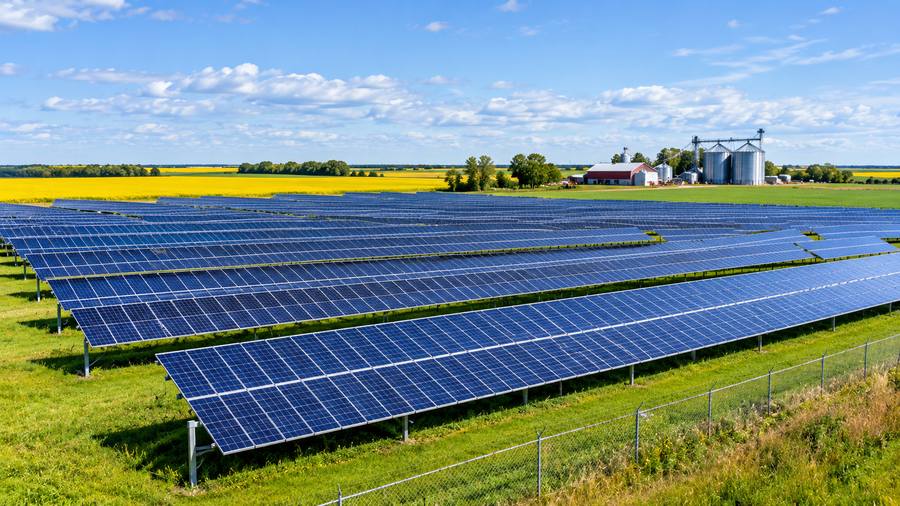
Under a typical arrangement, a renewable energy developer secures rights to use a defined area of privately owned land, obtains permits and grid connection, finances the project, then builds and operates the solar facility. The landowner receives payments under the agreement while retaining ownership of the underlying property.
Agreements may include option payments while the developer studies the site, followed by higher rent once construction or commercial operation begins. Some contracts use fixed annual rent, often with scheduled increases. Others may link part of the payment to project revenue or electricity sales.
A 2025 Pembina Institute guide cites public Canadian figures of roughly $600 to $1,200 per acre annually for solar and wind leases. Treat this as an indicative range, not a guaranteed solar rent or a national market rate. Actual offers depend on location, project size, grid connection, land quality and negotiation.
Which Canadian Locations Could Attract Solar Developers?
Alberta has an established renewable energy development market, and its Farmers’ Advocate Office provides guidance for landowners considering solar and wind leases. But a suitable parcel needs more than sunshine. Developers assess proximity to transmission or distribution infrastructure, available grid capacity, road access, terrain, environmental constraints and local approval requirements.
Ontario may also attract interest, but agricultural land rules require careful attention. Most renewable energy projects need provincial approvals, and restrictions can apply to ground-mounted solar on prime agricultural areas. Landowners should confirm the current rules for the specific project rather than assume that any open field can host panels.
Other provinces may offer opportunities where electricity procurement, local demand and grid infrastructure support new projects. There is no reliable province-wide ranking that can replace a site-specific feasibility assessment.
How Much Could a Landowner Earn?
Consider a hypothetical 40-acre parcel with an agreed annual lease payment of $800 per acre. The gross annual payment would be $32,000. Over 25 years, that equals $800,000 before tax, assuming the rent never changes and every payment is made.
That is not a forecast. The usable project area may be smaller than the total parcel, the developer may pay only after reaching certain milestones, and the agreement may include option periods or conditions that delay full rent. Inflation also reduces the purchasing power of fixed payments over time.
A landowner should compare the proposed rent with the income the same acreage could generate from farming, other leases or future sale. Tax treatment and property assessment should also be reviewed with qualified advisers.
What Should Be Negotiated Before Signing?
The lease should define the exact land area, access routes, construction rights, permitted equipment, payment schedule, annual escalators, insurance, liability and responsibility for property damage. It should also explain whether the developer can transfer the agreement to another company and whether the landowner must approve that transfer.
Pay particular attention to the option period. A developer may control the parcel for years while completing studies and seeking approvals, even if full rent has not started. Set clear deadlines, extension fees and termination rights.
Decommissioning deserves equal attention. The contract should require removal of panels, foundations, cables and other equipment, followed by restoration of the land. In Alberta, solar and wind operators must register projects, maintain reclamation plans and provide financial security under provincial requirements. Landowners should understand who holds that security and whether it is sufficient.
TwikUp's Perspective
A solar lease can diversify a farm’s income, but it also commits land to a long-term industrial use that may limit future choices. The strongest agreement is not necessarily the one offering the highest starting rent. It is the one that balances dependable payments with enforceable restoration duties, clear exit conditions and protection against developer default.
Readers comparing land-based income strategies can also explore TwikUp’s guides to buying land in Canada, development land investment and manufactured housing investment. Each model uses land differently, so comparing legal control, income certainty and long-term land value is essential before signing away decades of use.
Disclaimer
This article is for educational and informational purposes only and does not constitute legal, tax, financial or investment advice. Solar lease terms, approval requirements and land-use restrictions vary by province and project. Rental payments and investment outcomes are not guaranteed. Landowners should obtain independent legal, tax, engineering and financial advice before signing an agreement.