
Key Takeaways
- Proximity to substations and available grid capacity can matter more than the total acreage of a property.
- Developers may negotiate option payments during planning before full lease payments begin after construction.
- Fire safety, permitting, access rights and end-of-life restoration deserve careful attention before signing.
Can Landowners Earn Income From Battery Storage Projects in Canada?
Yes. Canadian landowners may earn income by leasing suitable property to battery energy storage system (BESS) developers. These facilities store electricity and release it when the grid needs additional power. However, owning vacant land does not automatically make someone eligible for a project. Location, grid connection opportunities, zoning and development approvals determine whether a parcel is commercially attractive.
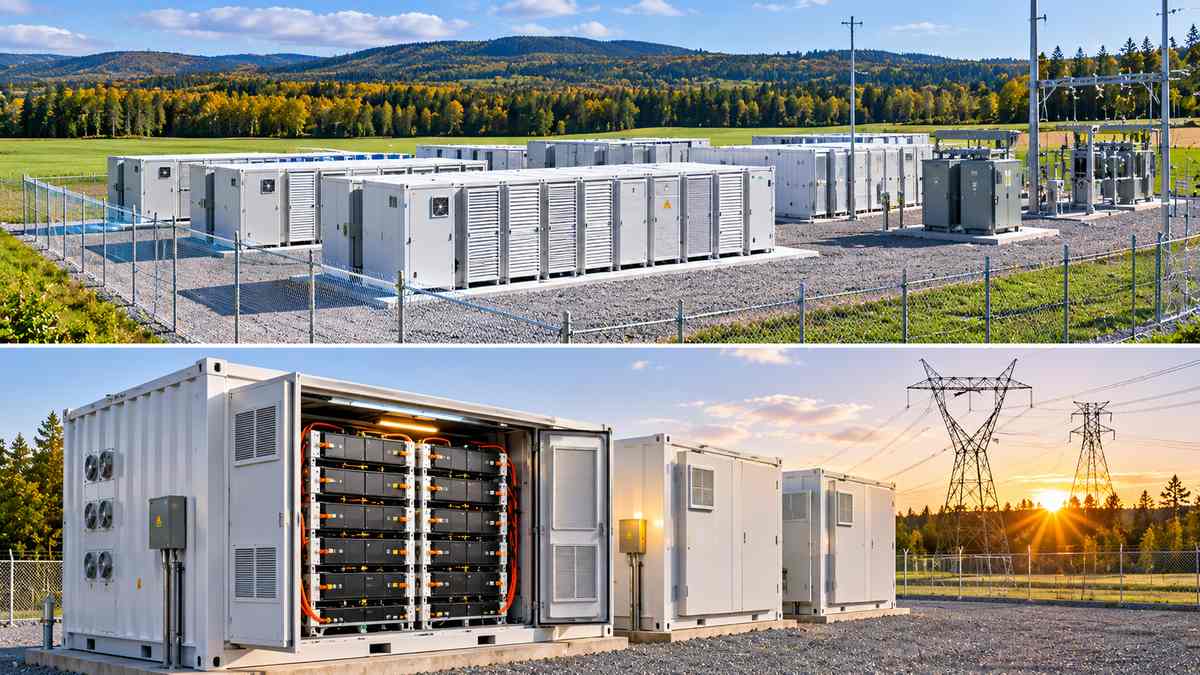
For property owners, the opportunity is different from traditional residential or commercial leasing. A developer may require a dedicated site for battery containers, electrical equipment, access roads and supporting infrastructure. In return, the landowner can negotiate compensation under a long-term agreement while retaining ownership.
Why Is Demand for Battery Storage Growing in Canada?
Electricity systems need ways to balance supply and demand. Battery storage helps by charging when electricity is available and discharging during periods of higher demand. It can also support grid reliability and help integrate renewable energy.
The Canada Energy Regulator reported that Canada's installed energy storage capacity more than doubled in 2025 to nearly 1 GW. Its 2026 outlook projects battery storage capacity could reach 15–23 GW by 2050, depending on the scenario.
Ontario is an important market. In June 2026, the Independent Electricity System Operator announced 20-year contracts for three new battery storage facilities representing 640 MW of capacity. This shows that developers and electricity system planners are actively pursuing projects, although procurement success does not guarantee demand for every nearby property.
What Type of Land Do BESS Developers Look For?
A suitable property needs more than open space. Developers assess whether a site can connect economically to the electricity network and accommodate the proposed equipment.
Important considerations include:
- Grid proximity: Land near a suitable substation or transmission infrastructure may offer an advantage, but available connection capacity must be confirmed.
- Property layout: Relatively level, accessible land can make construction and equipment installation easier.
- Road access: Heavy equipment and maintenance vehicles need reliable access.
- Land-use compatibility: Zoning, nearby homes, environmental features and local planning rules can affect approval.
- Flooding and drainage: Site conditions must support safe installation and long-term operation.
A developer may also investigate easements, title restrictions, soil conditions and the availability of utility infrastructure. A nearby power line alone does not prove that a project can connect to the grid.
How Do Battery Storage Land Lease Agreements Work?
Landowners may encounter different payment arrangements. The final structure depends on the project, developer, location and negotiated contract.
An option agreement may give a developer time to conduct feasibility studies, secure approvals and investigate grid connections. The owner may receive an option payment during this period, but the project might never reach construction.
A full lease can begin when specified development conditions are satisfied or when commercial operations start. Some agreements include annual increases, while others may contain additional payments linked to project performance.
Yukon Energy provides a real example of a long-term arrangement. It signed a 25-year land lease for the site of its grid-scale battery storage project in Whitehorse. There is no reliable nationwide BESS rent-per-acre benchmark in the sources reviewed. Landowners should compare written offers rather than assume another project's payment terms apply to their property.
What Risks Should Landowners Check Before Signing?
A long lease can affect how a property is used for decades. The agreement should clearly explain who controls the site, who pays for development and what happens if the project stops.
Pay particular attention to:
- Development delays: Option periods and extensions should have clear deadlines and payment conditions.
- Grid connection failure: The developer should explain what happens if the required connection cannot be secured.
- Safety responsibilities: Battery systems can experience thermal runaway, fire and hazardous gas releases. Emergency planning and qualified operators are essential.
- Insurance and liability: Confirm who covers property damage, third-party claims and operational incidents.
- Decommissioning: The contract should address equipment removal, land restoration and financial security for these obligations.
Ontario's firefighter guidance identifies thermal runaway, toxic gases and stranded electrical energy as important energy-storage hazards. These are reasons to examine the proposed safety plan rather than treating the installation like an ordinary storage building.
Which Canadian Rules and Approvals Matter?
Requirements vary by province and project design. In Alberta, the Alberta Utilities Commission's Rule 007 sets out facility application requirements, including a process for energy storage facilities. In Ontario, land-use planning, local approvals, grid connection requirements and project-specific permissions may all affect development.
Landowners should ask the developer to identify the relevant regulator, municipal approvals, utility connection process and environmental reviews before granting extensive site rights.
Indigenous consultation and community engagement can also form important parts of project development. These processes should be addressed early rather than treated as paperwork to complete after a lease is signed.
TwikUp's Perspective
Battery storage could create another commercial use for strategically located Canadian land, particularly where electricity networks need flexibility. But the strongest opportunity may not belong to the owner with the largest property. A smaller parcel with a viable grid connection and suitable planning conditions may be more attractive than a much larger site without them.
For landowners, the sensible first step is to assess the property's grid access, zoning and title restrictions before negotiating with developers. Our earlier guides on Canadian development land investment and buying land in Canada provide useful context for evaluating land beyond its current use.
A battery storage lease should be judged as a long-term property transaction, not simply an easy source of passive income. Independent legal, technical and financial reviews can help owners understand what they are committing to before signing.
Disclaimer
This article is for general educational purposes only and does not constitute legal, financial, engineering or investment advice. Lease terms, project feasibility, approvals and potential income vary by property and jurisdiction. Consult qualified professionals before entering into a land lease agreement.