
Key Takeaways
- Extra payments can reduce the principal balance sooner, which may lower future interest on a reducing-balance loan.
- Federal rules protect certain borrowers from prepayment penalties, but the lender and loan agreement still matter.
- Paying off a car loan should not leave you without emergency savings or force you to ignore more expensive debt.
Can You Save Money by Paying Off a Car Loan Early?
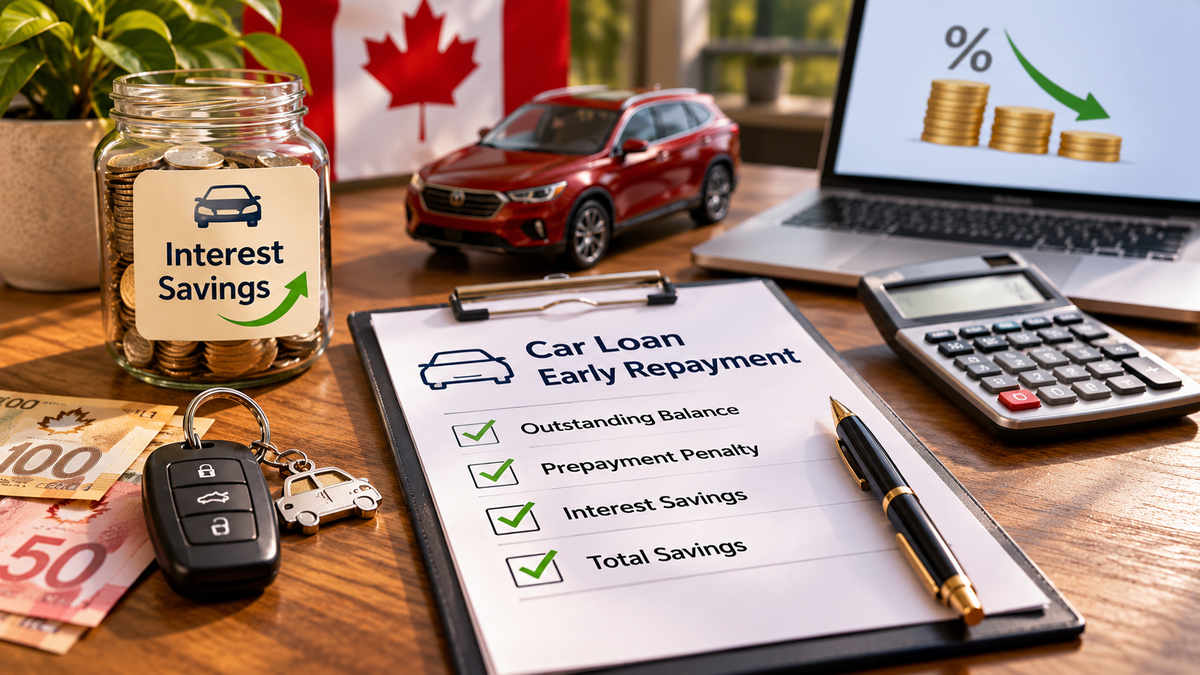
Yes, paying off a car loan early can reduce the total interest you pay, provided your lender applies additional payments toward the outstanding principal and your agreement allows the repayment method you choose. A typical car loan is repaid through regular instalments that cover both principal and interest. When you reduce the principal earlier than scheduled, less money remains on which future interest can accumulate.
However, the amount you save depends on your interest rate, remaining balance, repayment period, payment structure and lender's calculation method. Making an extra payment does not automatically produce the same savings under every financing agreement.
How Much Interest Can You Actually Save?
Consider an illustrative Canadian car loan with these terms:
- Original loan amount: $35,000
- Annual interest rate: 7.5%
- Repayment period: 72 months
- Monthly payment: approximately $605.15
Using a standard monthly reducing-balance calculation, the borrower would pay approximately $8,571 in total interest over six years if the scheduled payments remain unchanged.
Now compare two repayment strategies:
| Repayment strategy | Estimated interest |
|---|---|
| Regular monthly payments | $8,571 |
| Extra $100 every month | $7,032 |
| $3,000 lump sum after month 12 | $7,293 |
In this example, an additional $100 every month saves approximately $1,539 in interest and finishes the loan about 12 months earlier. A $3,000 lump-sum payment after the first year saves approximately $1,278 and shortens repayment by around seven months.
These figures are estimates based on monthly interest, immediate principal reduction and unchanged regular payments. They exclude fees and assume the lender applies extra payments directly to the principal. Your actual savings may differ.
How Do Extra Payments Reduce Car Loan Interest?
Your regular payment is divided between interest and principal. Early in a conventional amortizing loan, a larger portion of each instalment generally goes toward interest because the outstanding balance is still relatively high. As the principal decreases, the interest portion of later payments also declines.
An additional payment can speed up this process. For example, if your outstanding principal is $20,000, reducing it by $1,000 means future interest is calculated on a smaller balance under a reducing-balance structure.
You can use three common approaches:
- Monthly extra payments: Add a fixed amount to your regular instalment.
- Lump-sum payments: Put a bonus, tax refund or other available cash toward the balance.
- Full early repayment: Request a payoff amount and clear the remaining eligible balance.
Ask your lender how each payment will be processed. Some systems may treat extra money as an advance payment rather than an immediate principal reduction.
Does Canada Allow Car Loan Early Repayment Without a Penalty?
The answer depends on who provided your financing and which laws apply. Under section 627.28 of the federal Bank Act, federally regulated financial institutions must allow individuals to prepay qualifying fixed-amount, non-mortgage loans in full without a prepayment charge or penalty. The law also provides for partial prepayments at specified intervals.
However, not every dealership-arranged car loan necessarily comes from a federally regulated bank. Manufacturer finance companies, independent lenders and credit unions may operate under different regulatory arrangements.
Provincial and territorial consumer-credit laws may provide additional protections. For example, Ontario's Consumer Protection Act, 2023 contains provisions covering full and partial prepayment of qualifying credit agreements.
Do not assume one province's rules apply across Canada. Identify your lender, read the agreement and check the applicable consumer protection legislation before making a large payment.
What Should You Check Before Making an Extra Payment?
A quick conversation with your lender can prevent misunderstandings.
Ask these questions:
- Does my agreement allow additional principal payments?
- Can I make a partial payment whenever I want?
- Will the extra amount reduce principal immediately?
- Is there a minimum amount for a lump-sum payment?
- What is my current full payout amount?
- Will any eligible non-interest charges be refunded after full repayment?
Also ask whether your regular payment will remain unchanged after an extra payment. If the lender reduces your monthly instalment instead of shortening the repayment period, your total interest savings may be different.
When Is Early Car Loan Repayment Not the Best Choice?
Paying off debt is useful, but it should not come at the expense of your wider financial position. Start with your emergency savings. If using your entire cash reserve to clear the vehicle loan leaves you unable to manage rent, repairs or an unexpected expense, keeping some money accessible may be more sensible.
Next, compare interest rates across your debts. If your credit card charges considerably more interest than your car loan, directing extra money toward the credit card may provide a larger financial benefit. Consider any employer retirement matching contributions and essential upcoming expenses too. The goal is not simply to eliminate one payment. It is to use available money where it can do the most good.
TwikUp's Perspective
Paying off a car loan early can reduce interest costs, but borrowers should also consider their wider financial situation. This becomes especially important after losing a job and receiving a severance payment, when deciding how much money to keep available for everyday expenses and future obligations.
If you receive a severance package, understanding the tax deductions can help you estimate how much money you will actually have available. Read our guide on Severance Pay Tax in Canada: How Much Will You Keep After Tax? to understand how severance payments are taxed and what may affect your take-home amount before making a major debt repayment decision.
Disclaimer
This article provides general educational information about car loan repayment in Canada. It is not personalized financial or legal advice. Prepayment rights, interest calculations and applicable fees depend on the lender, loan agreement and relevant federal or provincial legislation. Confirm your exact payoff amount with your lender before transferring funds.