
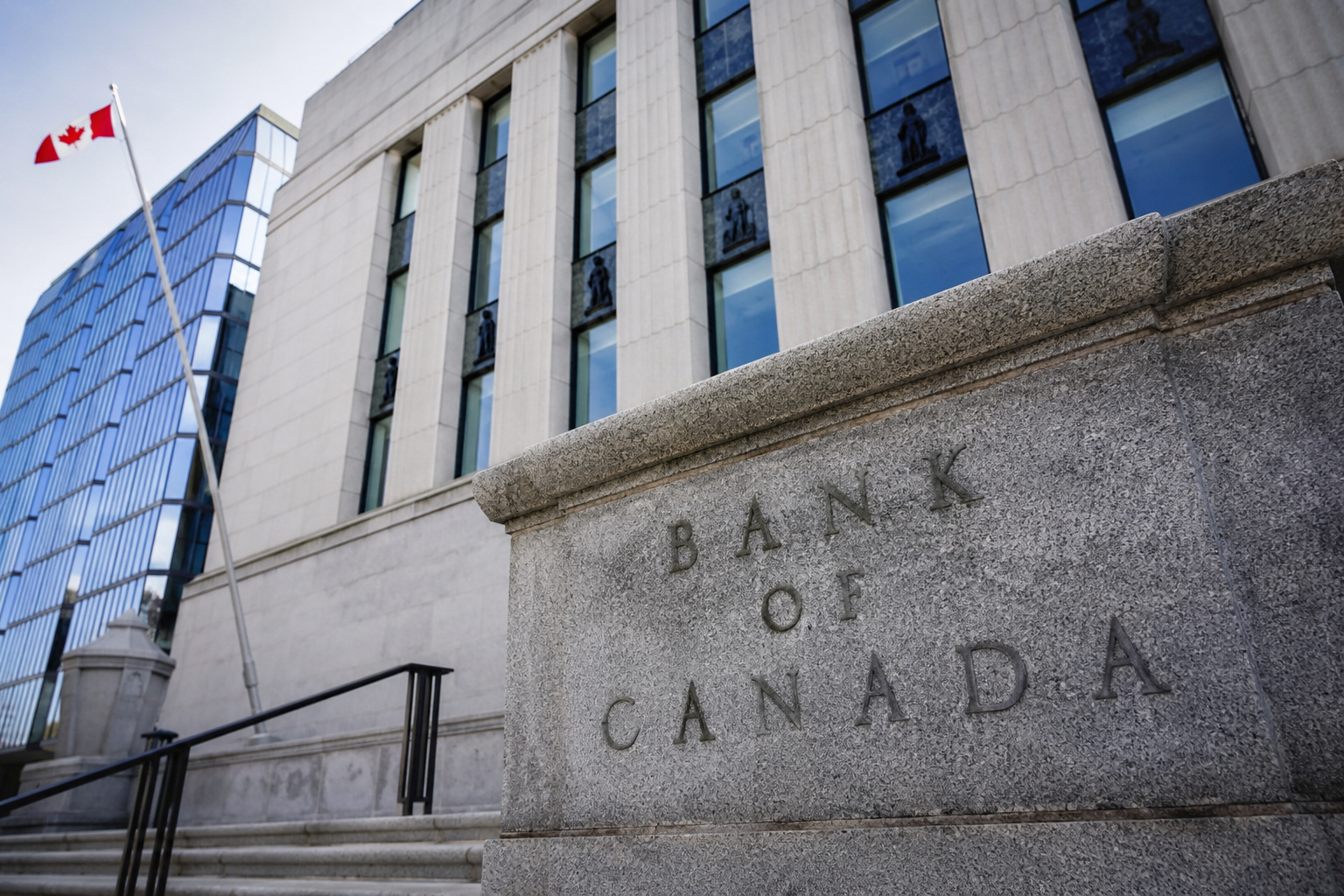
Canadian borrowers hoping for a rapid decline in interest rates may need to adjust their expectations. The Bank of Canada has kept its benchmark overnight rate at 2.25%, and many economists now believe borrowing costs could remain near current levels for an extended period as policymakers navigate the competing pressures of sluggish economic growth and persistent inflation.
For homeowners approaching mortgage renewal, the challenge is clear: rates are no longer rising aggressively, but meaningful relief may not arrive anytime soon.
Why Canada's Interest Rate Pause Matters for Borrowers
The Bank of Canada's overnight target rate currently sits at 2.25%, resulting in a prime lending rate of approximately 4.45%.
Most major financial institutions, including several of Canada's largest banks, expect the central bank to leave rates unchanged through the remainder of the year. The decision reflects a delicate balancing act between supporting economic activity and preventing inflation from becoming entrenched.
For consumers, this means borrowing costs for mortgages, lines of credit, and other variable-rate products are likely to remain relatively stable in the near term.
The Economic Forces Keeping Rates Elevated
Several factors are influencing the Bank of Canada's cautious approach:
- Headline inflation remains near 2.8%, above the central bank's 2% target.
- Canada's unemployment rate has risen to 6.9%, signaling weaker economic momentum.
- Wage growth remains strong at roughly 4.5%, which can contribute to ongoing inflation pressures.
- Global trade negotiations and tariff developments continue to create uncertainty for policymakers.
- Energy prices and geopolitical events remain potential sources of future inflation shocks.
While softer economic conditions would typically support lower interest rates, persistent inflation pressures have complicated the path forward.
Fixed and Variable Mortgage Rates Are Moving Differently
Borrowers evaluating mortgage options should understand that fixed and variable rates respond to different market forces.
Variable-rate products are closely tied to the prime rate. Because the Bank of Canada has paused its rate adjustments, variable mortgage rates and lines of credit have remained relatively stable. In many cases, they are currently about 0.50% to 0.70% lower than comparable fixed-rate offerings.
Fixed mortgage rates, meanwhile, are heavily influenced by government bond yields. Ongoing geopolitical uncertainty and global market volatility have placed upward pressure on those yields, keeping fixed-rate pricing elevated.
Current Fixed vs. Variable Rate Landscape
| Rate Type | Typical Trend | Main Driver | Current Position |
|---|---|---|---|
| Variable Rate | Relatively stable | Prime rate | Lower than fixed |
| Fixed Rate | Under pressure | Bond yields | Around 4.04% |
| Variable Mortgage | Follows BoC moves | Overnight rate | Holding steady |
| Fixed Mortgage | Market-driven | Investor sentiment | Less responsive to BoC |
For borrowers nearing renewal, comparing both options carefully is becoming increasingly important.
Why Inflation Remains the Key Number to Watch
Inflation continues to be the single most important indicator influencing future rate decisions.
If inflation gradually moves closer to the Bank of Canada's 2% objective, policymakers could gain confidence to consider future rate reductions. However, renewed price pressures could delay cuts or even revive discussions about additional rate increases.
Unexpected developments that could influence inflation include:
- Rising oil and energy prices.
- New international tariffs.
- Supply chain disruptions.
- Continued strong wage growth.
Some economists now suggest rates could remain near current levels well into 2027 if inflation proves difficult to fully control.
What Mortgage Borrowers Should Do Before Renewal
Waiting until your renewal date may reduce your options.
Borrowers approaching renewal should consider:
- Speaking with a mortgage broker early.
- Comparing fixed and variable rate offers.
- Monitoring upcoming Bank of Canada announcements.
- Reviewing lender promotions and refinancing opportunities.
- Securing a rate hold where available.
Many lenders offer rate holds for up to 120 days. This can provide protection if borrowing costs unexpectedly increase before renewal is finalized.
What Happens Next for Canadian Interest Rates?
The most likely near-term scenario remains a prolonged pause. Financial markets and economists generally expect the Bank of Canada to keep rates steady while monitoring inflation, employment trends, wage growth, and global economic developments.
The path toward lower rates has not disappeared, but it appears slower and less certain than many borrowers anticipated earlier in the year.
For Canadians with upcoming mortgage renewals, preparation and flexibility may prove more valuable than trying to predict the exact timing of future rate changes.