
Key Takeaways
- The Bank of Canada kept its policy interest rate unchanged at 2.25% on September 2, 2026.
- The Bank says the Middle East conflict is keeping energy prices high, adding to inflation risks and economic uncertainty.
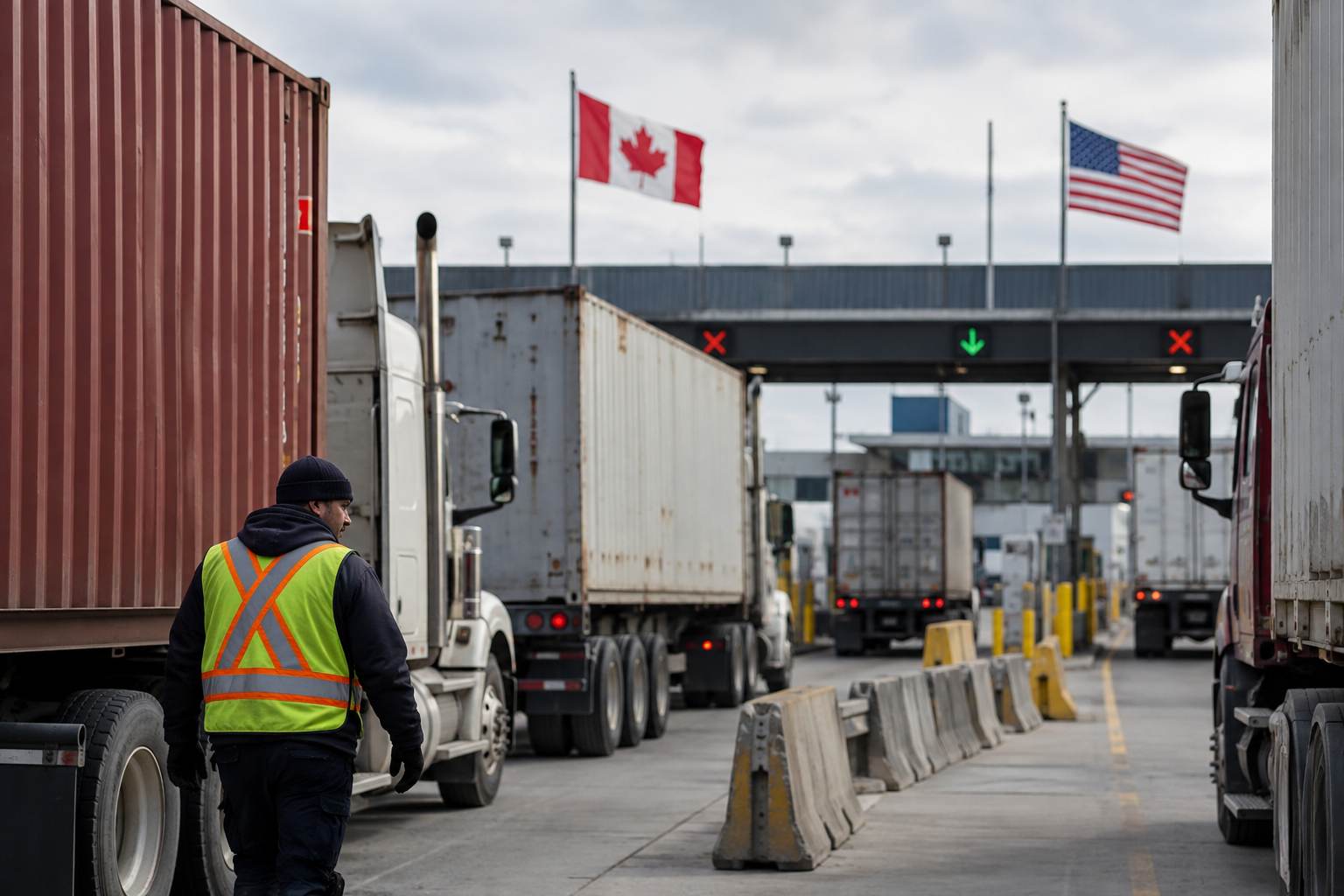
- Canada's new counter-tariffs covering approximately $27.6 billion of U.S. imports will take effect at 12:01 a.m. on September 8, 2026.
Bank of Canada Holds at 2.25%
On September 2, the Bank of Canada maintained its target for the overnight rate at 2.25%.
The Bank Rate remains at 2.50%, while the deposit rate is 2.20%.
But the decision came against an increasingly complicated global backdrop.
The Bank said Canada's economy had evolved broadly in line with its July forecast, while warning that upside risks to inflation had increased and new tariffs had made the outlook for economic growth more uncertain.
For the Canadian dollar, interest rates matter because differences between Canadian and foreign rates — particularly U.S. rates — can influence investor demand for Canadian-dollar assets.
But rates aren't the only force at work.
Energy Prices Are Complicating the Picture
The Bank of Canada also pointed to the ongoing conflict in the Middle East and elevated energy prices.
For Canada, that's a complicated economic equation.
As a major energy producer and exporter, stronger energy prices can increase the value of some Canadian exports and benefit parts of the energy sector.
But expensive energy can also raise transportation, production and household costs — potentially adding to inflation.
That leaves the Bank watching not simply where oil and energy prices go, but how those prices ultimately affect Canadian inflation and economic growth.
And Governor Tiff Macklem made an important distinction on September 2: Canadian monetary policy cannot eliminate the effects of tariffs or control global energy prices.
The Bank's job is to prevent those external shocks from undermining price stability in Canada.
Then Come $27.6 Billion in Counter-Tariffs
The next major development arrives on September 8.
Canada's new counter-tariffs on selected U.S.-origin products are scheduled to take effect at 12:01 a.m.
According to the Government of Canada, the measures cover approximately $27.6 billion worth of imports from the United States.
Depending on the product and corresponding U.S. tariff, Canadian tariff rates will be 15%, 25% or 50%.
Affected products span several areas, including steel and aluminum products, dairy products, appliances, agricultural equipment, pulp and paper products, plastics and electronics.
The government has also established specific transitional and remission provisions, so the treatment of goods already moving through the supply chain depends on the applicable rules.
Could All This Move the Canadian Dollar?
Possibly — but there isn't a simple "tariffs up, loonie down" equation.
Higher energy prices could benefit parts of Canada's export economy, while simultaneously creating additional inflation pressure.
Tariffs could protect or support some domestic industries, but they can also increase costs, disrupt supply chains and create uncertainty for businesses.
Meanwhile, changing expectations about future Bank of Canada and U.S. Federal Reserve interest rates can affect currency markets independently of either factor.
That means the Canadian dollar is being pulled by several forces at once.
What Should Canadians Watch Next?
Three developments now matter particularly closely.
First is Canada-U.S. trade policy. Canada's new tariffs begin September 8, but future negotiations, additional measures or changes to existing tariffs could alter the economic picture again.
Second is energy. A prolonged period of elevated energy prices could have very different consequences from a short-lived spike.
And third is the Bank of Canada. Incoming inflation, employment and economic-growth data will help determine how policymakers assess the next interest-rate decision.
TwikUp Insight
The Canadian dollar isn't facing one dominant economic story right now.
It's facing three.
The Bank of Canada is holding its policy rate at 2.25%. Global energy prices are creating additional inflation uncertainty. And Canada is preparing to impose counter-tariffs covering approximately $27.6 billion of U.S. imports.
None of those factors alone tells us where the loonie goes next.
The more useful question is how they interact — particularly whether trade restrictions weaken economic activity, whether elevated energy prices keep inflation pressure alive, and how those developments change expectations for Canadian interest rates.
For now, September 8 adds another important piece to that puzzle.
Disclaimer: This article is for general informational purposes only and does not constitute financial, investment or trading advice. Currency and financial markets can move unpredictably, and past or current economic relationships do not guarantee future outcomes.