
Key Takeaways
- Deflation is a sustained fall in the overall level of prices — different from disinflation, where prices still rise, just more slowly.
- It is dangerous for three reasons the Bank of Canada names: it feeds on itself through falling production and wages, it rewards people for delaying purchases, and it raises the rea
- Canada's 2% inflation target exists partly as a buffer: a lower target would leave inflation near zero and increase the risk of tipping into deflation.
Imagine everything gets cheaper. Now imagine your paycheque shrinking.
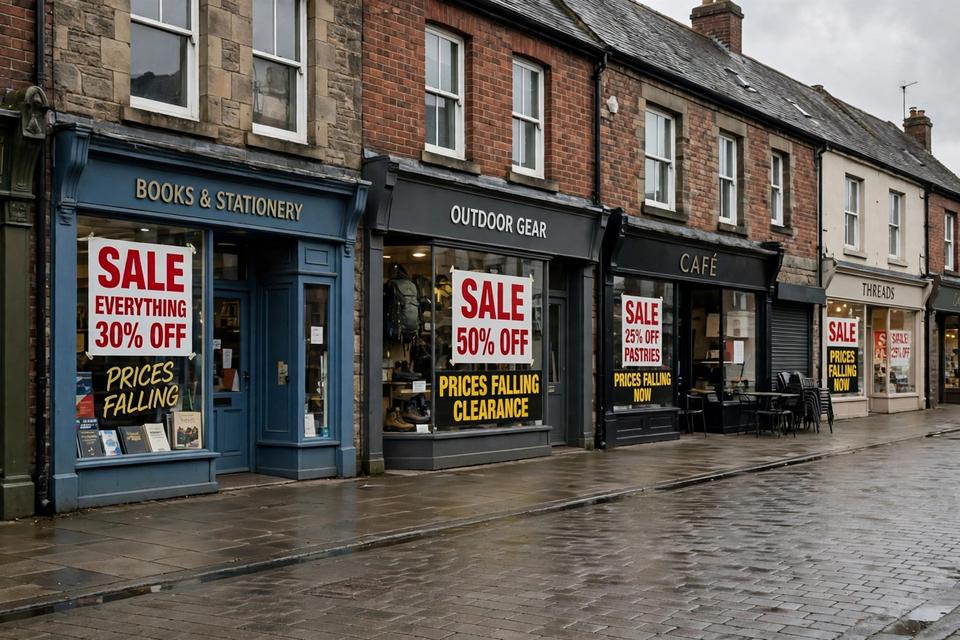
A new car costs less. A refrigerator is cheaper. That purchase you've been planning? Wait another six months and it might cost even less. Sounds wonderful. Until everyone starts waiting.
Businesses lose customers. Production slows. Wages freeze or fall. And the mortgage you owe? That hasn't changed. Welcome to deflation — the economic problem that makes falling prices far less attractive than they first sound. The Bank of Canada warns that deflation "is usually a sign that something is seriously wrong with the economy." Here's why.
First, what exactly is deflation?
Deflation isn't a discount at your favourite store. It isn't one product becoming cheaper. And it isn't one bad month. The Bank of Canada defines deflation as "a persistent decline in the level of prices" — when the annual change in the consumer price index turns negative year after year.
There's another term worth knowing: disinflation. They sound similar. They're not. If inflation falls from 2% to 1%, prices are still rising. Just more slowly. That's disinflation. Deflation means the overall price level keeps falling. And that's where the trouble begins.
Trap one: everyone waits for a better deal
Imagine you're buying a car. You know it could cost less in six months. Would you buy it today? Maybe not. Now imagine millions of people making the same decision.
Deputy Governor Rhys Mendes explained that consumers expecting falling prices "might put off purchases in anticipation of a better deal in the future." Businesses respond by cutting prices to attract customers. But those discounts create another problem. Why buy now when tomorrow might be cheaper?
Former Bank of Canada Governor Mark Carney raised the same dilemma with cars, refrigerators and investments in new equipment. If those purchases could cost less in six or nine months, waiting becomes tempting. And when enough people wait, the economy stalls.
Trap two: your mortgage doesn't shrink with prices
Here's where deflation gets personal. Imagine prices falling around you. Your income is shrinking or frozen. But your mortgage payment? Still there. Your business loan? Still there. Your credit line? Still there.
Deflation increases the real burden of debt because the amount owed doesn't automatically fall alongside prices and incomes. That means the same debt takes a bigger bite out of a smaller paycheque. Carney explained that this makes it harder for indebted households to spend and leveraged businesses to invest. And those are precisely the activities the economy needs during a downturn. Cheaper prices suddenly don't feel like much of a bargain.
Trap three: the economy gets caught in a loop
Here's the frightening part. Deflation can feed itself. The Bank of Canada describes a cycle in which falling prices lead to lower production and wages. That reduces demand from consumers and businesses. Lower demand pushes prices down further. And the cycle repeats.
Think about what that means. People spend less because prices are falling. Businesses cut back because people spend less. Wages weaken. Consumers have even less money to spend. Prices fall again.
Now the central bank has another problem. Mendes warned that once people expect prices to keep falling, those expectations limit how much stimulus monetary policy can provide during a downturn. Interest rates can only be cut so far below zero. His warning was stark: "escaping a deflationary cycle of this nature can be extremely difficult." That's why central banks treat deflation as harder to escape than inflation is to bring down.
So why does Canada actually want 2% inflation?
Here's something that might sound strange. The Bank of Canada doesn't aim for prices to stay perfectly flat. It targets 2% inflation. That target sits in the middle of a 1–3% band, adopted in 1991 and renewed with the federal government every five years.
Why not aim for zero? Because zero leaves very little room for error. The Bank explains that setting the target below 2% "would bring inflation very near to zero, increasing the risk of deflation." Think of 2% as a buffer. It gives the economy some distance from the dangers of persistently falling prices.
And the target works both ways. Inflation staying below 2% concerns the Bank, just as inflation staying above it does. The goal isn't endlessly rising inflation. It's stability.
Canada has already experienced the nightmare
This isn't just an economic theory. Canada has lived through it. The Bank of Canada identifies the 1930s as "the one major episode of sustained deflation in Canada." During the Great Depression, spending collapsed dramatically. Prices fell by more than 20% over four years. That's not a seasonal sale. That's an economy in serious trouble.
And Canada isn't the only example. Japan experienced mild deflation in the 1990s, a period associated with what Carney called a "lost decade" of missed economic opportunity. Different countries. Different experiences. But the same warning: falling prices aren't automatically good news.
The Twikup Take
Everyone loves a discount. But an entire economy running on discounts is a different story. When prices keep falling, waiting becomes attractive, spending weakens, wages come under pressure and debt becomes harder to carry. That's the trap.
Canada's 2% inflation target isn't a celebration of expensive groceries or bigger bills. It's a buffer against an economic problem that can be much harder to escape. A cheaper price tag sounds like a win — until your paycheque shrinks and your debt stays the same.
Image: Illustrative image.