
Key Takeaways
- The FDA says Libre Duo 10 Day is the first wearable in the U.S. to continuously monitor ketone levels.
- It is also the first device in the world to continuously monitor ketones and blood sugar together.
- The system is authorized for people aged 2 and older living with diabetes and can provide automatic alerts when ketone levels reach a concerning threshold.
FDA Authorizes New Wearable for Blood Sugar and Ketone Monitoring
The U.S. Food and Drug Administration has authorized a new wearable device that continuously monitors both blood sugar and ketone levels, giving people with diabetes access to two important measurements through a single system.
The FDA authorized Abbott Diabetes Care's Libre Duo 10 Day Continuous Dual Glucose Ketone Monitoring System on August 25, 2026.
The device is authorized for people aged 2 years and older living with diabetes.
What Makes the Libre Duo Different?
According to the FDA, Libre Duo 10 Day is the first wearable device in the United States that continuously monitors ketone levels.
It is also the first wearable device in the world to continuously monitor both ketones and blood glucose together in a single device.
The system measures the two levels in fluid just beneath the skin every minute, both during the day and at night.
Why Is Ketone Monitoring Important?
Ketones are produced when the body uses fat instead of glucose for energy.
When ketone levels become too high, they can contribute to diabetic ketoacidosis, commonly known as DKA.
DKA is a serious complication of diabetes that can develop quickly and become life-threatening if it is not treated.
The FDA says early detection of rising ketone levels is important.
How Does the Device Work?
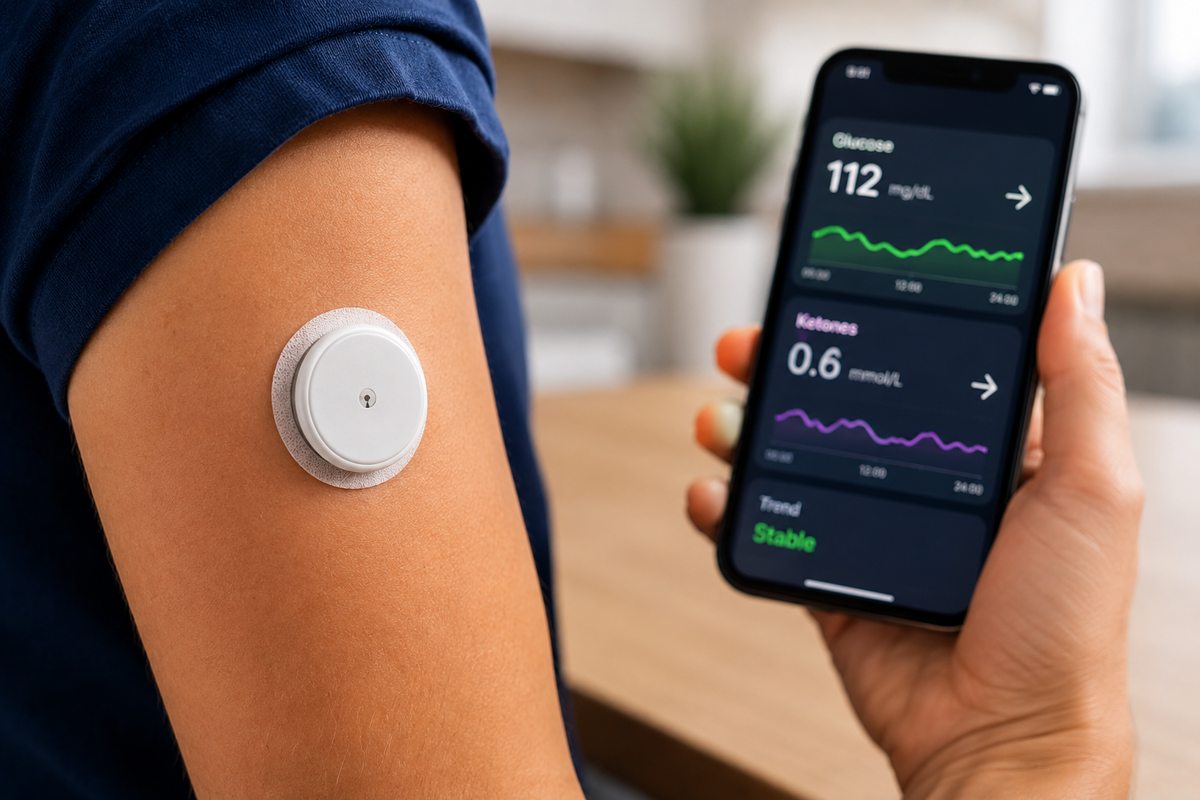
The Libre Duo 10 Day continuously measures glucose and ketone levels beneath the skin.
The readings are then transmitted wirelessly to a compatible smartphone.
Users can view their current glucose and ketone readings and see whether those measurements are moving upward or downward.
The system can also provide automatic alerts when ketone levels reach a concerning threshold.
How Could Alerts Help?
The FDA says real-time information about rising ketone levels may help patients and caregivers recognize a potential problem earlier.
Previously, people who needed to monitor ketones generally had to use separate tests that provided measurements at individual points in time.
Those tests could show a person's ketone level at that moment but could not continuously show whether levels were rising or falling.
The Libre Duo system is designed to provide that trend information continuously.
Who Can Use the Device?
The FDA authorized the Libre Duo 10 Day for people aged 2 years and older who are living with diabetes.
The authorization covers the device's continuous monitoring of both glucose and ketone levels.
The FDA also emphasized that ketone information should be interpreted alongside glucose readings and symptoms.
What Evidence Supported FDA Authorization?
The FDA reviewed clinical and performance information submitted by the device's sponsor.
The clinical program included six studies involving more than 600 participants aged 2 years and older.
The studies evaluated the accuracy of the device's glucose and ketone monitoring across different glucose and ketone levels.
The FDA said the results showed that the device accurately tracked clinically meaningful differences in ketone levels throughout its 10-day wear period.
The results also showed that the system could identify elevated ketone levels before the onset of diabetic ketoacidosis.
What Is the Wear Period?
The device is designed for a 10-day wear period.
During that period, it continuously measures glucose and ketone levels and sends information to a compatible smartphone.
This allows users to monitor trends without having to take separate measurements every time they want to check their levels.
Who Authorized the Device?
The FDA granted marketing authorization to Abbott Diabetes Care through the De Novo premarket review pathway.
The De Novo pathway is used for certain new types of medical devices that are considered low to moderate risk and do not have an existing legally marketed equivalent.
The FDA also established special controls covering areas such as labeling and performance testing.
Why Is This Important for Diabetes Care?
Blood glucose monitoring is already an important part of diabetes management.
However, ketone levels can provide additional information for people at risk of diabetic ketoacidosis.
By combining glucose and ketone monitoring into one wearable system, the Libre Duo could provide users and caregivers with more continuous information about changes in both measurements.
The FDA described the authorization as a breakthrough for the safety of children and adults living with diabetes.
What Does the FDA Say About the Technology?
FDA Center for Devices and Radiological Health Director Michelle Tarver said real-time information about rising ketone levels could help with early intervention before a situation becomes a life-threatening emergency.
The FDA said the authorization also fits with its Home as a Health Care Hub initiative, which supports the development of patient-centered technologies that can be used more easily in everyday home settings.
What Happens Next?
The FDA has now authorized the Libre Duo 10 Day for its intended use.
The device's authorization follows the FDA's review of its clinical and performance data and the establishment of special controls covering safety and effectiveness requirements.
The development represents another step toward wearable technologies that can continuously monitor multiple health measurements.
TwikUp Insight
The FDA's authorization marks a notable development in wearable diabetes technology.
Instead of monitoring glucose alone, the Libre Duo system is designed to continuously track both glucose and ketones through one wearable device.
The ability to see ketone trends in real time could provide useful information for people with diabetes and their caregivers, particularly when ketone levels begin to rise.
However, the FDA says ketone readings should always be considered alongside glucose measurements and symptoms.