
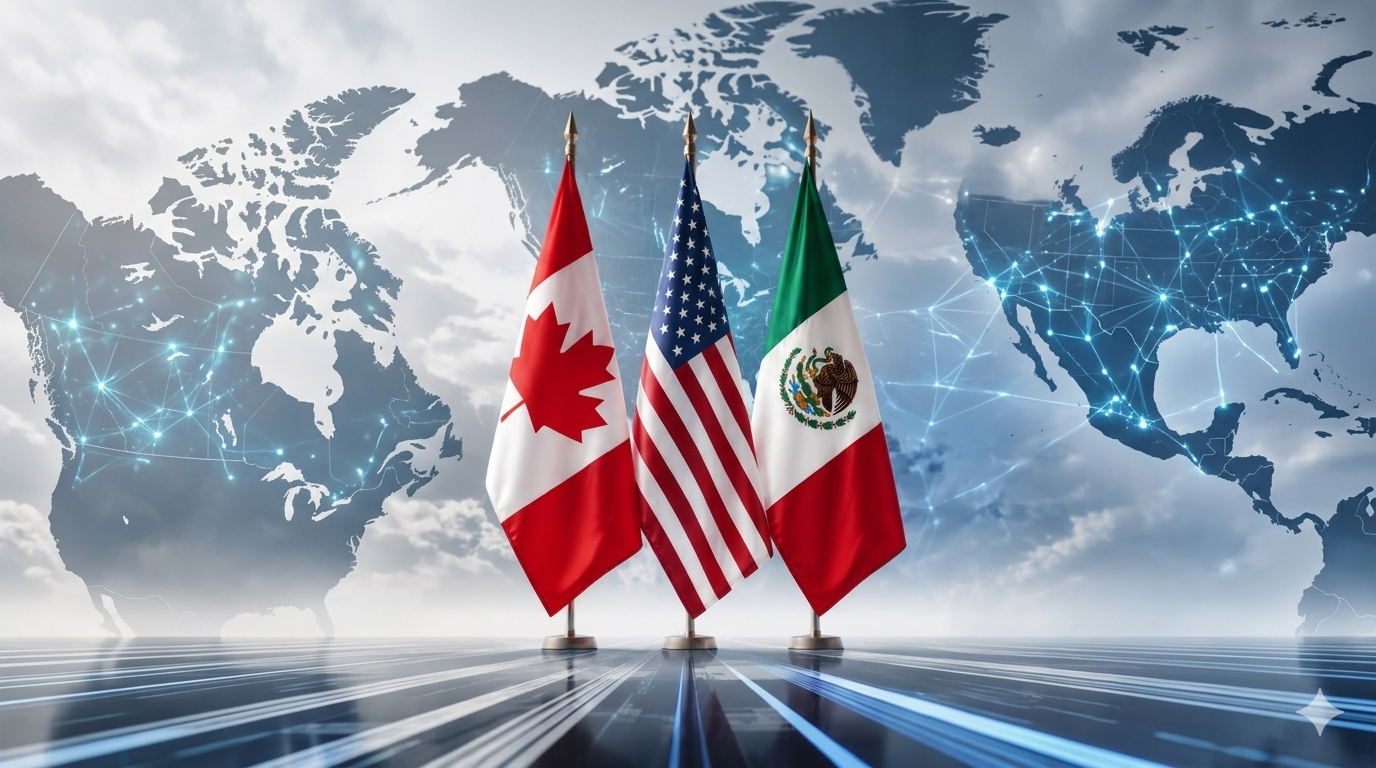
Canada has thrown down the gauntlet with a formal request for a 16-year renewal of CUSMA, North America's trade backbone. Dominic LeBlanc filed the request. The clock starts ticking July 1, 2026, when the review officially begins. Mexico is already on board and backing the extension. Analysts are watching closely and say this renewal could turbocharge investor confidence across the continent. This is not just bureaucratic paperwork. It is a high-stakes move that will shape jobs, investment, and cross-border power dynamics for nearly two decades.
What Happened
Canada officially filed a formal request to lock in CUSMA for another 16 years. Dominic LeBlanc submitted the renewal request as Canada's representative. The formal review process kicks off July 1, 2026 with no delays and no ambiguity. Mexico has publicly thrown its support behind the extension and sent a clear signal of trilateral alignment. Analysts are already weighing in because a renewal could significantly boost investor confidence by removing uncertainty from the trade equation.
Key Facts at a Glance
- Canada formally requested a 16-year CUSMA renewal that is longer than the original agreement's framework.
- The renewal request was submitted by Dominic LeBlanc, Canada's key trade architect.
- The review of the renewal begins July 1, 2026 so mark this date for market-moving developments.
- Mexico supports the proposed extension and signals strong regional cohesion.
- Analysts say the renewal may improve investor confidence and potentially unlock billions in capital.
Understanding the Issue
CUSMA is the trade agreement that replaced NAFTA and now governs $1.9 trillion in annual trade among Canada, the United States, and Mexico. A renewal request is not routine since it is a strategic move to lock in rules on tariffs, market access, intellectual property, labor standards, and investment protections for nearly two decades. The 16-year term Canada is seeking is a bold statement because it wants certainty instead of a deal that expires in a few years and leaves businesses guessing. This shapes everything from auto factories to agricultural exports to energy pipelines.
Historical Background
NAFTA took effect in 1994 and shaped North American trade for 24 years. CUSMA replaced it in 2020 after contentious negotiations under the Trump administration. The original CUSMA included a sunset clause requiring periodic reviews every six years so countries could reassess obligations. Canada's 16-year renewal request is a direct response to that built-in review mechanism and it is also a power play. By proposing a longer term, Canada is pushing back against the volatility that has defined recent trade politics.
Timeline of Events
- Dominic LeBlanc submits Canada's formal 16-year CUSMA renewal request.
- July 1, 2026: Formal review process begins so investors and businesses should mark this date.
- Mexico publicly announces support for the extension and strengthens trilateral momentum.
- Analysts release commentary predicting improved investor confidence if renewal proceeds.
Why This Matters
This is not bureaucracy since it is economic strategy. A 16-year CUSMA renewal would lock in trade rules through 2042 and cover multiple election cycles and potential political shifts. For businesses, that means predictable rules for cross-border supply chains. For investors, it means reduced political risk. For workers, it means job stability in export-dependent industries. For governments, it means a clearer framework to negotiate future disputes. The stakes are high because North America's economic competitiveness against China and the EU depends on how smoothly this renewal plays out.
Who Is Affected and Who Is Winning or Losing
- Winners if renewal passes include auto manufacturers, agricultural exporters, energy companies, parts suppliers, cross-border logistics firms, and long-term infrastructure investors.
- At risk if renewal stalls are businesses that have delayed investment pending clarity, workers in export-dependent regions, and supply chains built on just-in-time North American production.
- Governments under pressure include Canada that is seeking stability, the United States that is watching domestic political fallout, and Mexico that is balancing labor and environmental commitments.
Economic Impact
Analysts say the renewal may improve investor confidence and that is no small claim. In a world of geopolitical turbulence, trade certainty is a scarce commodity. Greater investor confidence typically translates to higher foreign direct investment, cheaper capital for manufacturers, and more long-term infrastructure projects. A 16-year framework could unlock billions in capital for sectors like automotive, energy, and agriculture. The ripple effects include job creation, wage growth, and stronger GDP performance across all three countries.
Industry Impact
The automotive sector is the biggest winner on paper. Auto manufacturers rely on CUSMA's rules of origin to ship parts tariff-free across borders. A 16-year renewal means they can invest in new plants without fearing sudden tariff changes. Agriculture is next in line because Canadian wheat, U.S. corn, and Mexican avocados all depend on stable access. Energy companies will watch closely since pipelines and cross-border electricity grids need long-term regulatory certainty. Even tech companies building data centers in North America will benefit from predictable digital trade rules.
Market Reaction
Wall Street and Bay Street are watching. Analysts' comments about improved investor confidence are already moving the needle. Markets hate uncertainty and a 16-year renewal removes a major source of risk. Expected effects include equity markets where companies with significant North American exposure could see valuation bumps. Currency markets could see the Canadian dollar strengthen if investors view the renewal as a stability signal. Bond markets could see lower sovereign risk premiums that reduce borrowing costs for all three governments. The key question is whether the market will react before the review concludes or only after the renewal is finalized.
Stakeholder Analysis
-
Canada with Dominic LeBlanc and the Trudeau government is submitting the request as a strategic move to lock in stability before potential U.S. political shifts. Canada wants to position itself as the reliable partner in North America.
-
Mexico with AMLO and successors shows support that signals alignment with Canada on trade stability. Mexico benefits from attracting nearshoring investment as companies move supply chains closer to the U.S. market.
-
The United States is watching from the sidelines even though it is not mentioned in the facts. It is the critical third party and its stance during the review will determine whether the 16-year renewal passes unchanged, gets renegotiated, or faces delays.
-
Businesses and investors are seeing analysts' predictions of improved confidence so they are positioning for a renewal. Multinationals are likely updating investment plans based on the July 1, 2026 review start date.
-
Labor unions and environmental groups will push for enforcement of labor and environmental provisions during the review. Their support or opposition could sway political outcomes.
Challenges and Risks
-
Review process uncertainty exists because the review begins July 1, 2026 but the outcome hinges on negotiations that could drag for months or years. Domestic ratification in each country adds another layer of complexity.
-
U.S. political volatility means that even with Canada and Mexico aligned, the U.S. could demand changes during the review. A shift in U.S. administration or Congress could alter the timeline or terms.
-
Labor and environmental pushback could happen since unions and activists may demand stricter enforcement of CUSMA's labor and environmental provisions. This could potentially complicate negotiations.
-
Market expectations versus reality matter because analysts predict improved investor confidence but if the review stalls or terms change, markets could react negatively and erase any early gains.
Opportunities
-
Locking in nearshoring momentum is possible because companies are moving supply chains from Asia to North America. A 16-year renewal would cement this trend and make Mexico, Canada, and the U.S. more attractive for manufacturing investment.
-
Infrastructure investment boom could happen since long-term certainty could trigger a wave of infrastructure projects including ports, railways, power grids, and digital networks across all three countries.
-
Strengthened trilateral cooperation is likely because Mexico's support suggests a cooperative dynamic. If Canada and Mexico align early, they could present a united front during U.S. negotiations.
-
Green energy and critical minerals could accelerate since CUSMA renewal could speed up investment in electric vehicle supply chains, battery manufacturing, and critical mineral extraction. These are sectors central to the energy transition.
What Happens Next
The formal review begins July 1, 2026. That is when the real work starts because governments will hold negotiations, stakeholders will lobby, and markets will react to every development. Mexico's support gives Canada an ally but the U.S. remains the swing vote. The review could conclude with a clean 16-year renewal, a modified deal, or a delayed outcome. Businesses should monitor official announcements, treaty documents, and political statements starting July 1.
Future Outlook
If the renewal proceeds smoothly, expect a surge in investor confidence, accelerated nearshoring, and a wave of infrastructure and manufacturing investment across North America. The 16-year term would lock in trade rules through 2042 and provide stability through multiple election cycles. If complications arise such as U.S. demands for changes, labor disputes, or environmental pushback, the renewal could be delayed or modified and uncertainty would remain. Analysts' favorable assessment is a strong signal but the final outcome depends on political will and negotiation dynamics during the review.
The Bottom Line
Canada is not asking for a favor since it is making a strategic play for long-term economic stability. A 16-year CUSMA renewal would reshape North America's economic architecture, lock in trade rules, attract investment, and shape jobs for nearly two decades. The review starting July 1, 2026 is the first step in a high-stakes game where the winners will be businesses and workers who can plan with certainty, and the losers will be those left guessing.
| Who | Stance | What It Means |
|---|---|---|
| Canada | Requested 16-year renewal | Seeking long-term stability for trade-dependent industries |
| Dominic LeBlanc | Submitted the request | Canada's trade architect is leading the push |
| Mexico | Supports extension | Trilateral alignment strengthens negotiation position |
| Analysts | Say renewal may boost investor confidence | Markets could react positively if renewal proceeds |
| Review process | Begins July 1, 2026 | Countdown to high-stakes negotiations has started |
Related Perspectives
- Nearshoring boom and how CUSMA renewal could accelerate supply chain shifts from Asia to North America
- Trade wars and stability plus why long-term agreements matter in an era of geopolitical volatility
- Investor confidence and policy certainty covering the hidden economics of trade agreement renewals