
Key Takeaways
- The Real-Time Rail is infrastructure,not an app: participating institutions build instant-payment products on top of it,delivered through existing banking channels, settling in rea
- It launches with mandatory centralized fraud services -a G7 first-including confirmation of payee,a fraud safety score and a shared risk list.
- The Big Six banks are not in the launch cohort; they onboard in the coming months& Payments Canada projects the system will reach more than 9 in 10 Canadians within the first year.
Why Did a Payment Ever Take Three Days?
Send money in Canada today and it often travels on rails built for the paper-cheque era: batches processed on business days, funds held in "float" — gone from your account, not yet usable in theirs. The Real-Time Rail, launched November 9, 2026 by Payments Canada, replaces that rhythm for participating institutions: exchange, clearance and settlement happen in real time, 24 hours a day, every day of the year, including weekends and holidays.
The RTR is infrastructure, not an app you download. Financial institutions, credit unions and payment service providers connect to it and build their own instant products on top, delivered through existing banking channels. It speaks ISO 20022, a data-rich messaging standard, meaning a payment can carry useful information — invoice numbers, payee details — along with the money itself, instead of a bare dollar figure.
Who Is Live, and Who Is Not
The eight launch participants are Wealthsimple, Questbank, Peoples Trust Company, Paramount Commerce, KOHO, DoBusiness.com, Digital Commerce Bank and Bank of America. The Big Six are absent from day one by design: Payments Canada calls this a deliberately sequenced rollout, with all major Canadian financial institutions onboarding in the coming months and reach projected at more than nine in 10 Canadians within the first year.
That sequencing matters for expectations. If your bank is not a participant yet, nothing changes for you today. When it joins, the change shows up inside the app you already have — payments that arrive in seconds, with the recipient's name confirmed before you send.
Why the Fraud Machinery Comes First
Instant money has an obvious dark side: a payment that settles in seconds cannot be quietly recalled tomorrow. So Canada launches as the first G7 country with mandatory centralized fraud services built into a real-time system from day one: confirmation of payee for consumer accounts, a fraud "safety" score on transactions, a shared repository of fraud risks and indicators, and a fraud reporting and intelligence platform — layered on top of each participant's own controls.
The payoff case is large. The C.D. Howe Institute projects up to $14.5 billion in savings over a decade from cheaper processing, less cash and cheque use and the end of float, with broader economic gains projected at $16 billion, rising to $27 billion as features expand. Interac, the RTR's technical operator and first fraud services provider, says e-Transfer payments will begin to clear and settle on the RTR — the release gives no date for that shift, so treat any timeline you see elsewhere with care.
The Twikup Take
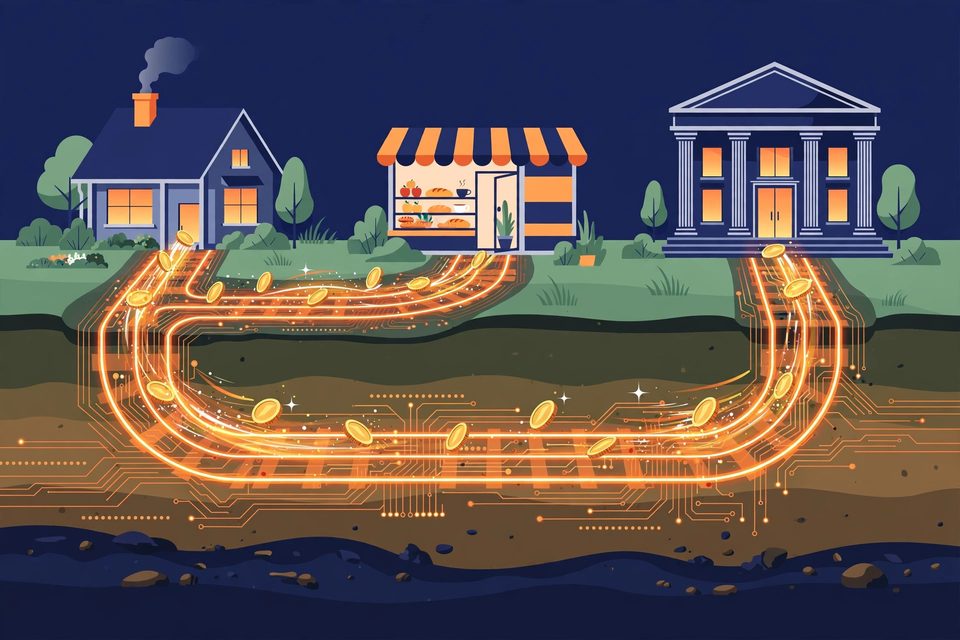
Think of the RTR as a new highway, not a new car: your bank still drives, but the road no longer closes at night. The winners are whoever builds the best on-ramp first — and for once, that race does not start with the Big Six.
Image: Illustrative image.