
Key Takeaways
- Ottawa is adding $10.7 million in sockeye infrastructure to the Prince George conservation hatchery, announced with the Lheidli T'enneh First Nation.
- The hatchery, originally for at-risk Chinook, will now also rear at-risk Fraser River sockeye; the sockeye build finishes by spring 2028.
- DFO will own and operate the hatchery in close collaboration with the Lheidli T'enneh First Nation.
A hatchery built for Chinook is getting a second mission
A salmon hatchery under construction in Prince George, B.C., was supposed to help protect at-risk Chinook salmon. Now, it's getting another job: helping vulnerable Fraser River sockeye survive.
The federal government and the Lheidli T'enneh First Nation are expanding the Upper Fraser River Salmon Conservation Hatchery with $10.7 million in additional infrastructure for sockeye salmon. The expansion will bring indoor and outdoor rearing areas, along with specialized incubation and rearing equipment.
The original hatchery was announced in August. Its mission is now expanding to include at-risk Fraser River sockeye, Fisheries and Oceans Canada said Wednesday. The sockeye infrastructure is expected to be completed by spring 2028. The first eggs are expected to arrive in late summer or early fall 2028.
The hatchery will be owned and operated by DFO in close collaboration with the Lheidli T'enneh. The sockeye expansion is funded through DFO programming, on top of a construction contract valued at more than $38 million.
Why sockeye need another lifeline
Fraser River sockeye face multiple pressures, including warming rivers, habitat loss and the lasting effects of the 2019 Big Bar landslide. For vulnerable Upper Fraser populations, adding hatchery capacity creates another tool for conservation.
But the project is about more than fish numbers.
"Fraser River sockeye salmon are central to the culture, traditions, and livelihoods of Indigenous communities and are an essential part of British Columbia's ecosystems," said Fisheries Minister Joanne Thompson. She added that the new capacity "will strengthen our ability to conserve and rebuild vulnerable Fraser salmon populations."
For the Lheidli T'enneh First Nation, the connection runs much deeper than conservation statistics.
"For Lheidli T'enneh, salmon are far more than a resource," said Chief Dolleen Logan. "They are woven into our culture, our responsibilities, and our relationship with the land and waters of our territory."
The Twikup Take
A salmon hatchery cannot replace healthy rivers, functioning habitats or thriving wild populations. But when vulnerable sockeye face mounting pressures, having another place to incubate and raise them could give conservation efforts an important extra tool. For the Upper Fraser, the real test will be whether this new capacity helps vulnerable salmon populations recover. The goal isn't simply to raise more salmon. It's to give disappearing runs another chance.
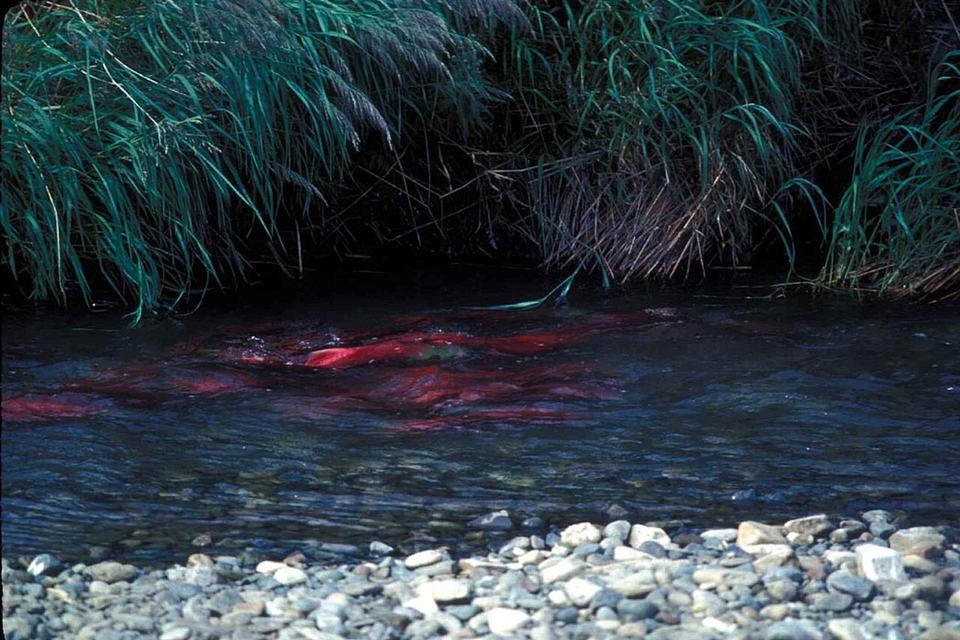
Image: Red salmon or sockeye salmon in spawning bed, U.S. Fish and Wildlife Service, public domain.