
Key Takeaways
- Two trade deals in one Manila trip.
- ASEAN deal could add nearly $2B to Canada's GDP.
- Signing targeted for 2027.
Two Trade Deals, One Trip to Manila
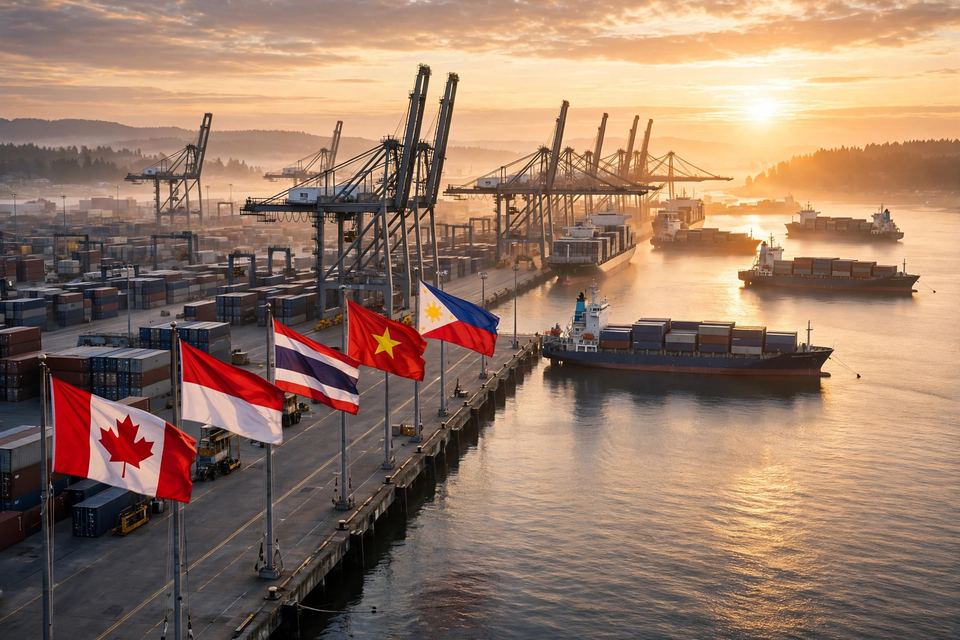
Canada has concluded negotiations on a free trade agreement with the Philippines and reached the substantial conclusion of talks on a broader deal with the Association of Southeast Asian Nations (ASEAN), Prime Minister Mark Carney announced in Manila on November 14.
Carney travelled to the Philippines as Guest of the Chair at the 49th ASEAN Summit, alongside a bilateral visit with President Ferdinand Marcos Jr. Both agreements are targeted for signing in 2027.
What the ASEAN deal would mean
The ASEAN-Canada Free Trade Agreement (ACAFTA) covers a bloc of almost 700 million people with an economy of close to $6 trillion. Once in force, it is expected to add nearly $2 billion to Canada's GDP and create nearly 14,000 Canadian jobs, particularly in agriculture and manufacturing. ASEAN was already Canada's fifth-largest merchandise trading partner in 2025, with two-way trade of $52.5 billion, up 22.7% from 2024.
Canada also announced $5 million to help ASEAN economies ratify and benefit from the agreement — on top of $25 million in technical assistance announced last year — plus closer defence cooperation with the Philippines, including extending the Dark Vessel Detection satellite program to 2033.
The Philippines deal
The bilateral agreement was concluded one year after the two leaders agreed to pursue it. The Philippines is a market of more than 110 million people; Ottawa says the deal could increase Canadian exports up to three times by 2035, led by agriculture and forest products. Two-way trade was $3.4 billion in 2025. A separate $26 million package supports closer ties, from nuclear safety to climate-resilient agriculture. Neither agreement is in force yet — both still need signing, then ratification.
"Two agreements in one year: that is the speed and ambition this moment demands," Carney said.
The Twikup Take
This is the diversification strategy made concrete: two Pacific deals in a single trip, aimed squarely at reducing reliance on one trading partner. The numbers that matter now are the 2027 signing target — and whether ratification keeps pace.
Image: Illustrative image.