
Key Takeaways
- Canada has completed the federal impact assessment for the Marten Falls Community Access Road Project in northern Ontario.
- The federal decision found that potential effects within federal jurisdiction are justified when considered alongside the project's expected benefits.
- The project is expected to improve year-round connectivity for Marten Falls First Nation and other remote Indigenous communities while supporting economic opportunities.
Canada Completes Federal Assessment of Marten Falls Road Project
Canada has completed the federal impact assessment of the Marten Falls Community Access Road Project in northern Ontario, with the federal government determining that the project's potential effects within federal jurisdiction are justified when considered alongside its expected benefits.
The Impact Assessment Agency of Canada announced the decision on August 31, 2026, after an assessment that considered scientific evidence, Indigenous Knowledge, public input and consultation with Indigenous communities.
The decision statement establishes legally binding conditions that the project proponent must follow throughout the project's life to reduce adverse effects on Indigenous Peoples, the environment and local species.
What Is the Marten Falls Community Access Road?
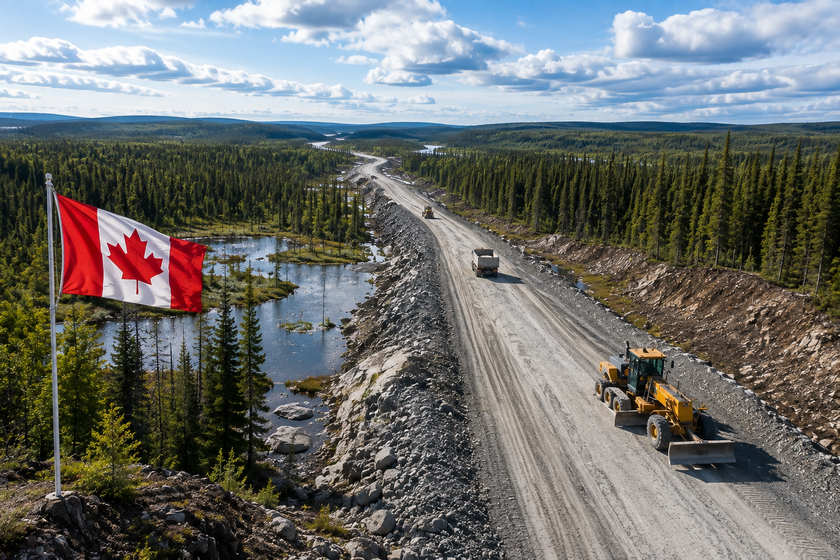
The Marten Falls Community Access Road is planned as an all-season, multi-use road connecting the northern end of the Painter Lake forestry road to the community of Marten Falls in northern Ontario.
The project is intended to address long-standing connectivity challenges faced by Marten Falls First Nation and other remote Indigenous communities in the region.
Unlike seasonal transportation routes, an all-season road could provide more reliable year-round access to the community and surrounding areas.
Why the Federal Decision Matters
The federal impact assessment examined the potential environmental, social and Indigenous rights-related effects of the proposed project.
Following the assessment, the Minister of the Environment, Climate Change and Nature issued a decision statement determining that the potential effects within federal jurisdiction are justified when the expected benefits of the project are taken into account.
The decision does not remove the requirement for other approvals. The project must still obtain any necessary authorizations and permits before work can proceed.
Indigenous Communities Were Involved in the Assessment
Indigenous participation was an important part of the federal assessment process.
According to the Impact Assessment Agency of Canada, a total of 17 Indigenous groups participated in the assessment.
Consultations with Indigenous communities resulted in mitigation measures and follow-up requirements designed to address potential adverse effects on Indigenous Peoples and impacts on rights recognized and affirmed under section 35 of the Constitution Act, 1982.
The assessment also incorporated Indigenous Knowledge alongside scientific and technical information.
Environmental Protections and Conditions
The federal decision statement establishes legally binding conditions for the project.
These conditions are intended to reduce potential adverse effects within federal jurisdiction, including impacts on Indigenous Peoples who live in or use the area, as well as effects on the local environment and species.
The conditions will apply throughout the life of the project and require the proponent to meet the requirements established through the federal decision.
Economic and Connectivity Benefits
The federal government says the road is expected to address persistent connectivity challenges affecting Marten Falls First Nation and other remote Indigenous communities.
The project is also expected to create economic opportunities in northern Ontario.
Improved transportation infrastructure could provide more reliable access to communities, services and economic activities while supporting longer-term regional development.
Federal and Provincial Cooperation
The federal assessment was coordinated with Ontario's Ministry of the Environment, Conservation and Parks.
Several federal departments provided scientific and technical expertise during the assessment, including Environment and Climate Change Canada, Fisheries and Oceans Canada, Health Canada, Indigenous Services Canada, Natural Resources Canada and Transport Canada.
This coordinated approach was used to examine the project's potential effects and establish measures to address them.
What Happens Next?
The completion of the federal impact assessment is an important regulatory milestone, but it does not mean every approval for the project has been completed.
The project proponent must still obtain any necessary authorizations and permits required under applicable federal, provincial or other laws.
The legally binding conditions included in the federal decision statement will also need to be followed throughout the project's life.
Bottom Line
Canada has completed the federal impact assessment of the Marten Falls Community Access Road Project in northern Ontario.
The federal decision determined that potential effects within federal jurisdiction are justified when considered against the project's expected benefits. The project is expected to improve year-round connectivity for Marten Falls First Nation and other remote Indigenous communities while creating economic opportunities.
However, the project still requires any necessary authorizations and permits before work can proceed.