
Key Takeaways
- Canada's first Forest Sector Strategy (to 2050) is backed by a proposed $6.5 billion Budget 2026 investment — over $9 billion committed since August 2025.
- New measures include $100 million over three years (FRED) for forest-dependent communities and up to $31.6 million for B.C. projects.
- Hodgson highlighted Tla'amin Nation's acquisition of full ownership of Western Forest Products' Stillwater Forest Operation, backed by the Indigenous Loan Guarantee Program.
Canada has a forest sector in trouble, and for the first time ever, Ottawa has a plan to fix it
Natural Resources Minister Tim Hodgson unveiled Canada's first-ever Forest Sector Strategy on November 27 at the Tla'amin Nation in British Columbia — a plan running to 2050, backed by a proposed $6.5 billion investment in Budget 2026 that the government bills as the largest federal forest-sector investment ever.
Combined with measures announced since August 2025, total federal commitments to the sector now exceed $9 billion.
That's a staggering number. But the real question is whether the money will save an industry that has been in decline for years.
Four pillars to rebuild the forest sector
The strategy is built on four pillars:
Transforming the sector through innovation.
Securing the fibre supply.
Opening new markets at home and abroad — including mass-timber housing construction.
Supporting forest-dependent communities and workers.
The new money includes the Forest Resources for Economic Diversification (FRED) initiative: $100 million over three years for forest-dependent communities, and up to $31.6 million for B.C. projects, including $19.2 million from PacifiCan in tariff-response funding for 16 B.C. businesses.
These are ambitious goals. But they come at a time when the sector is absorbing U.S. softwood lumber duties and tariff pressure.
The B.C. funding is explicitly framed as tariff response — a signal that Ottawa is trying to help communities hit hardest by trade disputes.
The Tla'amin example
Hodgson pointed to the host nation as the model.
The federal Indigenous Loan Guarantee Program is supporting the Tla'amin Nation's acquisition of full ownership of Western Forest Products' Stillwater Forest Operation, announced in Budget 2026.
It's a powerful example of Indigenous ownership in action — a shift from outside control to local stewardship.
The strategy lands as Ottawa pushes wood construction as both a housing and an industrial policy.
It's a bold move. But can it work?
The Twikup Take
A first-ever strategy arriving in 2026 tells you how long forestry ran on autopilot: Canada's third great resource sector managed decline by habit while lumber politics were fought one tariff ruling at a time.
The $6.5 billion is proposed, not spent — it lives or dies with Budget 2026 — but the direction is coherent: own the fibre, build with the wood, and put Indigenous ownership inside the structure rather than around it.
The challenge is turning those ambitions into real jobs, real communities and real results.
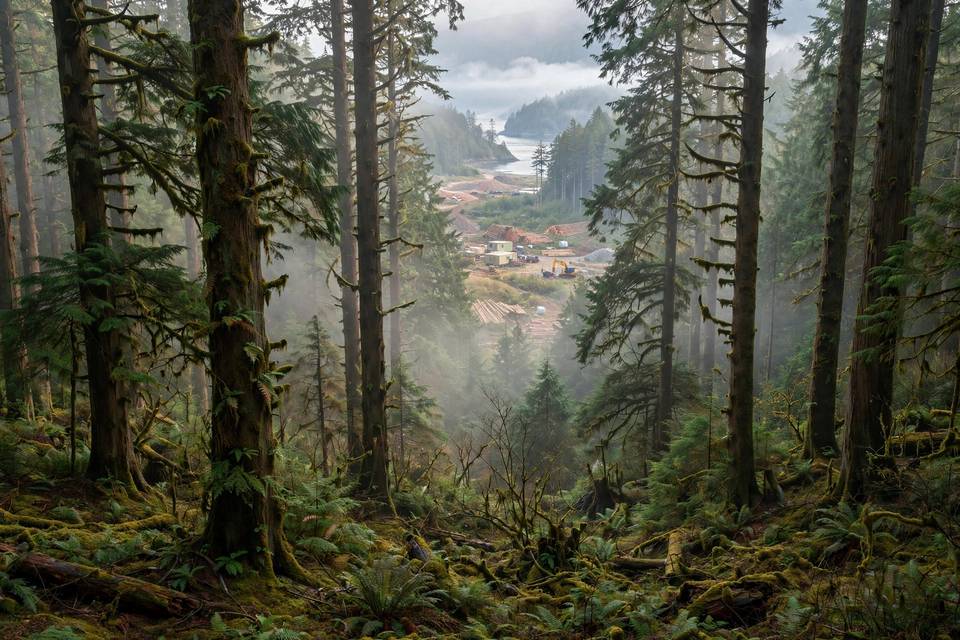
Image: Illustrative image.