
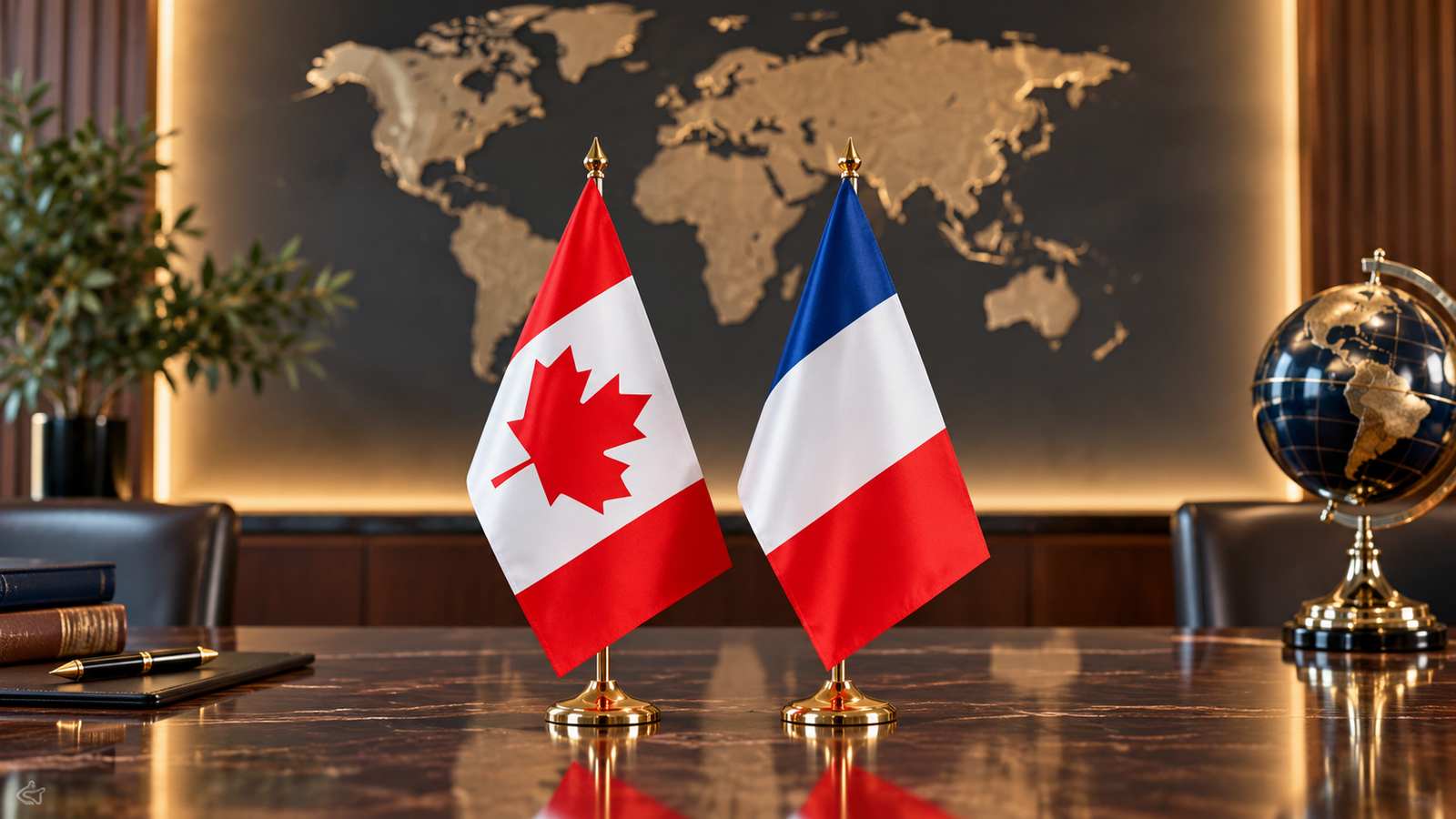
Canada and France Plan Shared Space Infrastructure
One of the major areas discussed during the meeting was space cooperation.
Prime Minister Mark Carney and President Emmanuel Macron directed their space agencies, defence ministries and industries to work toward developing and sharing common space infrastructure.
This could include launch systems as well as ground reception and control infrastructure. The two leaders also highlighted opportunities for cooperation between industries in Canada, France and the wider European Union.
The move adds space technology to an already expanding Canada-France relationship that includes aerospace, advanced technologies and strategic infrastructure.
Defence and Aerospace Cooperation to Deepen
Defence and aerospace are also becoming increasingly important parts of the partnership.
Canada and France agreed to deepen collaboration in these sectors as both countries continue working with international partners on security and strategic capabilities.
The leaders also discussed European and transatlantic security, the war in Ukraine and developments in the Arctic.
Canada and France are NATO Allies, giving their defence relationship an established institutional foundation.
Energy Security Becomes Another Focus
Energy security was another major issue during the discussions.
Carney and Macron discussed how international conflicts can affect energy supplies and agreed to strengthen cooperation on energy security.
Canada is also seeking to expand its role in both clean and conventional energy, while France continues to focus on energy security and the broader European energy landscape.
The discussions therefore place energy cooperation alongside defence, aerospace and technology as another strategic area for the two countries.
New Canada-France Business Partnership
Economic cooperation is also set to receive a fresh push.
The leaders welcomed a new strategic partnership launched by the Canadian Chamber of Commerce and the Chambre de commerce et d’industrie en France.
The partnership is designed to deepen business ties, strengthen bilateral economic cooperation and diversify trade between Canada and France.
This comes as bilateral trade already represents a significant part of the relationship.
According to the Canadian government, merchandise trade between the two countries reached $15.2 billion in 2025. Canadian exports to France were valued at $5 billion, while imports from France reached $10.2 billion.
Artificial Intelligence Moves Into the Partnership
Artificial intelligence was another area highlighted during the meeting.
Carney and Macron said leading countries in AI, including Canada and France, should work together on the technology.
The discussions also connected AI cooperation with the responsible development of emerging technologies.
For Canada, closer cooperation with France could create additional opportunities in areas such as advanced computing, AI research and other strategic technologies.
Wildfire Management Added to Cooperation
The two countries also agreed to deepen cooperation on wildfire management.
Wildfires have become an important area of public safety and climate resilience cooperation, particularly as governments seek better preparedness, response capabilities and early-warning systems.
The addition of wildfire management broadens the partnership beyond traditional economic and defence cooperation.
Arctic Issues Remain Part of the Conversation
The Arctic was also discussed during the meeting.
Canada and France addressed regional security and broader geopolitical developments, alongside issues involving European and transatlantic security.
France's relationship with Canada also has a geographic dimension because Saint-Pierre-et-Miquelon is located near Newfoundland and Labrador.
The two countries continue to view their relationship as an important link between Canada, France and Europe.
Stronger Local Cooperation With Saint-Pierre-et-Miquelon
Carney's visit was also significant because it marked the first official visit by a Canadian prime minister to Saint-Pierre-et-Miquelon.
During the visit, the leaders highlighted the historical, cultural, economic and people-to-people connections between the archipelago and Atlantic Canada.
They also tasked the Regional Joint Cooperation Commission with expanding work in four areas: economic integration and trade diversification, energy transition and decarbonisation, climate resilience and early-warning systems, and cross-border security.
Canada-France Trade Ties Already Have a Strong Base
The latest announcements build on an established economic relationship.
Canada and France have expanded bilateral trade over the past decade, with the Canadian government reporting that trade has grown by nearly two-thirds during that period.
France is also Canada's third-largest export market within the European Union.
Beyond trade, the two countries cooperate in defence, security, technology, climate-related areas, culture and the French language.
Leaders Will Continue Discussions in New York
The Canada-France discussions are not ending with the Saint-Pierre-et-Miquelon meeting.
Carney and Macron agreed to remain in close contact and continue their discussions in New York during the 81st session of the United Nations General Assembly.
That gives both countries another opportunity to discuss international security, economic cooperation, technology, energy and other shared priorities.
What Happens Next?
The immediate focus will be on turning the latest commitments into practical cooperation.
Space agencies, defence ministries and industries are expected to explore common infrastructure and other opportunities, while businesses will have a new framework for strengthening economic ties.
Further discussions at the United Nations could also provide more details about Canada's cooperation with France and the European Union.
Bottom Line
Canada and France are broadening their partnership well beyond traditional diplomatic ties.
The latest meeting placed space infrastructure, defence, aerospace, energy security, artificial intelligence, wildfire management and trade diversification on the agenda.
With further discussions expected in New York, the next phase of the relationship will depend on how these areas of cooperation translate into specific projects, business activity and government initiatives.