
Key Takeaways
- Canada and Newfoundland and Labrador jointly approved the $14 billion Bay du Nord project on November 20, 2026
- The companies' final investment decision is expected in early 2027; approval alone does not start construction
- Federal figures cite $20 billion in revenues and $50 billion in GDP over 20 years; the province's ~$6.4 billion figure counts provincial-direct returns only
A $14 Billion Green Light. Not a Construction Start.
A $14 billion offshore oil project just got the government's green light. But the companies behind it still have one enormous decision to make: whether to spend the money.
On November 20, 2026, Canada and Newfoundland and Labrador jointly approved Bay du Nord, an offshore oil project to be developed by Equinor and its partner Shell in waters off the province.
The approval clears a major hurdle. It doesn't mean construction has begun.
That decision belongs to Equinor and Shell.
The Next Big Date: Early 2027
The companies' final investment decision (FID) is expected in early 2027.
Until then, Bay du Nord remains an approved project, not an active construction site.
Governments have said yes. Now the companies must decide whether to commit.
And that distinction matters when billions of dollars are involved.
$20 Billion, $50 Billion or $6.4 Billion?
Three enormous figures are attached to Bay du Nord. They don't all mean the same thing.
The federal government's projections put the project's long-term economic impact at approximately $20 billion in revenues and $50 billion in GDP over 20 years.
Newfoundland and Labrador Finance Minister Craig Parrott has cited another figure: nearly $6.4 billion.
Why the difference?
Because the $6.4 billion represents the province's direct share, not the project's total national economic impact.
These aren't competing estimates of the same thing. They're different measures.
And for Newfoundland and Labrador, the distinction is especially important.
Why Newfoundland and Labrador Is Watching Closely
Offshore oil royalties play a major role in the province's public finances.
That makes the provincial-direct revenue figure particularly important for budgeting. A national GDP projection may sound impressive, but it isn't money the provincial government can simply spend.
Bay du Nord also represents something bigger than one development.
It has become a test of whether a new offshore oil project can successfully navigate Canada's approval process.
This time, Ottawa and Newfoundland and Labrador delivered a joint approval, with the province supporting the project rather than fighting it through litigation.
That decision could become a reference point for future East Coast offshore developments.
But approval alone doesn't deliver the economic benefits.
What Happens Next?
Watch early 2027.
That's when Equinor and Shell are expected to make their final investment decision.
If they proceed, contracting follows.
If they don't, government approval alone won't turn Bay du Nord into a construction project.
The political decision has been made.
The commercial decision hasn't.
The Twikup Take
Imagine getting permission to build a $14 billion project, then still having to decide whether to write the cheque.
That's Bay du Nord.
Ottawa and Newfoundland and Labrador have cleared the regulatory hurdle together. Now the decision sits with Equinor and Shell.
Early 2027 will reveal whether this approval becomes a turning point for Canada's offshore oil industry or remains an ambitious plan waiting for investment.
The $14 billion project has its green light. Now it needs its green money.
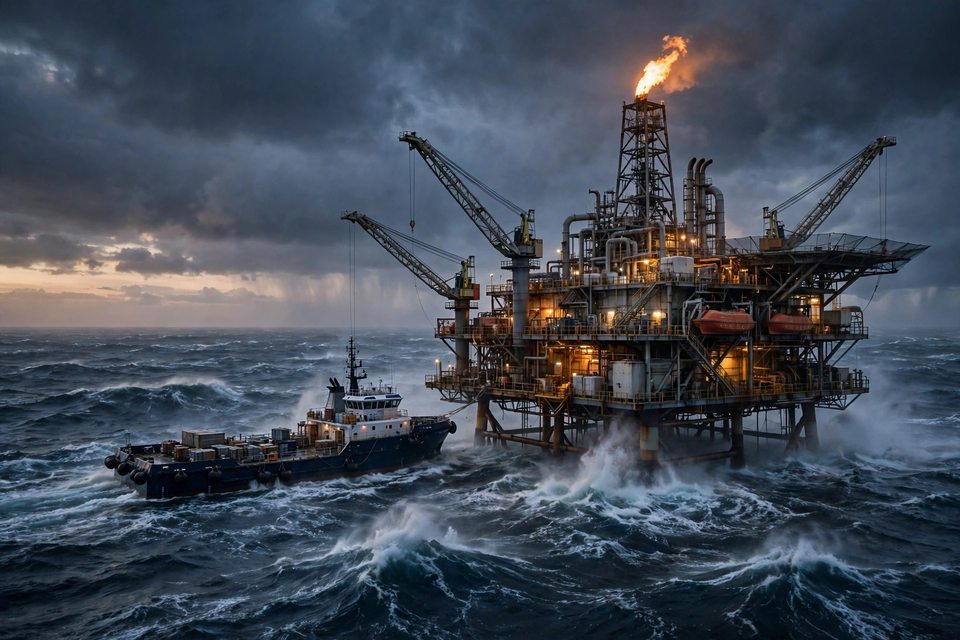
Image: Illustrative image.