
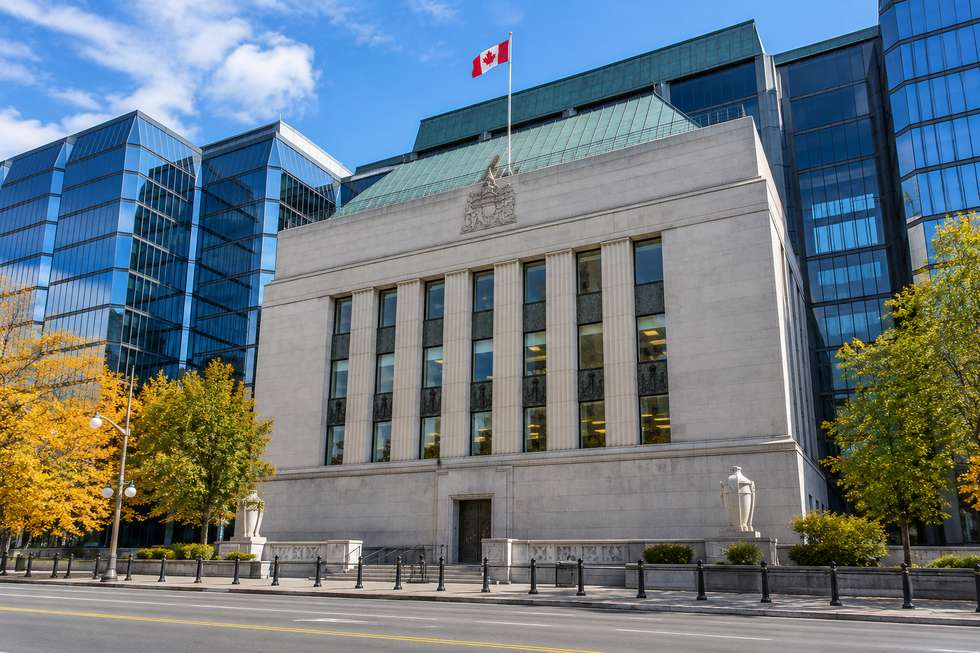
Key Takeaways
- The Bank of Canada scheduled its interest-rate announcement and October Monetary Policy Report for October 28, 2026.
- Canada's annual inflation rate rose to 3.1% in September, led largely by higher gasoline prices.
- Employment fell by 68,000 in September, while the unemployment rate increased to 6.5%.
Bank of Canada Faces a Difficult Policy Choice
Canada's latest economic figures present policymakers with competing pressures: inflation has accelerated, but the labour market has weakened. The Bank of Canada's October 28 interest-rate decision is therefore an important moment for households, businesses and financial markets watching the country's economic direction.
The central bank scheduled its announcement for 9:45 a.m. Eastern Time, alongside its quarterly Monetary Policy Report. However, the official policy-rate page reviewed for this article continued to list the previous target of 2.25%. An increase to 2.50% should not be reported as confirmed without a published decision.
Inflation Moves Higher
Statistics Canada reported that the Consumer Price Index rose 3.1% year over year in September, compared with 3.0% in August. Higher gasoline prices were a major contributor, with gasoline prices increasing 27.8% annually.
There were signs of moderation beneath the headline figure. Excluding gasoline, consumer prices rose 2.2% year over year, down from 2.4% in August. This distinction matters because policymakers assess whether price pressures are broad-based or concentrated in particular categories.
Employment Weakness Adds Pressure
The labour market delivered a contrasting signal. Statistics Canada reported that employment declined by 68,000 in September, marking a second consecutive monthly decrease. The unemployment rate rose to 6.5%, while the employment rate fell to 60.6%.
Weaker employment can signal softer household demand and a less robust economy. Yet higher fuel costs and persistent price increases can complicate efforts to bring inflation back toward the Bank's target.
TwikUp's Perspective
The decision cannot be judged by inflation alone. A rate increase could help restrain demand, but it may also add pressure to borrowers and businesses already facing economic uncertainty. Holding rates steady could provide breathing room, while leaving policymakers attentive to renewed inflation risks.
The most useful signals will be the Bank's published rationale, updated economic projections and guidance on future decisions. Until the official statement confirms the outcome, the expected move to 2.50% remains a forecast, not an established fact.