
Key Takeaways
- The search for Parker became the largest missing-person response in Calgary Police Service history.
- Investigators received approximately 1,000 formal tips, more than 90,000 direct social media messages and about 10 terabytes of CCTV footage.
- The review recommends stronger systems for managing information, coordinating resources, supporting personnel and planning major searches.
Calgary Police Review Identifies Gaps After Historic Search for Missing Child
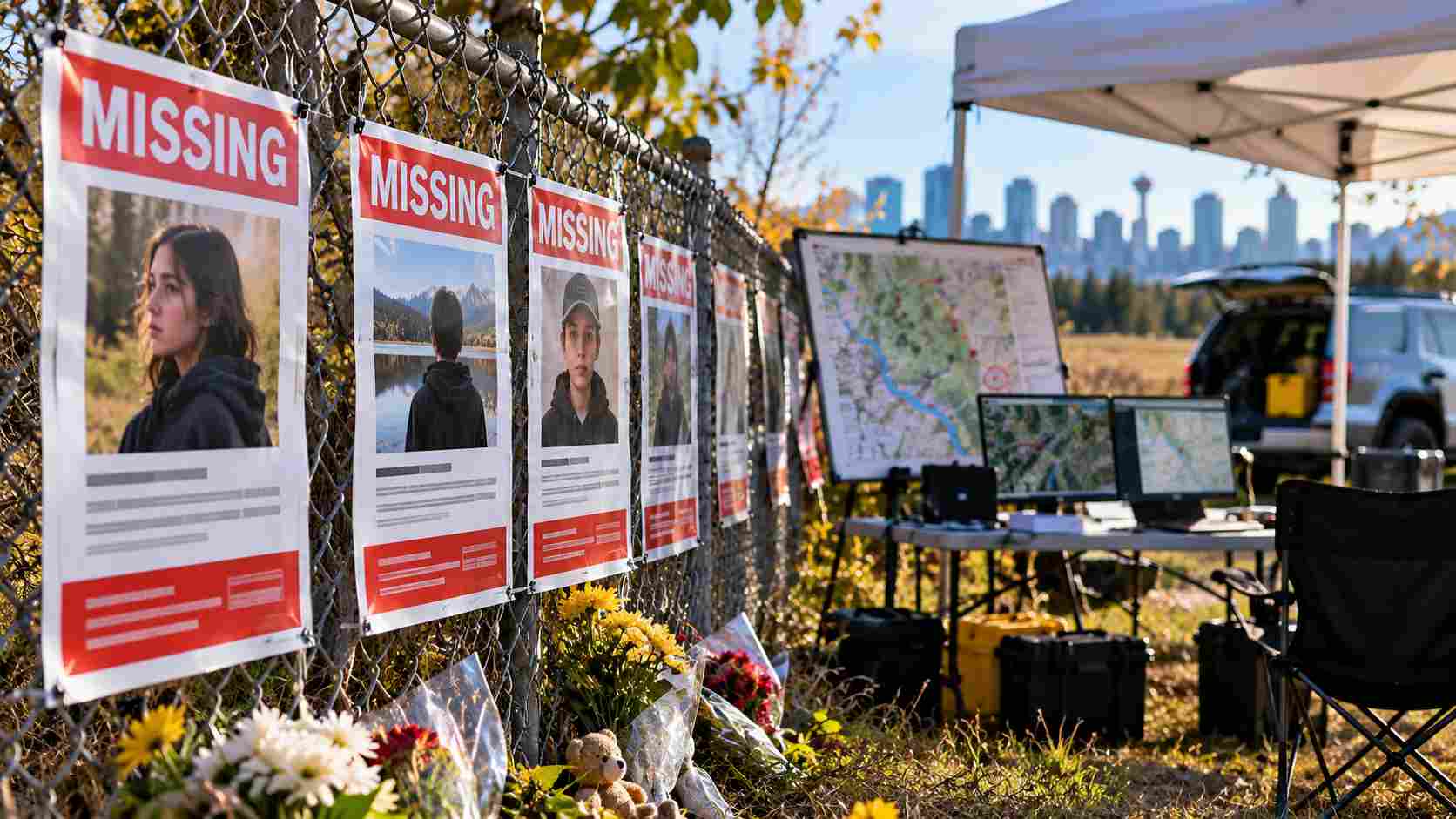
A search can generate thousands of leads, mountains of digital evidence and an overwhelming public response. Calgary’s largest missing-person investigation has now prompted police to examine whether their systems can keep pace when a case grows into a prolonged, multi-agency emergency.
What the Review Found
On October 20, 2026, the Calgary Police Service (CPS) released key findings from its internal operational and investigative review of the search for 11-year-old Parker Wells. Police said the review was designed to identify lessons and practical improvements, not to reinvestigate his disappearance or assess individual employees.
The scale of incoming information was a major challenge. According to CPS, the investigation generated approximately 1,000 formal tips, more than 90,000 direct social media messages, thousands of emails and around 10 terabytes of CCTV footage.
Police said the information had significant investigative value, but existing systems were not designed to manage such volumes efficiently during an extended critical incident. Investigators faced challenges with duplicate information, assigning responsibility for follow-up and tracking activity across separate systems.
Recommendations for Future Searches
The review identified strengths, including collaboration between investigators and search teams, public engagement, digital evidence capabilities and cooperation with partner agencies. More than 800 searcher deployments supported the response.
However, CPS also identified areas requiring improvement. These include scalable staffing, shift continuity, clearer incident-command responsibilities, centralised tip management, technology capacity, public alerting and member wellness.
The recommendations are intended to inform future policy, training, exercises, technology investments and operational planning. Police also acknowledged that a separate City of Calgary review examined the initial 9-1-1 response, while a provincial review concerning alerting was underway.
TwikUp’s Perspective
The review highlights a broader challenge for modern policing: public participation can generate valuable evidence, but information is only useful when agencies can assess, organise and act on it effectively.
Centralised reporting systems, clear responsibility for leads and sustainable staffing could help future investigations handle sudden surges in information. The review does not conclude that different systems or resources would have changed the outcome of Parker’s case.
Its significance lies in turning a difficult experience into practical improvements, while recognising the impact on the family, responders and community.