
Key Takeaways
- BC Hydro's South Peace project is exempted from the CPCN process: substations rise to 230 kV and existing 12-km lines carry more power with no new lines built.
- Work begins in 2028 and the upgraded system is in service in 2030.
- The province says the move could enable up to $3B in industrial investment — enabled investment, not the project's own cost, which was not stated.
More power on the same wires, years sooner
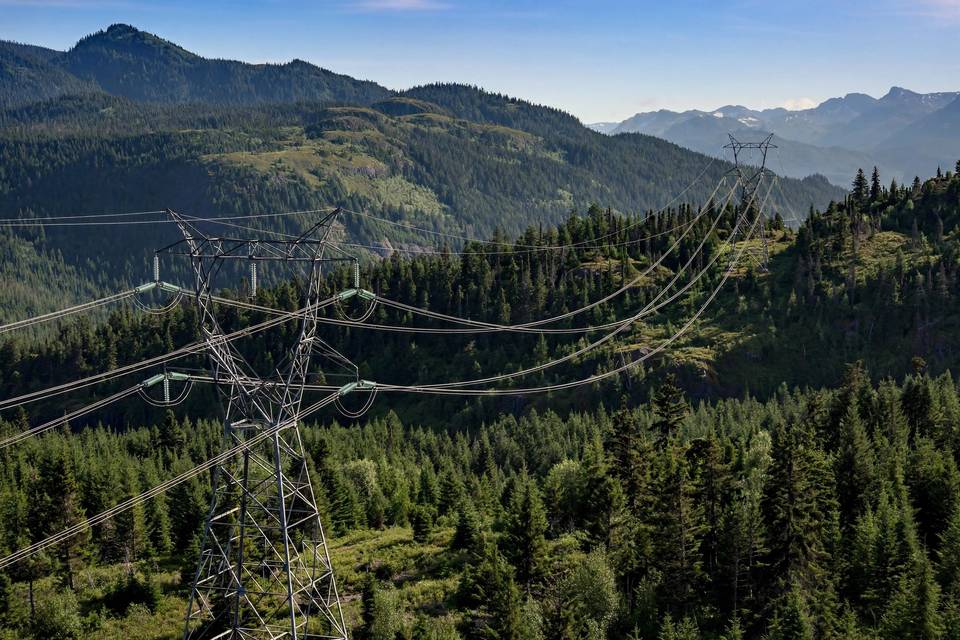
British Columbia has exempted BC Hydro's South Peace System Reinforcement Project from the usual certificate of public convenience and necessity process, clearing the way for a bigger grid around Dawson Creek without years of regulatory hearings. The upgrade raises the Dawson Creek and Bear Mountain substations to 230 kilovolts, letting the two existing 12-kilometre transmission lines between them run at 230 kV instead of 138 kV — substantially more capacity over the same corridor, with no new transmission lines to build. Work begins in 2028, with the upgraded system in service in 2030.
Why the province moved
The province says the exemption could enable as much as $3 billion in industrial investment — note that this is investment unlocked, not the cost of the Hydro project itself, for which no figure was given — contributing an estimated $8.8 billion in GDP over the developments' lifetimes and supporting up to 900 million cubic feet per day of added natural gas capacity. The first named beneficiary is NorthRiver Midstream, whose West Doe Gas Plant expansion (100 to 400 million cubic feet per day, about $500 million) can now proceed toward a final investment decision; Tourmaline, ARC Resources and Shell are also named as potential beneficiaries. "Our commitment to make B.C. an energy superpower starts in the South Peace," said Energy Minister Larry Neufeld.
The Twikup Take
Skipping the certificate process trades scrutiny for speed, and the province is betting the trade is worth it: the Peace region's gas growth has been waiting on wires, not wells. The honest gap in the announcement is the project's own price tag — "enabled investment" is a benefit figure, not a cost figure, and ratepayers will eventually ask what the upgrade itself costs.
Image: Illustrative image.