
Key Takeaways
- Saskatchewan introduced a bill Tuesday to expand immediate roadside penalties for impaired driving; it is not yet law.
- Drivers who fail a breath test would face immediate suspension, impoundment, ignition interlock and education courses.
- New immediate fines would be $1,000 for a first offence and $2,000 for repeat offences, plus a 30% victim surcharge.
Saskatchewan's impaired-driving bill is in
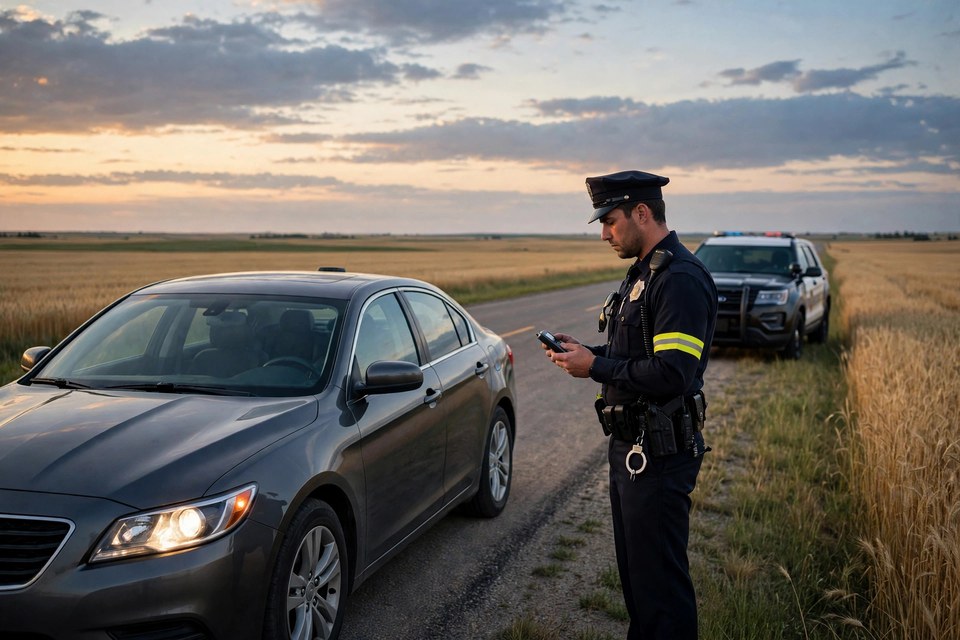
Fail a roadside breath test in Saskatchewan, and under a bill introduced Tuesday the consequences would start on the spot — no waiting for a court date.
The provincial government introduced The Driver, Vehicle Use and Safe Roads Act, 2026, which would amend The Traffic Safety Act to expand immediate roadside penalties for impaired driving. The bill builds on a policy the government first announced on June 29. It has been introduced, not passed — nothing in it is in force yet.
Five penalties, all at the roadside
For a driver who fails a roadside breath test, the bill proposes five immediate consequences:
- An immediate licence suspension
- Immediate vehicle impoundment
- An immediate ignition interlock requirement
- Immediate impaired education courses
- Immediate Safe Driver Recognition penalties, including demerit points and financial penalties
The bill would also create new immediate fines: $1,000 for a first offence and $2,000 for second and subsequent offences, each plus a 30% victim surcharge.
The .04-to-.08 band gets tougher too
Drivers who blow above .04 but below .08 — under the criminal threshold but not clean — would face changed licence suspensions, new reinstatement fees and an ignition interlock restriction starting at three months for a first offence, with escalating penalties for repeat offenders.
Some things would deliberately stay out of the roadside regime and remain strictly Criminal Code matters: offences involving fatalities, injuries or property damage, cases with passengers under 16, and refusals to provide a breath sample. The bill also adds licence cancellation and suspension penalties for certain drug offences, including trafficking and production.
The measures carry public support from Justice Minister and Attorney General Tim McLeod, MADD Canada CEO Steve Sullivan, Saskatchewan RCMP Traffic Services Supt. Grant St. Germaine, and Lorilee Davies of the Saskatchewan Association of Chiefs of Police.
The Twikup Take
The design here is speed as deterrence: Saskatchewan is betting that a suspension, an impound and a four-figure fine delivered at the roadside change behaviour more than a charge that takes a year to reach court. Whether the bill keeps this shape through debate is the next thing to watch. The message is clear: in Saskatchewan, impaired driving could become a roadside consequence before it becomes a courtroom battle.
Image: Illustrative image.