
Key Takeaways
- The Pentagon's "Canadian Defense Shortfalls" fact sheet says only 41.9% of Canada's air force fleet and 53.9% of its naval fleet were serviceable in 2025-26.
- It accuses Ottawa of having no resourced path to NATO's 5%-of-GDP commitment and criticizes the review of the 88-jet F-35 purchase.
- Defence Minister David McGuinty replied that Canada does not report to the United States and is on track, reaching 4% of GDP by 2030.
Washington put it in writing
The Pentagon does not usually grade its closest ally in public. On Monday it did. The U.S. Department of War released a two-page fact sheet titled "Canadian Defense Shortfalls" that accused Ottawa of failing to defend North America and concluded: "Canada's defense shortfalls speak for themselves. Canada must get serious and focused."
The document says decades of underinvestment "has atrophied the Canadian Armed Forces" and left Canada unable to be "a credible partner in the defense of our shared continent." It says Secretary Pete Hegseth is focused on Canada's modernization "after decades of American taxpayers footing the bill for its homeland defense."
The numbers Washington used
The fact sheet's readiness figures for 2025-26 are stark: only 41.9% of the air force fleet is serviceable, only 53.9% of the naval fleet, and the army's operational readiness rate is 48%. The document blames aging equipment and personnel shortages. Canada, it notes, depends entirely on the U.S. and NATO for airborne early-warning aircraft, and only one of its four aging submarines is operational at any given time.
On spending, the fact sheet says Canada promised 2% of GDP in 2006 and took nearly two decades to get there, reaching it only in 2025. It says Ottawa still has no resourced path to the 5% by 2035 NATO commitment, with the biggest increases postponed until after the 2029 election. Canada's latest budget projects combined defence and security spending of 4.1% of GDP by 2027-28, with core defence at just 2.6%. The sheet also took aim at Ottawa's review of the planned 88-jet F-35 purchase, warning a mixed fleet would "compound existing personnel shortfalls."
Canada's own defence department has reported similar equipment shortages, while putting the share of units ready for operations at 61%.
Ottawa's answer
Defence Minister David McGuinty did not soften it on Tuesday. "Canada is a sovereign nation. I'll be very direct. We don't report to the United States," he told reporters in Ottawa.
McGuinty said Canada remains on track for 5% by 2035, that allies agreed to review that commitment in 2029, and that Canada's plan reaches 4% of GDP by 2030 — up from 1.25% just fourteen months ago. Canada spent $63.4 billion on defence in 2025 and has allocated $81.8 billion over five years to rebuild the Forces. His department added that military cooperation with the U.S., through NORAD and NATO, has not changed.
The Twikup Take
Strip away the tone and the two sides are arguing over a timeline, not a destination. Washington wants the 5% path spelled out now; Ottawa says the money is moving and the review comes in 2029. What is new is the megaphone — a public fact sheet is pressure, not paperwork. And it raises a bigger question: how long can two allies disagree so publicly about the same numbers before the disagreement itself becomes the story?
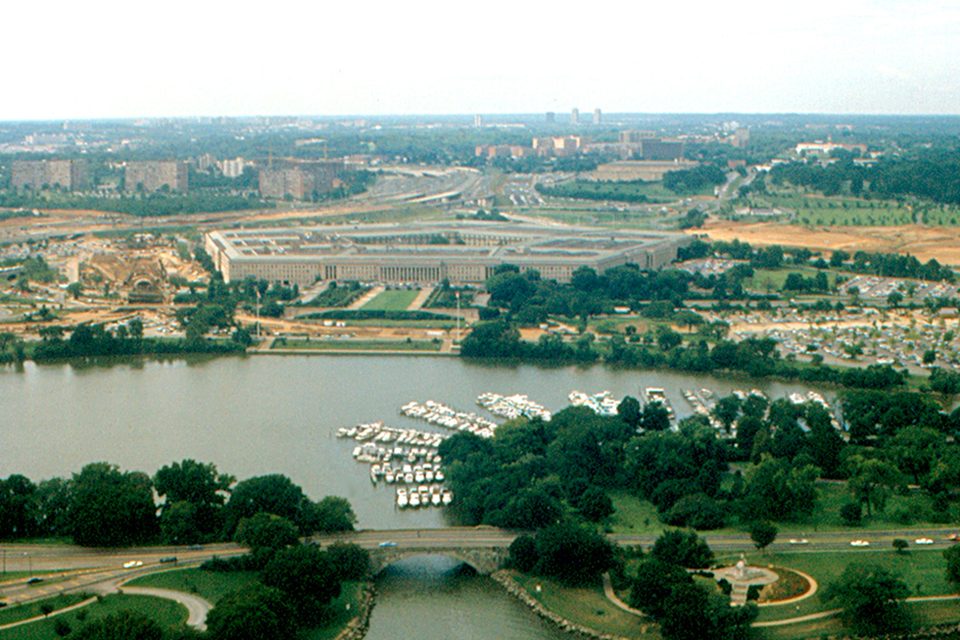
Photo: Arlington - Pentagon from the Air by roger4336, CC BY-SA 2.0.