
Key Takeaways
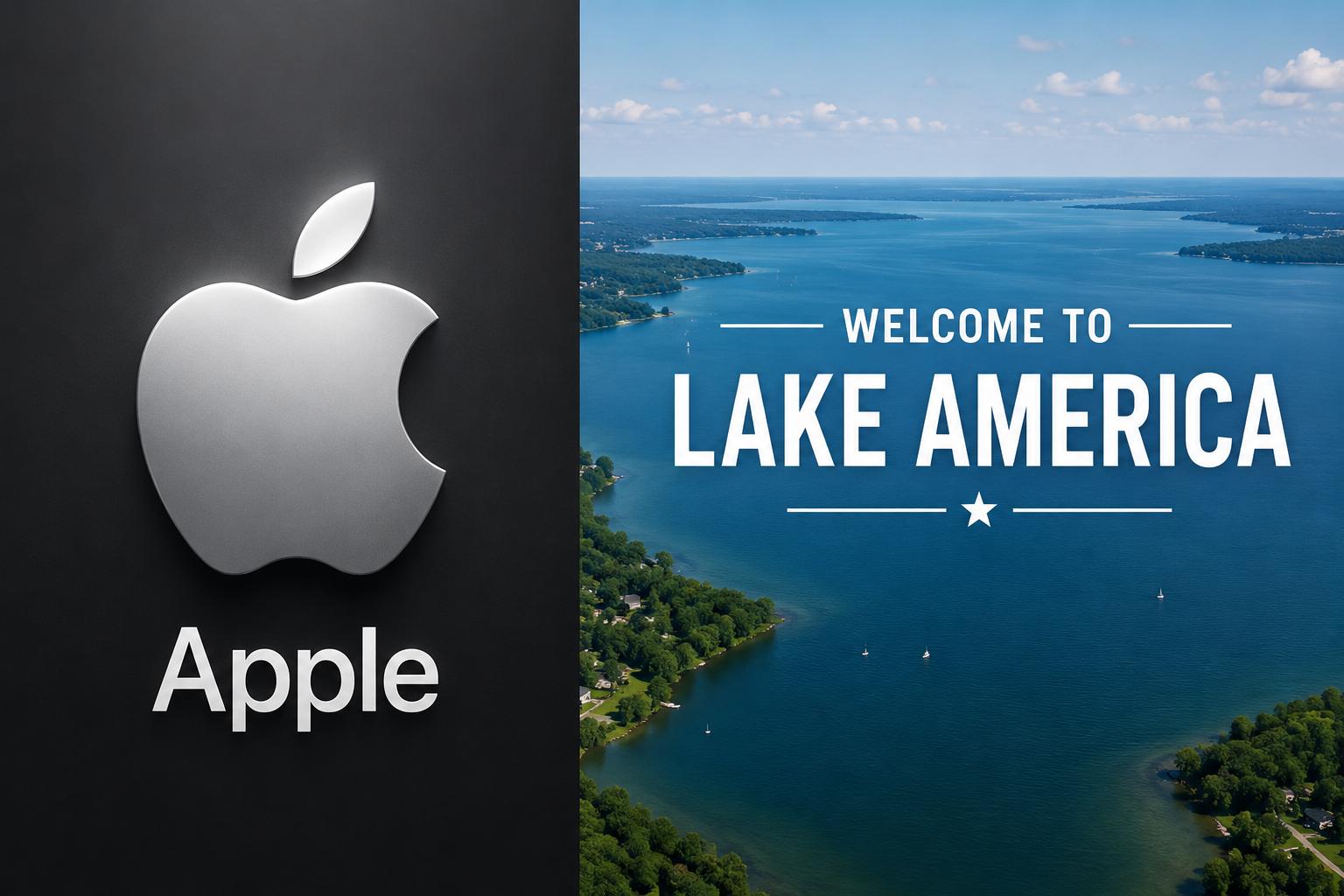
- U.S. Interior Secretary Doug Burgum said President Donald Trump contacted Apple about changing Lake Ontario's name on its maps.
- Apple has not officially confirmed that it will change the name on Apple Maps.
- Trump's August 27 executive order directs the U.S. government to use “Lake America” in federal maps and the Geographic Names Information System.
Trump Orders Lake Ontario Renamed Lake America
The development follows an executive order signed by President Trump on August 27, 2026, directing the U.S. government to rename the body of water currently known as Lake Ontario as Lake America.
The White House order directs the Secretary of the Interior, working with the U.S. Board on Geographic Names, to take appropriate steps to update the name in the U.S. Geographic Names Information System.
The order also directs federal agencies to use the new name in government maps, contracts, documents and other official communications.
What the Executive Order Means for Maps
The executive order applies to the U.S. federal government's geographic naming system.
It does not automatically require private technology companies such as Apple to change the names used in their mapping products.
That distinction is important because Apple Maps is operated by a private company, while the Geographic Names Information System is a U.S. government system used as an official reference for geographic names.
Apple Maps Could Be Next
According to Burgum, President Trump has contacted Apple directly about the name change.
Burgum said he expects users could see the change on Apple's mapping platform soon, although Apple has not publicly confirmed when or whether it will make the change.
The situation therefore remains different from the official federal renaming. The U.S. government has already ordered the change for federal use, while Apple's decision remains a company matter.
Google Maps Has Already Made the Change
Google Maps has already updated the name for users in the United States.
Google said its mapping service follows official geographic naming information from U.S. government sources. As a result, users in the United States can see Lake America.
The naming can differ depending on the user's location.
Users in Canada continue to see Lake Ontario, while users outside the United States and Canada can see both names.
Canada Is Not Bound by the US Renaming
The U.S. executive order does not change Canada's official geographic naming conventions.
Lake Ontario is shared by the United States and Canada, with the lake bordered by New York State and the Canadian province of Ontario.
Canadian authorities can therefore continue using the name Lake Ontario.
The disagreement over the name has become another point of tension between Washington and Ottawa amid broader trade disputes between the two countries.
Why the Name Change Matters
The renaming is more than a change to a label on a map.
The decision has become part of the wider political relationship between the United States and Canada, with the two countries involved in an increasingly tense trade dispute.
For technology companies such as Apple and Google, the issue also raises questions about how mapping services handle geographic names when governments on opposite sides of a border use different names.
What Happens Next
The next major development could come from Apple.
If Apple follows the U.S. government's updated geographic naming system, Apple Maps could eventually display Lake America for users in the United States.
However, the company has not officially announced such a change.
Until Apple confirms its position, the reported possibility should be treated as an expected or potential update rather than a completed change.
The Bigger Picture
The Lake Ontario naming dispute highlights how political decisions can affect digital mapping services and the way geographic information is presented to millions of users.
The U.S. government has already moved ahead with the federal renaming process, while Google has updated its U.S. mapping service.
Apple's position remains unresolved, but comments from Interior Secretary Doug Burgum suggest that discussions between the Trump administration and Apple are underway.
TwikUp Insight
Apple may soon change Lake Ontario to “Lake America” on its Maps service for U.S. users, according to Interior Secretary Doug Burgum.
However, Apple has not officially confirmed the change. Trump's executive order applies to U.S. federal geographic naming and does not automatically require private mapping companies to adopt the new name.