
Key Takeaways
- Grants are designed as non-repayable assistance, while student loans create a debt that must generally be repaid.
- Certain circumstances, including eligibility reassessments, can cause some grant funding to be converted into a loan.
- Federal student loan repayment normally begins after a six-month non-repayment period, but provincial loan conditions can differ.
Canada Student Grant vs Student Loan: What Is the Difference?
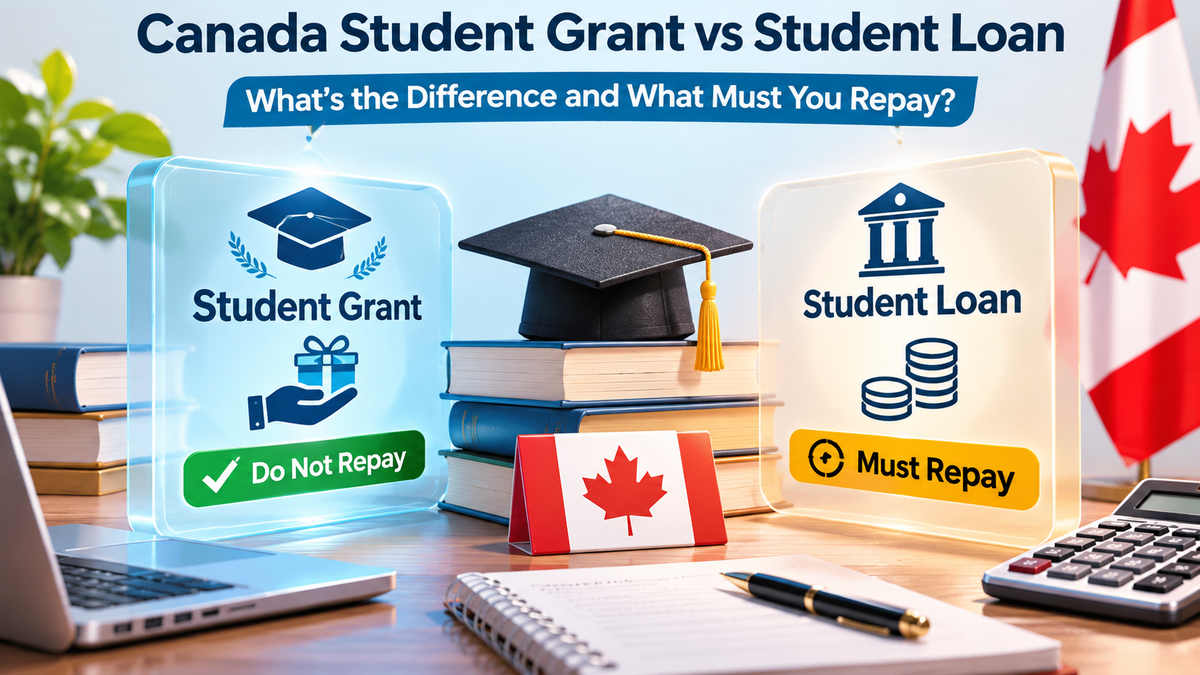
The main difference between a Canada Student Grant and a Canada Student Loan is repayment. A grant is financial assistance that generally does not have to be returned, while a loan is borrowed money that must be repaid. Eligible students may receive both through a single student aid application, depending on their financial circumstances and province or territory.
This distinction matters because the total amount shown in a student aid assessment is not necessarily the amount a student will eventually owe. Before accepting funding, students should understand which portion is a grant and which portion is a loan.
How Does a Canada Student Grant Work?
A Canada Student Grant provides financial support to eligible post-secondary students who meet the program's requirements. Unlike borrowed money, grant funding is generally non-repayable.
The federal government offers different grants based on circumstances such as financial need, study load, dependants and disability. For example, the Canada Student Grant for Full-Time Students provides up to $4,200 per year during the 2026–2027 school year. Eligible part-time students may receive up to $2,520 per year.
Students with qualifying disabilities may also receive a grant of $2,800 per year. Additional assistance may be available to students with dependants.
These amounts are maximums, not guaranteed payments. Eligibility, family income, assessed need and the type of study determine what an applicant can receive. Students should check the current requirements before making education budgets.
How Does a Canada Student Loan Work?
A Canada Student Loan is borrowed money provided to help cover eligible education expenses, including tuition, living costs and school-related expenses.
The amount offered depends on factors such as tuition, living arrangements, family income, savings and assessed financial need. Students who qualify may receive a combination of federal and provincial or territorial assistance.
Federal Canada Student Loans do not currently accrue interest. However, borrowers may still have a provincial loan portion, and interest rules can differ depending on where they live. This means students should not assume that every part of their student debt has identical terms.
A loan remains a financial obligation even when the money is used for education rather than everyday purchases.
Can You Receive Both a Grant and a Student Loan?
Yes. Eligible students can receive grants and loans together. Their student aid assessment explains the funding they have been approved to receive.
For example, imagine a student receives $4,000 in grant funding and $6,000 in student loans for an academic year. The total assistance is $10,000, but the amount that generally needs repayment is $6,000, not the full $10,000.
This is an illustrative example, not an estimate of what every student qualifies for. Actual awards depend on the student's application and assessment.
In some circumstances, students may be able to accept grant funding without taking the loan portion. The available options and eligibility conditions should be confirmed with the relevant student aid office.
When Can a Student Grant Become Repayable?
A grant is not automatically a loan, but it is not unconditional. Some funding may be converted into a loan if a student no longer meets the eligibility requirements or if the original assessment is changed.
For example, a grant may be reassessed if a student withdraws, does not maintain the required enrolment status, or provided inaccurate or incomplete information. The specific rules depend on the grant and the applicable agreement.
The National Student Loans Service Centre's terms explain circumstances in which certain Canada Student Grants may be converted into direct loans. Not every grant is treated identically, and some disability-related equipment assistance has separate conditions.
If a student changes their course load, leaves a program or receives a reassessment notice, they should contact their student aid office promptly. Ignoring the notice can make it harder to understand or resolve an unexpected balance.
When Must You Start Repaying a Canada Student Loan?
Federal student loan repayment generally begins after a six-month non-repayment period. The period starts after a student finishes their final term, leaves school, takes time away or reduces their studies from full-time to part-time.
During this period, borrowers do not have to make regular payments on their Canada Student Loan. At the end, the borrower must begin making payments according to the repayment terms.
Students should check their National Student Loans Service Centre account and review their loan agreement rather than relying only on an expected graduation date. Provincial portions may follow different repayment arrangements, particularly in Alberta, Nova Scotia and Prince Edward Island, where provincial and federal loans are repaid separately.
What If You Cannot Afford Your Student Loan Payments?
Borrowers who face financial difficulty may qualify for the federal Repayment Assistance Plan (RAP). Depending on family income and circumstances, the plan can reduce required payments or bring them down to zero for an approved period.
RAP approval is not permanent. Borrowers generally need to reapply every six months and provide updated information to remain eligible. Provincial loan portions may have separate assistance rules, so borrowers should confirm whether another application is necessary.
For a closer look at eligibility, payment reductions and the renewal process, readers can explore TwikUp's related guide to Canada Student Loan Repayment Assistance.
TwikUp's Perspective
Losing a job can make existing debt obligations harder to manage, especially when regular income stops but loan payments and household expenses continue. For someone considering a consumer proposal or bankruptcy after employment loss, a severance payment may also affect the financial decisions they make during this period.
Before deciding how to use a termination payment, understand its tax treatment and how much money you may actually receive. Read our guide on Severance Pay Tax in Canada: How Much Will You Keep After Tax? to learn how severance is classified, what deductions may apply and how to estimate your take-home amount.
What Should Students Check Before Accepting Funding?
Before relying on an award, confirm the grant and loan amounts separately, check whether the school and program qualify, and review the conditions attached to each type of assistance. Students should also identify which organization administers each part of their funding.
Disclaimer
This article is for general educational purposes only. Student aid eligibility, grant conditions and loan repayment rules can change and may differ by province or territory. Confirm your individual funding assessment and repayment obligations with your student aid office or the National Student Loans Service Centre.