
Key Takeaways
- Anne Carson has won the 2026 Nobel Prize in Literature for her innovative body of work and engagement with classical tradition.
- The Toronto-born writer is known for combining poetry, prose, translation, essays and dramatic forms.
- Her major works include Autobiography of Red, The Beauty of the Husband, Red Doc> and Float.
Anne Carson Wins 2026 Nobel Prize in Literature
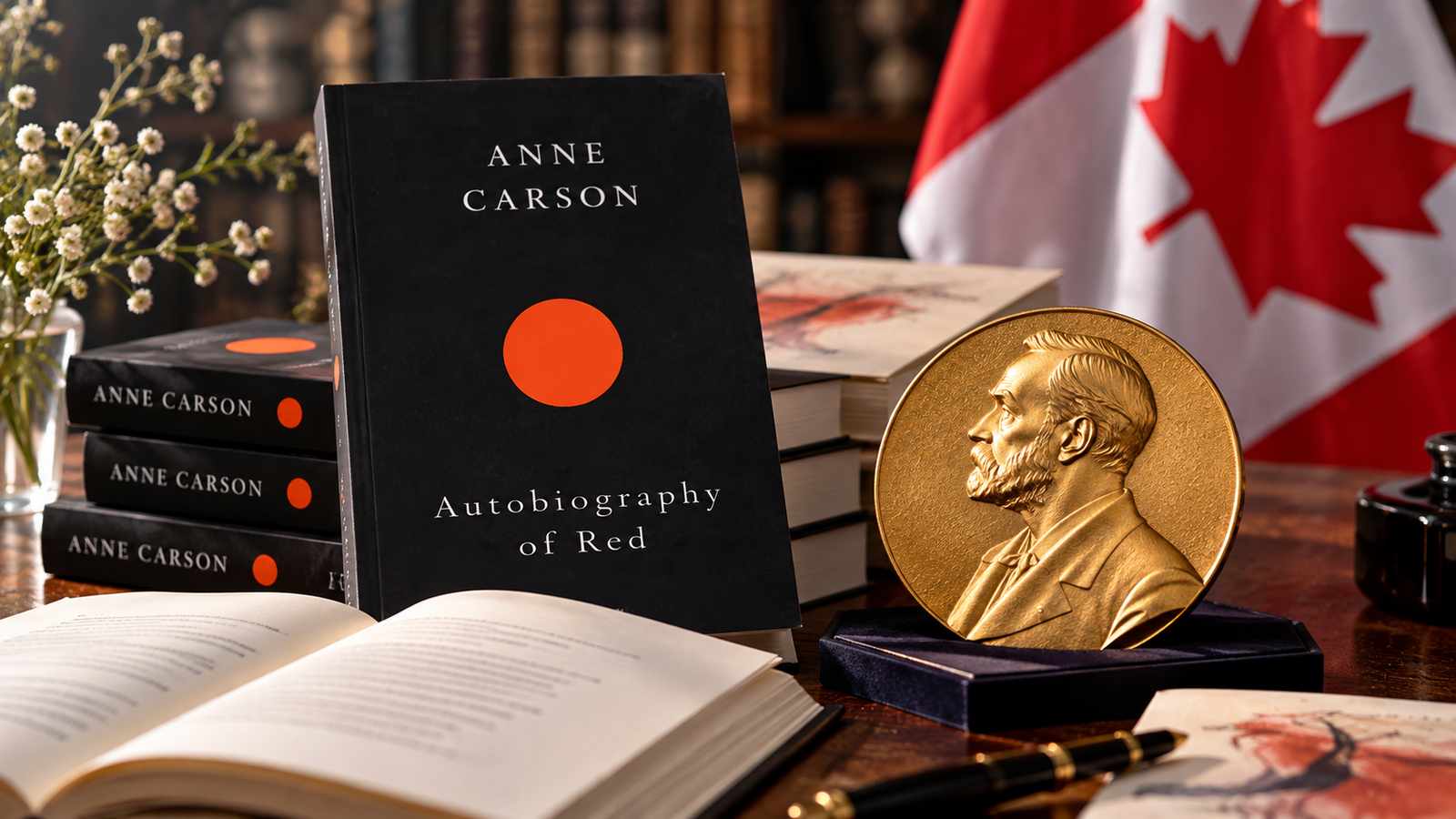
Canadian poet and writer Anne Carson has won the 2026 Nobel Prize in Literature, giving one of the country’s most distinctive literary voices the world’s highest-profile literary honour.
The University of Toronto confirmed Carson’s win on October 8, citing the Nobel committee’s recognition of her “bold and inventive oeuvre” and its playful engagement with classical tradition. The Swedish Academy’s official Nobel schedule had set October 8 as the date for the literature announcement.
A Writer Who Crosses Literary Boundaries
Carson’s work rarely stays inside one literary box. Her writing moves between poetry, prose, essays, translation and dramatic forms, often bringing ancient Greek literature into conversation with contemporary life.
Born in Toronto in 1950, Carson studied Classics at the University of Toronto, earning a BA, MA and PhD. Her academic background has remained central to her creative work, particularly her fascination with ancient texts, language and mythology.
From Greek Myth to Modern Literature
One of Carson’s best-known books is Autobiography of Red, a 1998 novel in verse inspired by the ancient Greek story of Geryon and Herakles. Her other major works include The Beauty of the Husband, Red Doc> and Float.
She has also translated classical works, including Sappho and Greek tragedy, treating translation as a creative literary practice rather than simply a transfer of words between languages.
Why Carson’s Nobel Matters
The Swedish Academy’s citation places Carson’s engagement with classical tradition at the centre of its decision. That recognition is especially significant because her work demonstrates how ancient material can be reshaped without losing its complexity.
TwikUp’s Perspective
Carson’s Nobel is a reminder that literary innovation does not always mean abandoning the past. Her career shows how old stories, fragments and languages can become raw material for new forms. For readers unfamiliar with classical literature, her work may offer an unexpected doorway into it.