
Key Takeaways
- Pacific Link has been listed as a project of national interest under the Building Canada Act.
- The proposed pipeline could transport one million barrels of Canadian crude oil per day to a deepwater export terminal near Delta, British Columbia.
- The project now moves into a federal review process involving Indigenous consultation, environmental considerations, technical assessments and development of project conditions.
Pacific Link Targets New Export Capacity
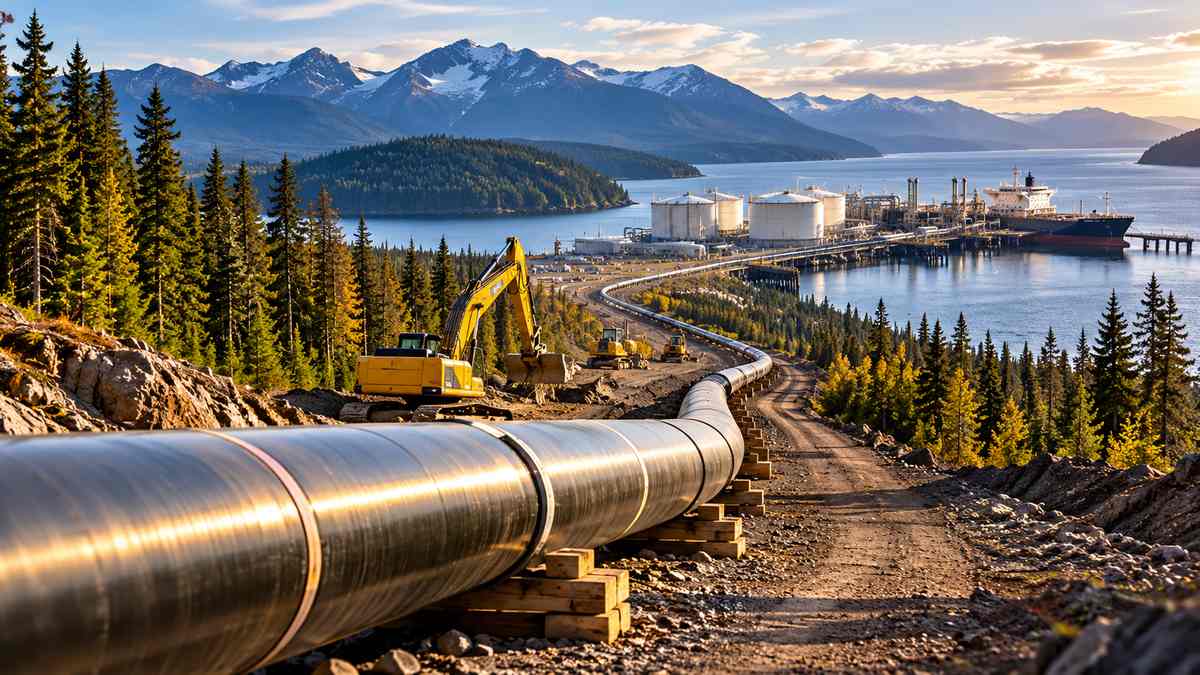
The proposed pipeline would transport up to one million barrels of Canadian crude oil per day from Bruderheim, Alberta, to a deepwater port near Delta, British Columbia. From the coastal terminal, crude would be transferred to vessels for shipment to international markets.
The Major Projects Office says the proposed route could extend approximately 1,250 kilometres and include around 11 pump stations, a receipt terminal in Bruderheim and a marine loading facility capable of serving Very Large Crude Carrier vessels.
The project is intended to increase Canada's access to global oil markets and diversify export destinations beyond its existing trade routes.
Project Enters Federal Review Process
Being listed as a project of national interest does not mean construction can begin immediately. The designation allows Pacific Link to proceed through the federal review framework established under the Building Canada Act.
Over the next year, the Major Projects Office, supported by the Canada Energy Regulator, will lead the federal review and work on a conditions document covering regulatory requirements for the project.
The process is expected to include Indigenous consultation, public hearings and assessments covering technical, environmental, social, cultural, health, safety and security considerations.
The government says it aims to finalize the conditions document by September 1, 2027, subject to the required consultation and regulatory process.
Ownership and Indigenous Participation
The project ownership structure includes Trans Mountain Corporation and the Alberta Petroleum Marketing Commission, which will hold equal shares of the balance of the project. Pembina Pipeline Corporation will have a 10% economic interest during construction, with an opportunity to increase that interest by up to another 10% after commercial operations begin.
Canada, Alberta and the ownership group have also committed to offering Indigenous communities a minimum 10% ownership interest. Financing support is expected through the Canada Indigenous Loan Guarantee Corporation and Alberta Indigenous Opportunities Corporation.
Economic Impact Could Be Significant
The federal government estimates that Pacific Link could support approximately 140,000 jobs at the peak of construction and upstream development. It also estimates the project could generate more than $20 billion in GDP annually and $100 billion in government revenue by 2060.
These figures are government estimates rather than guaranteed outcomes. Actual economic effects will depend on the project's final design, investment, construction schedule, regulatory approvals and future market conditions.
TwikUp's Perspective
The designation changes Pacific Link's status from a pipeline proposal under consideration to a formally listed national-interest project with a defined federal review pathway.
For businesses and investors, the next stage will be particularly important because the project still requires detailed regulatory work, route development, environmental assessment and consultation. The final conditions will determine how the proposed infrastructure can proceed.
The Indigenous equity component is also a significant part of the project's structure. Rather than treating participation solely as consultation, the framework includes an ownership opportunity that could provide participating communities with a direct economic interest in the project.
What Happens Next
The Major Projects Office will continue developing the project conditions with the Canada Energy Regulator and other stakeholders. Route details, environmental protections, ownership arrangements and other requirements will continue to be developed during the review.
Pacific Link therefore represents a major infrastructure proposal entering its next formal phase, with the coming year focused on determining the conditions required before construction can move forward.