
Key Takeaways
- The Mackenzie Valley Highway (800 km, Wrigley to the Dempster Highway) is the first project of national interest listed in Canada's North.
- Ottawa commits to fully fund construction and certain maintenance — but the release gives no total cost; up to 3,000 jobs at peak construction.
- A further $120M+ from the Arctic Infrastructure Fund goes to the Arctic Economic and Security Corridor toward the Nunavut border.
An 800-kilometre road to end the North's winter isolation
Prime Minister Mark Carney announced in Yellowknife on November 27 that the Mackenzie Valley Highway has been listed as a project of national interest under the Building Canada Act — the first such listing in Canada's North. The project would build an 800-kilometre all-season gravel highway from Highway 1 at Wrigley to the Dempster Highway south of Inuvik, passing Tulita, Norman Wells and Fort Good Hope and giving those communities their first year-round road access. The federal Major Projects Office will coordinate approvals during the environmental assessment, and Ottawa commits to fully fund construction and certain maintenance costs through Budget 2026 and the Arctic Infrastructure Fund — though the release states no total price tag for the highway.
The stated benefits: more than 10,000 people served, about 1,900 in the Sahtu gaining all-season access, a Yellowknife–Inuvik drive cut from roughly 38 hours to 23 hours, up to 3,000 jobs at peak construction, and a stronger NORAD link between Yellowknife and Inuvik. A Leadership Governance Understanding was signed November 25 by the Sahtu Secretariat, the Gwich'in Tribal Council, Pehdzéh Kı̨́ First Nation, the territorial government and Canada. "More than a road, it will be a gateway to improving lives, unlocking new economic opportunities, and strengthening our sovereignty," Carney said.
A second corridor gets $120 million
Carney also announced more than $120 million from the Arctic Infrastructure Fund for the Arctic Economic and Security Corridor — an all-season road from Yellowknife toward the Nunavut border, led by the Tłı̨chǫ Government, the Yellowknives Dene First Nation and the territorial government, planned to be shovel-ready by 2029 and eventually linked to the Grays Bay deepwater port. A new federal major projects management entity will be created, starting with the Mackenzie Valley Highway.
The Twikup Take
Northern highways have been promised in some form for half a century; what changed today is the legal machinery — a national-interest listing, a single federal approvals coordinator, and a full-funding commitment. The missing number is the story to watch: an 800-kilometre Arctic road with no published price tag will define both the project's credibility and Budget 2026's fine print when it lands.
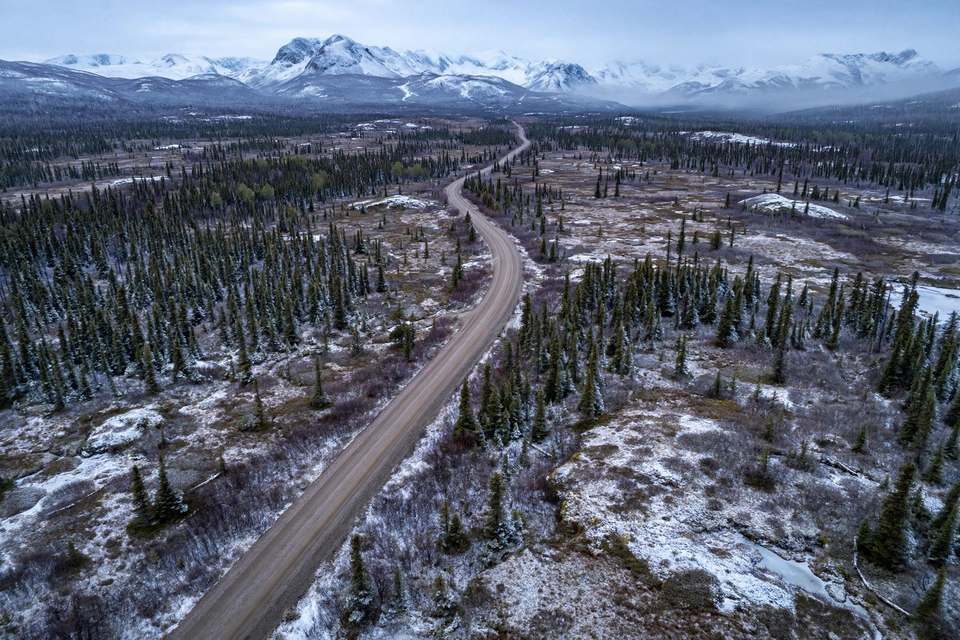
Image: Illustrative image.