
Key Takeaways
- Total manufacturing sales were essentially unchanged in September at $80.2 billion, but sales fell in 11 of 21 subsectors.
- In volume terms, sales dropped 1.5% — the largest decline since January — because higher prices, not more activity, held the headline up.
- Petroleum and coal products jumped 10.0% on prices, while primary metal sales fell 9.5% from a record August; Alberta's factory sales hit a record high.
A flat headline with a sagging floor underneath
Canadian factories sold less stuff — but higher prices hid the drop
Imagine selling fewer products and still reporting the same sales total. That is essentially what happened in Canadian manufacturing during September.
Manufacturing sales were essentially unchanged at $80.2 billion, according to Statistics Canada's first September reading. August's growth was revised upward to 1.8%.
Beneath that flat headline, the story changes. Sales fell in 11 of 21 subsectors. Once prices are stripped out, sales fell 1.5%, the largest volume decline since January, even though industrial product prices increased 2.0%.
Oil prices kept the headline afloat
Petroleum and coal product sales jumped 10.0% to $11.5 billion, their third consecutive monthly increase. The increase was driven by prices, with conflict in the Middle East pressuring refined-product prices. In volume terms, sales in that subsector edged down.
Remove that sector, and Canada's manufacturing sales fell 1.5%.
Primary metal sales plunged 9.5% to $7.0 billion after a record August, as exports of unwrought copper and copper alloys dropped 26.6%. Wood product sales fell 7.0%.
Factories have more stock — and more work waiting
Inventories rose 1.7% to $130.5 billion. That increase pushed the inventory-to-sales ratio to 1.63, meaning factories are holding more unsold material relative to their shipments.
Unfilled orders also climbed 2.1% to a record $136.8 billion, led by aerospace products and parts. That means substantial production work is already booked, even if new demand starts weakening.
Quebec fell while Alberta broke a record
Sales fell in six provinces, led by a 4.0% decline in Quebec.
Alberta moved in the opposite direction. Factory sales there rose 7.2% to reach $11.4 billion, an all-time high supported by the petroleum sector.
The Twikup Take
This is the second consecutive Statistics Canada report in which the total dollar figure looked stronger than the underlying volume figures.
September's factories sold less, but received more money — a fuel-price effect — while backlogs and inventories increased.
Those buffers could prove useful — or become a warning sign if demand weakens.
October's advance estimate, due November 23, will offer the next clue about volumes.
Canada's factory sales looked flat on paper. Strip out prices, and the slowdown becomes impossible to miss.
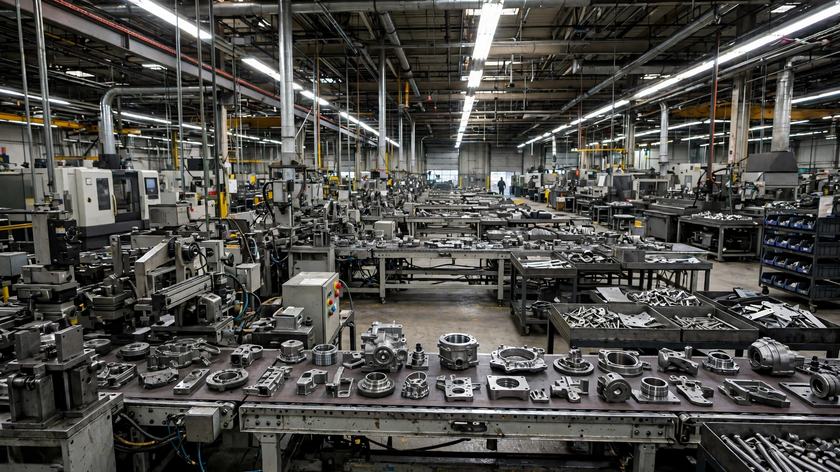
Image: Illustrative image.