
Key Takeaways
- WRPS and Ontario’s Ministry of Transportation agreed to deploy stationary ALPR-equipped CCTV cameras on provincial highways in Waterloo Region.
- WRPS says its in-cruiser ALPR system generated 7,749 plate-of-interest alerts from January 1 to September 11, 2026.
- WRPS says non-investigative video footage from the CCTV program will be automatically deleted after 30 days.
Ontario drivers could soon become much more familiar with cameras that can automatically read licence plates as vehicles travel along provincial highways.
The Waterloo Regional Police Service (WRPS) and Ontario’s Ministry of Transportation have reached what police describe as the first agreement of its kind in Ontario, allowing CCTV cameras equipped with Automated Licence Plate Recognition technology — commonly called ALPR — to be deployed on provincial highways in Waterloo Region.
The move could also provide an early look at how this technology might eventually be used more broadly across Ontario’s highway network.
Waterloo Region Is Going First
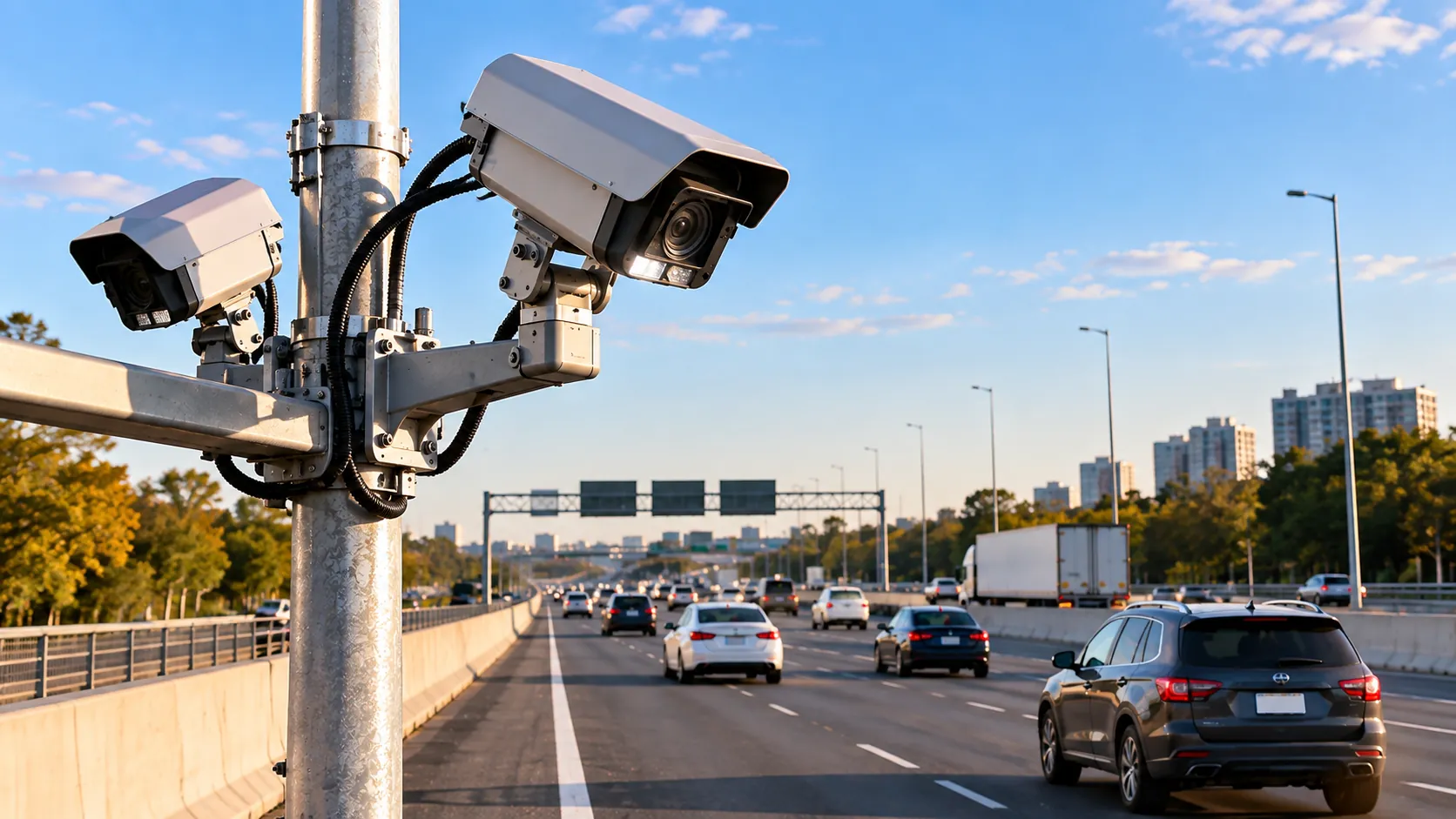
Under the new partnership, WRPS will be able to deploy stationary CCTV cameras equipped with ALPR technology along provincial highways running through Waterloo Region.
The Highway 401 corridor is a major focus. Waterloo police say the region’s connection to the highway makes it vulnerable to organized criminal activity extending well beyond municipal boundaries.
Police say criminal networks can use major highways to move between communities while targeting vehicles, businesses and property.
The exact number of cameras and their final highway locations have not yet been determined. WRPS says those locations will be made public once the cameras become operational.
What Exactly Will These Cameras Do?
ALPR technology can automatically photograph and read vehicle licence plates.
Instead of an officer manually entering a plate number, the system can compare plates against information available to police and generate alerts for vehicles or plates connected with certain law-enforcement interests.
Waterloo police already use ALPR technology in police cruisers.
According to WRPS, between January 1 and September 11, 2026, its in-cruiser ALPR system generated 7,749 alerts involving licence plates of interest.
Those included plates associated with stolen vehicles, stolen licence plates, wanted people and active criminal investigations.
Police say those alerts contributed to:
- 75 vehicle recoveries
- 94 arrests
- 77 charges
Now, instead of relying only on cameras mounted to moving police vehicles, the new agreement allows the technology to be placed at stationary locations on provincial highways.
Why Ontario Is Interested in Highway Licence Plate Cameras
The Waterloo project comes as Ontario explores wider applications for ALPR technology.
In material accompanying the province's Protecting Ontario's Streets and Communities Act, 2026, the government specifically identified the possibility of adding ALPR cameras to major provincial highways.
One of the stated objectives is combating organized retail theft, where organized groups can move stolen property between jurisdictions using Ontario's highway network.
That makes the Waterloo agreement particularly significant.
It doesn't mean ALPR cameras are immediately being installed on every major Ontario highway. But Waterloo Region is becoming an early testing ground for a technology the province has already indicated it wants to explore more widely.
What Happens to Drivers' Information?
The expansion will inevitably raise privacy questions because thousands of ordinary drivers could pass these cameras while travelling.
WRPS says privacy and legal compliance were considered during development of its CCTV program.
Police consulted with the Information and Privacy Commissioner of Ontario and completed a Privacy Impact Assessment covering how personal information is collected, used, protected, retained and eventually destroyed.
According to WRPS, footage will only be accessed for legitimate law-enforcement purposes.
Video that isn't required for an investigation will be automatically deleted after 30 days.
The collection and use of information must also comply with applicable legislation and constitutional protections, including the Canadian Charter of Rights and Freedoms and Ontario privacy law.
Ontario's Highway Surveillance Could Be Changing
Licence plate recognition itself isn't new to Ontario policing. Police services have already been using mobile ALPR systems in cruisers.
What's different here is bringing stationary ALPR-equipped cameras directly onto provincial highway infrastructure through a partnership between a police service and the Ministry of Transportation.
For drivers, there may be little noticeable difference while passing one of these locations. Behind the scenes, however, the technology can automatically read plates and help police identify vehicles connected with investigations.
Waterloo Region gets the first agreement of its kind.
The bigger question is whether similar cameras eventually start appearing along major highways elsewhere in Ontario.
With the province already exploring broader ALPR deployment, what begins around Waterloo and Highway 401 could ultimately become part of a much larger highway policing strategy.