
Key Takeaways
- Zaporizhzhia’s October 10 morning update reported seven deaths, 10 injuries and damage to at least 26 residential buildings.
- The city council declared October 11 a day of mourning for civilians killed in the attack.
- The US Treasury issued General License 135 for specified transactions involving Russian-origin diesel fuel. It was not a blanket removal of Russia-related sanctions.
Russian Strike Damages Zaporizhzhia Homes as US Issues Licence for Russian Diesel Transactions
A strike on Ukraine’s Zaporizhzhia damaged residential buildings and triggered emergency rescue work on October 10. The attack came as a separate US Treasury decision on Russian-origin diesel drew attention to how Washington is managing energy-related sanctions during the war.
Residential damage and rescue operations
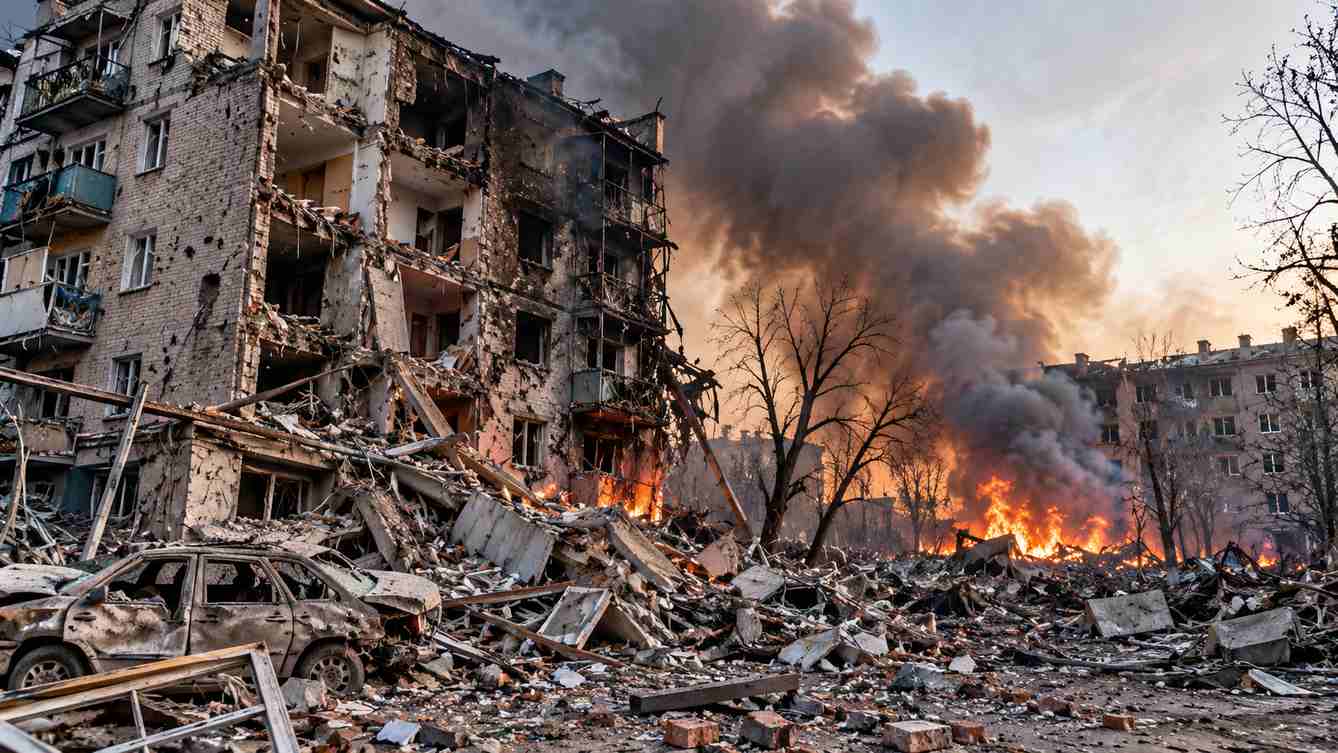
In an update published at 9:15 a.m. local time, Zaporizhzhia City Council reported damage to at least 26 residential buildings: 23 apartment blocks and three private homes. Three buildings had suffered significant damage, while non-residential buildings and premises were also affected.
The council’s update recorded seven deaths and 10 injuries at that time. Rescue operations were continuing, and officials warned that people could still be beneath the rubble. These figures reflect that specific update and should not be treated as a final casualty count.
The city council subsequently announced that October 11 would be a day of mourning for civilians killed in the attack. The announcement formalised the city’s response but did not provide a final death toll.
What the US diesel licence permits
On October 9, the US Treasury’s Office of Foreign Assets Control issued Russia-related General License 135. Its official title authorises specified transactions connected with the sale, delivery, offloading and importation of diesel fuel originating in Russia.
A general licence permits activities within its defined scope that would otherwise be restricted under the relevant sanctions rules. It does not, by itself, mean that all US sanctions against Russia have been lifted. The licence’s precise conditions matter when assessing which transactions are permitted.
TwikUp’s Perspective
The two developments highlight different pressures surrounding the war: the immediate protection of civilians and the longer-term challenge of enforcing economic restrictions while energy markets remain interconnected.
However, the timing of the attack and the licence does not establish that one caused or influenced the other. Any claim linking the US decision to Russia’s military actions requires separate evidence and clear attribution.
For readers, the key distinction is between a documented event and its political interpretation. Official updates can establish reported damage, rescue activity and the legal scope of a sanctions measure. They cannot, on their own, prove a motive or a causal relationship between separate decisions.