
Key Takeaways
- Quebec-selected skilled workers go through two stages: Quebec issues the CSQ under its own criteria, then IRCC decides admissibility.
- The PSTQ replaced the old program on November 29, 2024, with four streams and invitation-only applications through Arrima.
- French is scored on the Échelle québécoise, not the federal scale — Stream 1 invitation criteria look for spoken level 7 and written level 5.
One application is actually two
Why does Quebec make skilled workers apply twice — while the rest of Canada asks for only one application? That single difference shapes the entire Quebec immigration journey. If you're a skilled worker aiming to settle in Quebec, you don't start by applying for permanent residence. You start by convincing Quebec to select you. Only after that does Ottawa step in.
Everywhere else in Canada, skilled workers deal with one government. In Quebec, they deal with two — in a fixed order. First, the Government of Quebec assesses you against Quebec's own selection criteria and issues a Certificat de sélection du Québec (CSQ). Only with a CSQ in hand do you file a second, separate application with Immigration, Refugees and Citizenship Canada for permanent residence. Under the federal–Quebec agreement, the province chooses its own immigrants. At the federal stage, IRCC does not re-judge whether Quebec should have picked you — it runs the medical, security and criminality checks and decides admissibility. No CSQ, no Quebec skilled-worker application: the federal door only opens for people Quebec has already selected.
Step one now runs through the PSTQ
On November 29, 2024, the old Regular Skilled Worker Program was replaced by the Programme de sélection des travailleurs qualifiés (PSTQ), and invitations under the new program began in July 2025. The PSTQ sorts candidates into four streams by their main occupation and its TEER category: Stream 1, highly qualified and specialized skills (TEER 0–2, non-regulated); Stream 2, intermediate and manual skills (TEER 3–5, non-regulated); Stream 3, regulated professions; and Stream 4, exceptional talent, which has no TEER criterion but requires a partner opinion or a documented exceptional achievement.
You cannot simply apply. The PSTQ runs on a declaration of interest filed in Quebec's Arrima system: your profile enters a bank, is scored on a points system, and only candidates whose profiles match what Quebec is seeking receive an invitation to submit the actual selection application. A declaration of interest is not an application, and it can be updated at any time — work experience from the last five years, education, family, and intentions all feed the profile.
French is measured on Quebec's own scale — and it is the heavyweight
Quebec does not use the federal CLB/NCLC scale. PSTQ French is measured on the Échelle québécoise, and the ministry's published invitation criteria show how steep the expectation is: Stream 1 candidates are identified at spoken French level 7 or higher with written French at level 5; Stream 2 at spoken level 5; Stream 3 splits by TEER band (7 spoken / 5 written for TEER 0–2; 5 spoken for TEER 3–5); Stream 4 applies no French criterion. An accompanying spouse is expected to show spoken French at level 4 or higher under the criteria for Streams 1 through 3. Minimum experience criteria also apply at the invitation stage — 12 months in the main occupation for Stream 1, 24 months including 12 in Quebec for Stream 2. Two cautions: these are the criteria the ministry says it uses to identify candidates for invitation, and it can tighten them in any given round; and any French test results in your declaration must be less than two years old.
After the CSQ: the federal stage, and work while you wait
The CSQ stays valid until IRCC decides your permanent-residence application, even if the certificate itself expires in the meantime — Quebec has not renewed CSQs since 2018, because it does not need to. And the wait is not necessarily a work stoppage: a CSQ holder working in Quebec whose federal application is in process may qualify for a bridging open work permit once they have an acknowledgment of receipt, or an LMIA-exempt employer-specific permit.
Quebec's 2026–2029 immigration orientations make the PSTQ the only permanent-selection route for skilled workers — the Quebec Experience Program ended on November 19, 2025 — so this two-step path is now the whole game for skilled workers bound for Quebec.
The Twikup Take
The mistake applicants make is treating Quebec as a slower version of Express Entry. It is a different system with a different gatekeeper, a different language scale and an invitation bank instead of a points race — and the selection decision that matters most is made in Quebec City, not Ottawa.
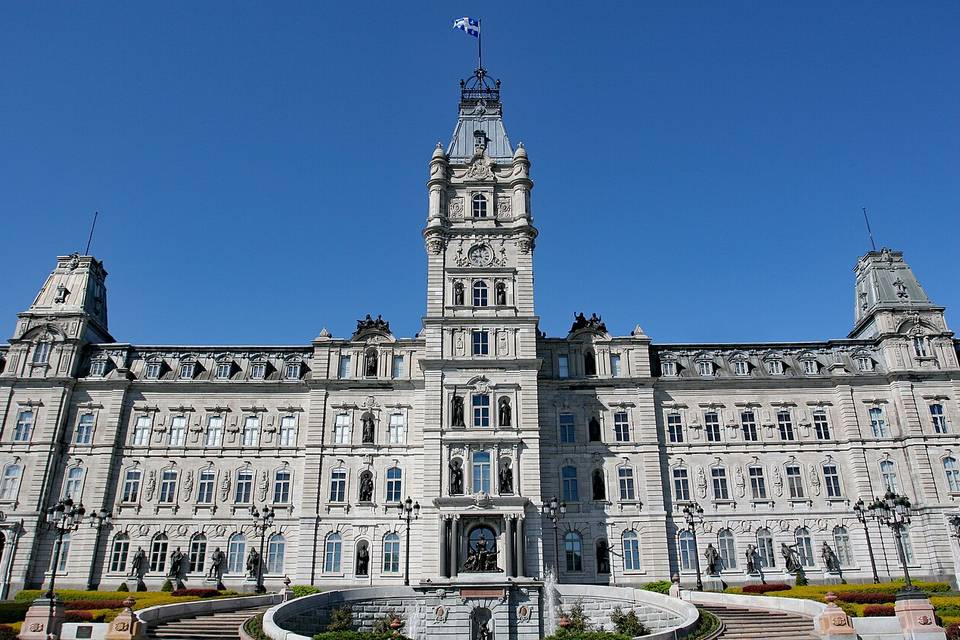
Photo: The Parliament Building of Quebec, home to the National Assembly of Quebec — Parliament building of Quebec Canada by Marc-Lautenbacher, CC BY-SA 4.0.